
A presentation should address the prospect’s specific needs rather than just describe your company. Sending the same template to every prospect can miss the context gathered in the sales call.
That gap between what buyers expect and what sales reps deliver is where deals go to die. And it's not because reps don't care. It's because building a custom deck after every sales call takes forever.

The real cost of "good enough" sales decks
Generic presentations feel safe. They're fast to send and they cover the basics. But covering the basics is not the same as addressing this prospect's needs.
A personalised deck can connect your proposal to the prospect’s stated priorities. Test whether that changes engagement and sales outcomes for your team.
But here's the thing: most sales reps know this. They just don't have the time or energy to do anything about it.
In Ai1, the Sales agent does this work for your team.
What happens between the call and the deck
Picture this. Your rep just finished a killer discovery call. The prospect is interested. The timing is right. Now what?
For the manual-work estimate used in this example, the process looks like this:
- Rep listens back through the call recording (30-45 minutes)
- Pulls key pain points and requirements into notes
- Sends a request to the design team for deck edits
- Content team reviews for messaging accuracy
- Back-and-forth revisions over email or Slack
- Final review and send
Best case? Two to four hours of real work spread across multiple people. Worst case? The deck doesn't go out for a week.
By then the prospect has already talked to two other vendors and forgotten half of what made your call stand out.
The speed tax is real
InsideSales.com’s 2015 lead-response comparison concerns telephone calls to new leads, not sales-deck delivery after a call. The InsideSales comparison (2015) was a telephone call at five minutes versus 30 minutes after a lead enquiry. It does not establish an hourly effect on closing probability after a sales call.
What if the deck was ready in 15 minutes?
Not a template with the prospect's name swapped in. A fully personalized presentation that references their specific pain points, maps your solution to their business model, and includes research on their company you didn't even do yourself.
That's what an AI sales deck generator does. And it changes the math on every deal in your pipeline.
"With this tool, you can get a deck out in 10 to 15 minutes after a sales meeting, hyper-personalized, and blow the client's mind."
— Mike Schwarz, Founder & CEO, MyZone AI
Think about what that does to your conversion rate. The prospect hangs up the call, checks their email 15 minutes later, and there's a polished deck waiting for them that speaks directly to what they told you. That's a completely different buying experience.

How an AI sales deck generator actually works
The system is flexible about how it gets information. You can feed it through whatever channel your team already uses:
- Slack: Paste your call transcript into a channel and the agent picks it up
- Zoom API: Connects directly and auto-detects sales opportunities from recordings
- Email: Forward a thread and the agent generates a draft-mode deck
- Phone: Call your AI agent and describe the opportunity verbally
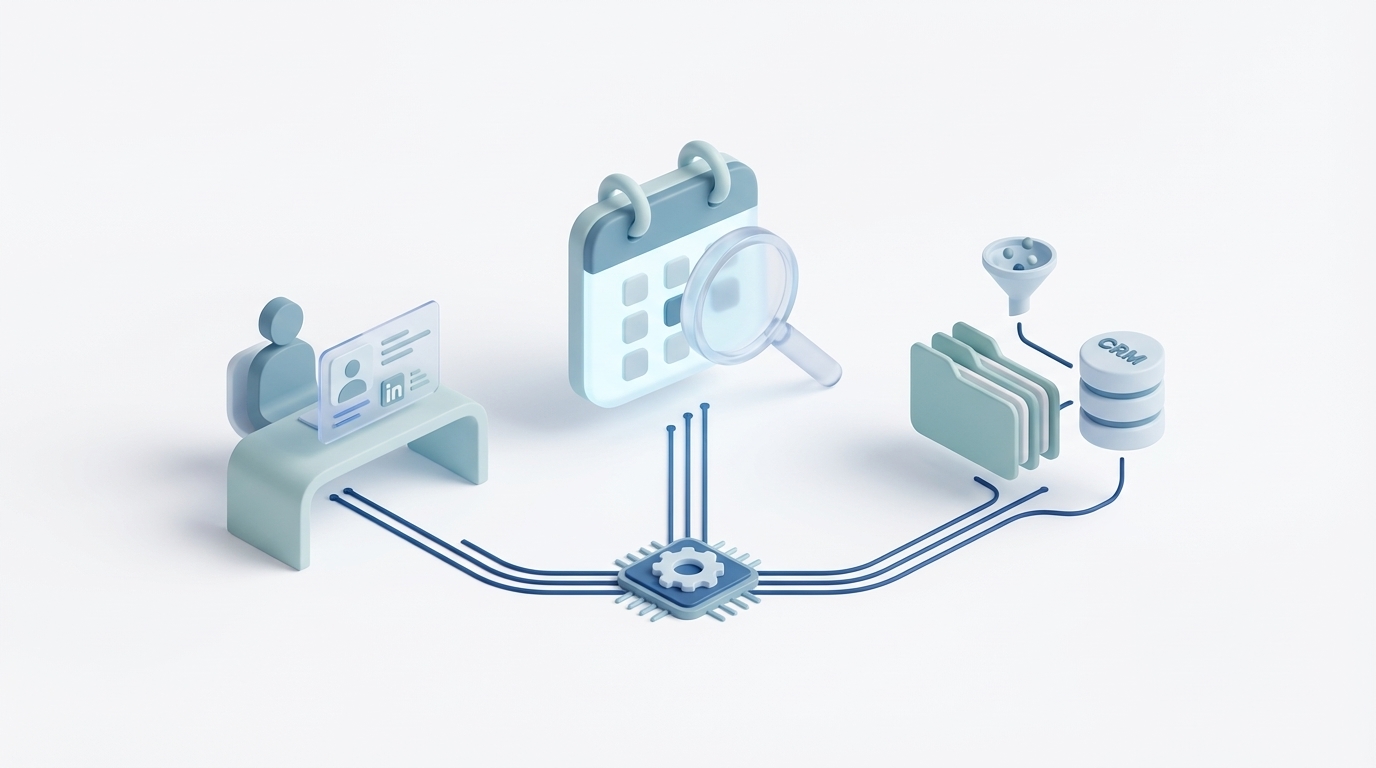
Once triggered, the agent does something your sales rep never has time for. It researches the prospect.
The research layer
Before building a single slide, the AI runs through a research pipeline that would take a human analyst 45 minutes:
- LinkedIn enrichment on key contacts
- Website scraping for company size, industry, and tech stack
- Contact analysis to understand the decision-maker's role and priorities
- Cross-referencing call transcript themes with your product's value propositions
All of this gets woven into the deck. The result is a presentation that feels like your team spent a full afternoon preparing it. Are you currently doing this level of research for every prospect? Most teams aren't.
The branded output
There's a one-time setup where your brand's style guide, colors, fonts, and deck template get loaded into the system. After that, every deck comes out looking exactly like your team built it. Same brand voice, same visual identity.
The output is a PPTX file your rep can open, review, tweak if needed, and send. Always a human in the loop. The AI does the heavy lifting, but the rep makes the final call.
The quality problem nobody talks about
When people hear "AI-generated presentation," they picture clunky, robotic-looking slides with bad formatting and stock photos. That's fair. A lot of AI output looks terrible.
But the difference here is the template layer. When you configure proper brand templates and give the system clear style rules, the output quality jumps dramatically. Microsoft’s Copilot presentation guidance likewise recommends starting from your organisation’s template to retain its theme and design.
"When you first use a tool like this, you have a hard time sleeping that night, wondering why you spent so many hours of your life creating custom sales decks."
— Mike Schwarz, Founder & CEO, MyZone AI
In our own MyZone build, I rated the first output 9 out of 10; that was my subjective assessment, not an independent quality benchmark. Small pixel-level bugs got fixed quickly once the right skills and templates were in place. The system can even generate dynamic workflow diagrams using Gemini's image model and insert them directly into your slides, so each prospect sees a visual map of how your solution fits their specific setup. Google’s 2025 Nano Banana Pro announcement describes turning notes into diagrams and creating infographics.

Generic fast or custom late: pick your poison
This is the trap most sales teams fall into. They think there are only two options.
Option A: Send a generic deck within an hour of the call. It's fast, it checks the box, but it converts at a fraction of the rate because the prospect can tell you didn't tailor it for them.
Option B: Build a custom deck that takes days. It's gorgeous, it's specific, but the prospect's attention has moved on. They've already had two calls with your competitor.
Both options kill deals. What if you didn't have to choose?
The sweet spot
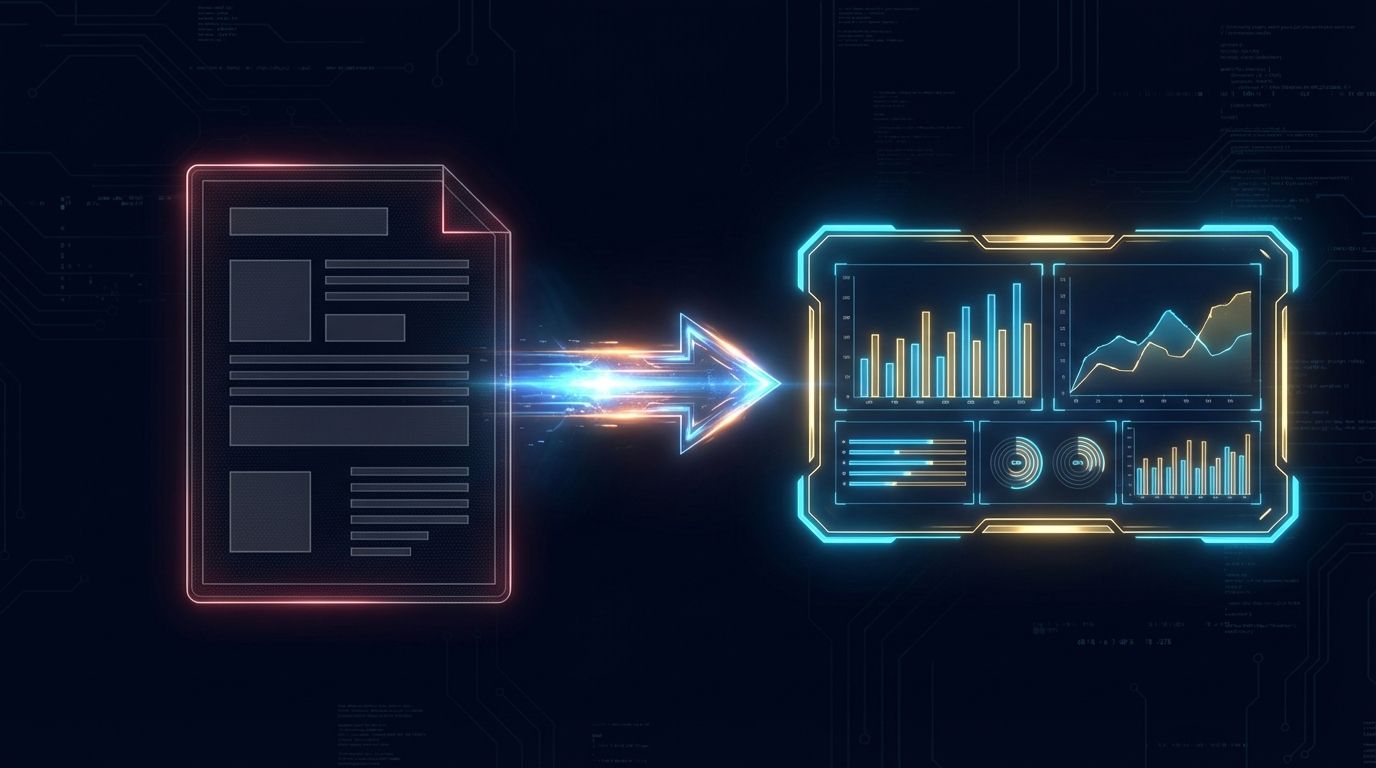
An AI sales deck generator gives you the third option: highly customized decks delivered immediately. Same quality as the design team's best work. Same speed as the generic template. That's the combination that moves close rates.
The AI sales pipeline intelligence systems that feed your CRM can now work hand-in-hand with deck generation. Every stage of the deal gets the right material at the right time.
What goes into a generated deck
A typical AI-generated sales deck runs 14 to 17 slides. Here's what the system builds:
- Cover slide with the prospect's company name and a personalized tagline
- Problem framing pulled directly from what the prospect said on the call
- Solution overview mapped to their specific pain points
- Feature deep-dives on the 3-5 capabilities most relevant to their use case
- Dynamic workflow diagram showing how your product fits their operations
- ROI projections based on their company size and industry benchmarks
- Social proof from clients in the same vertical
- Implementation timeline customized to their stated urgency
- Pricing and next steps aligned with where they are in the buying process
Every slide pulls from the research layer, the call transcript, and your brand configuration. The deck feels hand-built because the content is genuinely unique to that prospect.
How this connects to your meeting intelligence
If you're already using AI meeting intelligence to capture and analyze sales calls, the deck builder becomes even more powerful. The transcript, action items, and sentiment analysis from your meeting agent feed directly into the deck generation pipeline.
No copy-pasting. No manual handoff. The call ends and the deck starts building itself.
Two problems solved at once
The AI sales deck generator solves two problems that usually fight each other.
First, it saves labor cost. By our own estimate, a deck that takes 2-4 hours to customise manually could instead need about 10 minutes of rep review after AI generation; these are illustrative task times, not a measured team-wide benchmark. Multiply that by 20 deals a month and the savings are massive.
Second, it kills generic decks. Sales reps are busy people. They don't want to spend an afternoon building custom slides, so they grab the template and swap in a logo. That stops. Every prospect gets a personalized experience without any rep having to open PowerPoint.
"Sales reps are inherently lazy and busy. They don't want to create custom decks. So they send generic ones that convert at a fraction of the rate."
— Mike SchwarzWhat about the onboarding deck?
Once the deal closes, the same system can generate a personalized client onboarding deck. Same prospect data, same research, but now the slides focus on implementation steps, timelines, and team introductions. One system, multiple outputs across the entire client lifecycle.
How to put this into action
Setting up an AI sales deck generator involves brand configuration, integrations and testing. Here's the process:
- Load your brand configuration. Upload your style guide, color palette, fonts, and logo. This is a one-time setup that takes about 30 minutes.
- Set up your deck template. Provide your existing sales deck as a baseline. The AI learns the slide structure, layout patterns, and content flow.
- Connect your input channels. Choose how your reps will trigger deck generation: Slack, Zoom integration, email forwarding, or phone.
- Run a test build. Feed the system a recent call transcript and review the output. Adjust tone, depth, and slide count as needed.
- Set your review workflow. Decide whether decks go to the rep for review before sending, or whether they route through a manager first.
- Go live. Start generating decks after real calls and measure the impact on response time and close rate.
Rollout time depends on brand assets, integrations, review requirements and the changes needed after a test build.
What your team gets back
For an illustration, assume five sales reps each prepare 15 decks per month, and each manual deck takes three hours. This is a scenario, not a measured client result; review time and implementation costs still need to be deducted.
That is 225 hours of manual deck work in this scenario, before deducting AI-output review and other work. Any time actually saved can go back into calls, relationship-building and selling.
Who should be using this
The AI sales deck generator fits any team that sends customized presentations as part of their sales process:
- B2B SaaS companies with complex product lines
- Agencies pitching custom service packages
- Consulting firms creating proposal decks
- Enterprise sales teams managing long deal cycles
- Startups where founders are also doing sales
If your reps have ever said "I'll just send the standard deck" when they should have personalized it, this is built for you.
The bottom line
A prompt, relevant follow-up helps continue the conversation after a sales call; its effect on closing depends on the deal. Every generic deck your team sends tells the prospect they're not worth the effort.
An AI sales deck generator removes that tradeoff entirely. Speed and personalization stop being opposites. Your reps get their time back. Your prospects get an experience that makes them feel like the only client you have.
So here's the question: how many deals did your team lose last quarter because the deck went out too late or wasn't personalized enough?
See the Sales Deck Builder Automation in Action
Watch how Ai1 builds personalized sales decks for every prospect with our sales deck builder automation workflow.
Meet the Slide Creator →