
AI Agents: Development, Deployment & Business Applications
By MyZone AIPublished · Last updatedBuilding, deploying, and scaling autonomous AI agents — from agentic development deep-dives to practical applications that transform small business operations.
AI agents represent a fundamental shift in how businesses interact with artificial intelligence. Unlike traditional AI tools that respond to a single prompt and return a single output, AI agents are autonomous systems capable of planning, reasoning, and executing multi-step workflows with minimal human oversight. They do not just answer questions — they take action, adapt to new information, and coordinate with other agents to accomplish complex objectives. Microsoft's 2025 Work Trend Index found 67% of leaders were familiar with agents, versus 40% of employees.
- AI agents plan, reason and carry out multi-step workflows with minimal human oversight. Traditional AI tools return one output per prompt.
- A chatbot can draft an email. An agent can research the prospect, pull CRM data, draft the outreach, schedule follow-ups and adjust as it goes.
- Agentic development can support architecture, coding and testing; production readiness still requires review and validation.
- Small businesses use AI agents for customer service, bookkeeping, content creation and operational management.
For businesses, this distinction matters enormously. A chatbot can draft an email. Without being told each step, an AI agent can:
- research a prospect
- pull data from your CRM
- draft a personalized outreach sequence
- schedule follow-ups
- adjust the approach based on engagement signals
The shift from tool to teammate is not incremental; it is a different category of capability entirely.
| Traditional AI tool | AI agent | |
|---|---|---|
| How it works | Responds to a single prompt and returns a single output | Plans, reasons and executes multi-step workflows with minimal human oversight |
| What it does | Answers questions | Takes action, adapts to new information and coordinates with other agents |
| Example | Drafts an email | Researches a prospect, pulls CRM data, drafts outreach, schedules follow-ups and adjusts to engagement |
| Role | Tool | Teammate |
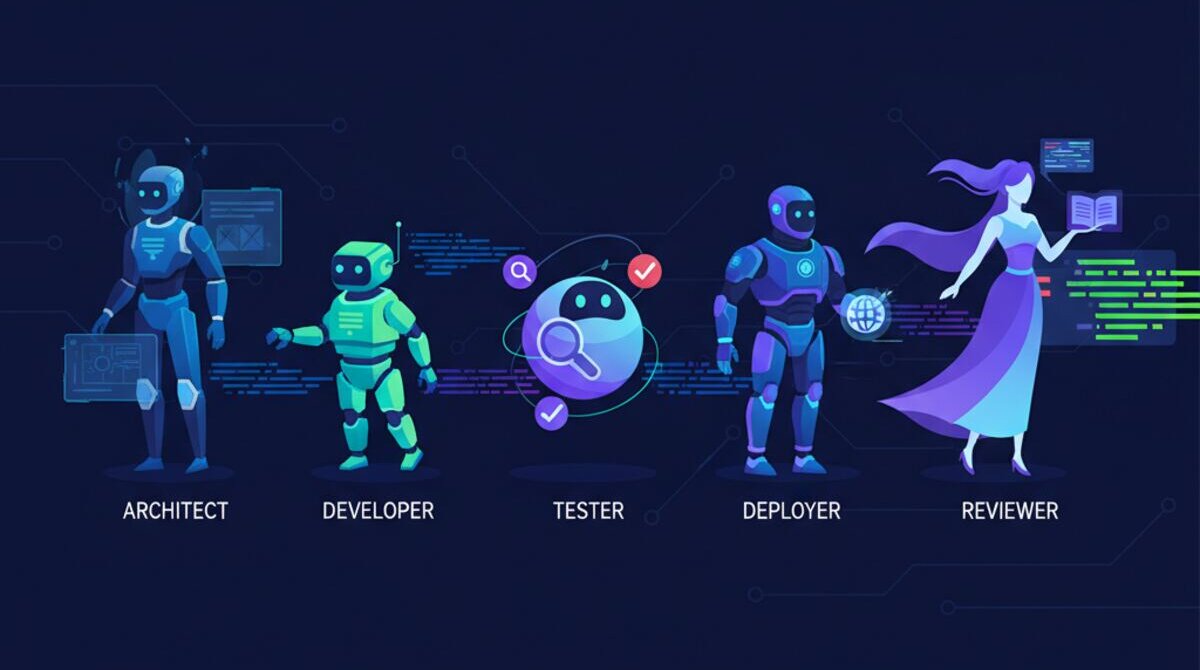
The development side is equally transformative. Agentic development is rewriting the economics of software creation. AI agents can assist with architecture, coding and testing. Delivery time and staffing still depend on scope, integration needs and the quality checks required. Multi-agent systems take this further by orchestrating specialized agents — one for code generation, another for quality assurance, a third for deployment — into coordinated teams that operate around the clock. In Anthropic's 2025 internal research evaluation, its multi-agent system outperformed single-agent Claude Opus 4 by 90.2%.
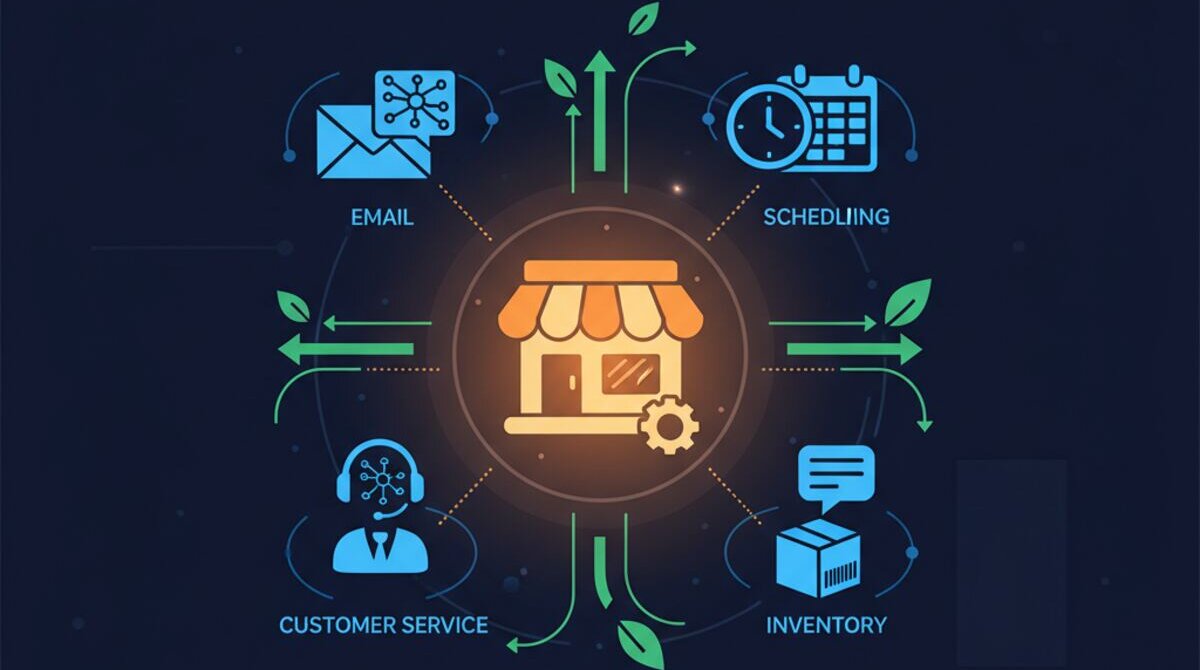
But the impact is not limited to tech companies with engineering teams. Small businesses are adopting AI agents to handle customer service, bookkeeping, content creation, and operational management. A local services company can now deploy the same caliber of digital workforce that was previously exclusive to enterprises with seven-figure technology budgets. These guides explore the full spectrum — from the technical foundations of building agents to the practical realities of deploying them in businesses of every size. Whether you are evaluating security considerations or looking to automate specific workflows, this is where the conversation starts. In Microsoft's 2025 Work Trend Index, 46% of leaders reported using agents to fully automate workstreams or business processes.
What do these AI agent guides cover?


What other AI topics can you explore?
Frequently asked questions
How can you stay ahead of the AI curve?
Get weekly insights on AI automation, strategy, and business transformation. Plus early access to upcoming workshops.
Join 500+ business leaders. No spam, unsubscribe anytime.
Or explore our upcoming workshops →