
From Solo AI to Specialized Teams
A year ago, the conversation around AI was dominated by single-purpose assistants. ChatGPT for writing. Copilot for coding. Claude for research. But that's old news. The real revolution happening right now is the shift from one AI doing everything to teams of specialized AI agents working in perfect coordination.
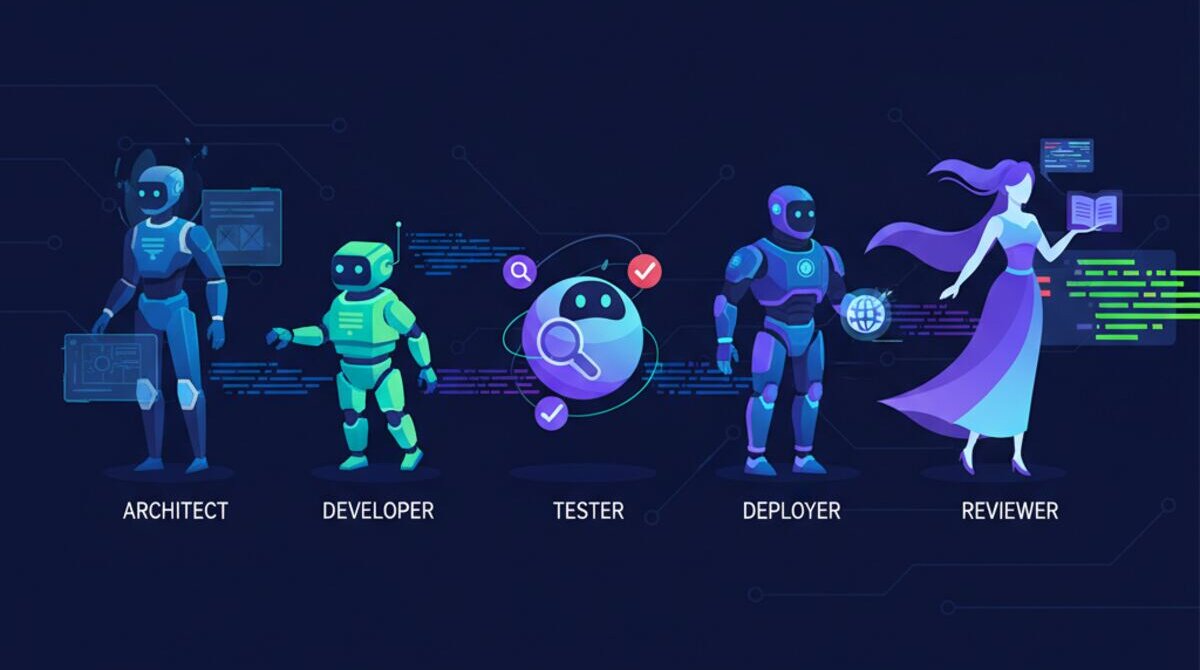
For entrepreneurs running lean teams, this changes everything. Imagine having a Chief Product Manager, a senior developer, a security auditor, a QA engineer, an SEO specialist, and an accessibility expert—all working 24/7, coordinating via Slack, and requiring only token costs instead of six salaries.
In Ai1, the Agentic Development Coach does this work for your team.
How Multi-Agent Development Works
The workflow is elegantly simple but transforms how fast you can ship products.
It starts with a Product Requirements Document—your vision laid out in plain language. A lead agent reads it, breaks it down into technical requirements, and parses that into discrete, parallel tasks. Then the magic happens: specialized sub-agents take ownership.
A security agent runs threat modeling and vulnerability scans. A code agent writes production-grade code with architecture-aware patterns. A QA agent designs test cases and runs automated testing. An SEO agent optimizes metadata, readability, and performance. An accessibility agent ensures WCAG compliance.
All of this happens in parallel. While the code agent is writing, the security agent is reviewing. While QA is testing, the SEO agent is optimizing. They coordinate via a Slack channel—asking questions, flagging issues, requesting approvals. No meetings. No email threads. Just asynchronous, autonomous collaboration.
The Coordination Layer: How Agents Talk to Each Other
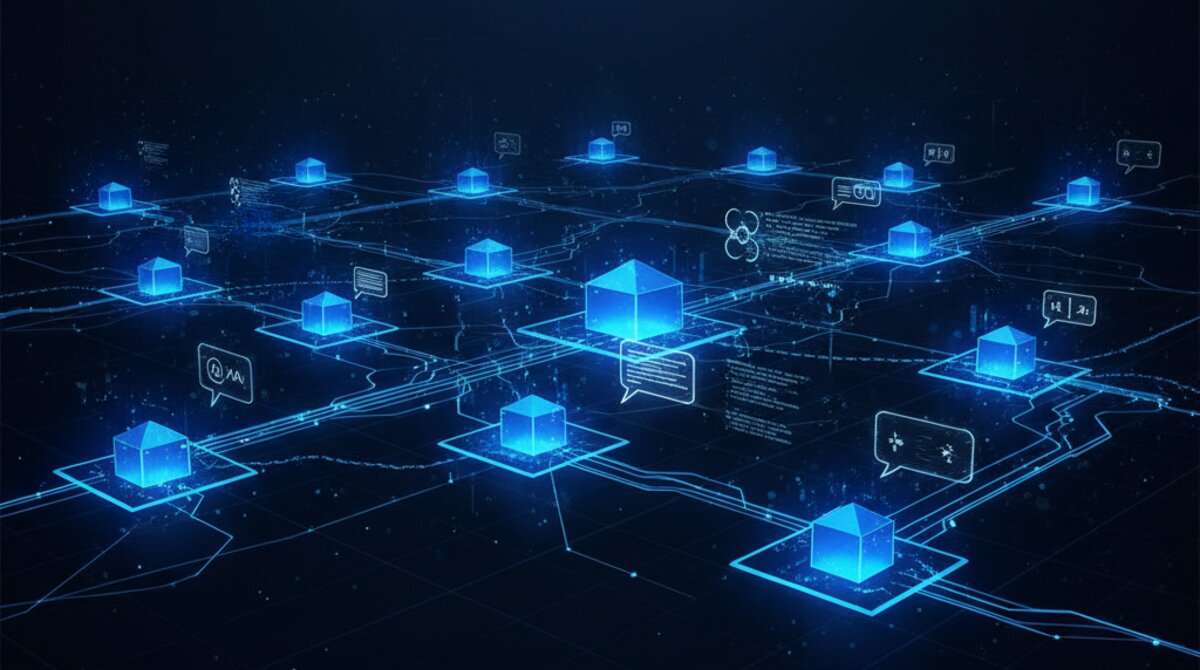
The secret sauce is not any individual agent's capability — it is the coordination layer that ties them together. In our setup, every agent has a dedicated Slack channel where it posts updates, asks questions, and flags blockers. A lead agent acts as the project manager, routing tasks to the right specialist and resolving conflicts when two agents produce contradictory outputs.
This coordination pattern mirrors how the best human engineering teams work, but at machine speed. When the code agent finishes a component, it posts the file paths to the channel. The security agent picks it up within seconds and runs a vulnerability scan. If it finds an issue, it posts the finding and the code agent immediately produces a fix. This review-and-fix loop that takes days with human teams happens in minutes with agents.
The handoff protocol is critical. Every agent session ends with a structured handoff document — what was built, what was tested, what passed, what needs attention. This means you never lose context between sessions. The next agent that picks up the work has complete visibility into everything that happened before, which eliminates the rework and confusion that plagues traditional development teams.
The "Agents Chatting All Night" Phenomenon
One of the strangest and most delightful aspects of multi-agent development is what happens when you go to bed. You specify the work. You hit start. And then you sleep.
You wake up to a Slack channel that looks like a 4-person engineering team had a productive all-nighter. Threads of discussion. Code reviews. Test results. Revisions. By the time you open your laptop over coffee, the product is built, tested, documented, and ready for review.
No back-and-forth with developers. No waiting for someone to "get around to it." No timezone delays. The agents work around the clock, and the history is all there—transparent, auditable, asynchronous.
The Token Economics: The New Cost of Labor
Here's where it gets interesting for entrepreneurs operating on margin-thin budgets: the cost of running agents is collapsing.
Yes, running a team of agents for heavy development work costs money. Thousands of dollars in monthly token fees for continuous, multi-agent deployment is real. But the math becomes profound when you compare it to human teams. Token costs are dropping approximately 10x per year. Inference pricing has fallen 92% in just three years—from $30 per million tokens to $0.10–$2.50.
"The math is simple. A senior developer costs you $150K a year. A team of AI agents doing comparable work costs you $3K a month in tokens—and that number is dropping fast. Entrepreneurs who understand this are going to eat their competitors' lunch."— Mike Schwarz, Founder & CEO, MyZone AI
What costs $10,000 per month today will cost $1,000 per month by year-end. The long-term trajectory is unmistakable: custom software, competitive intelligence reports, marketing campaigns, entire product lines—all built by AI teams at a fraction of traditional development costs.
From Vision to Shipped in Hours, Not Weeks
The velocity gain is otherworldly. Traditional software development with humans? A mid-sized project takes two to four weeks: requirements discovery, architecture design, sprint planning, coding, testing, deployment. Debugging and revision cycles add more time.
With multi-agent development, the same project can be scoped, built, tested, and deployed in hours. You write the PRD. Agents take it from there. By the time you've reviewed the work and made feedback, the next iteration is already in motion.
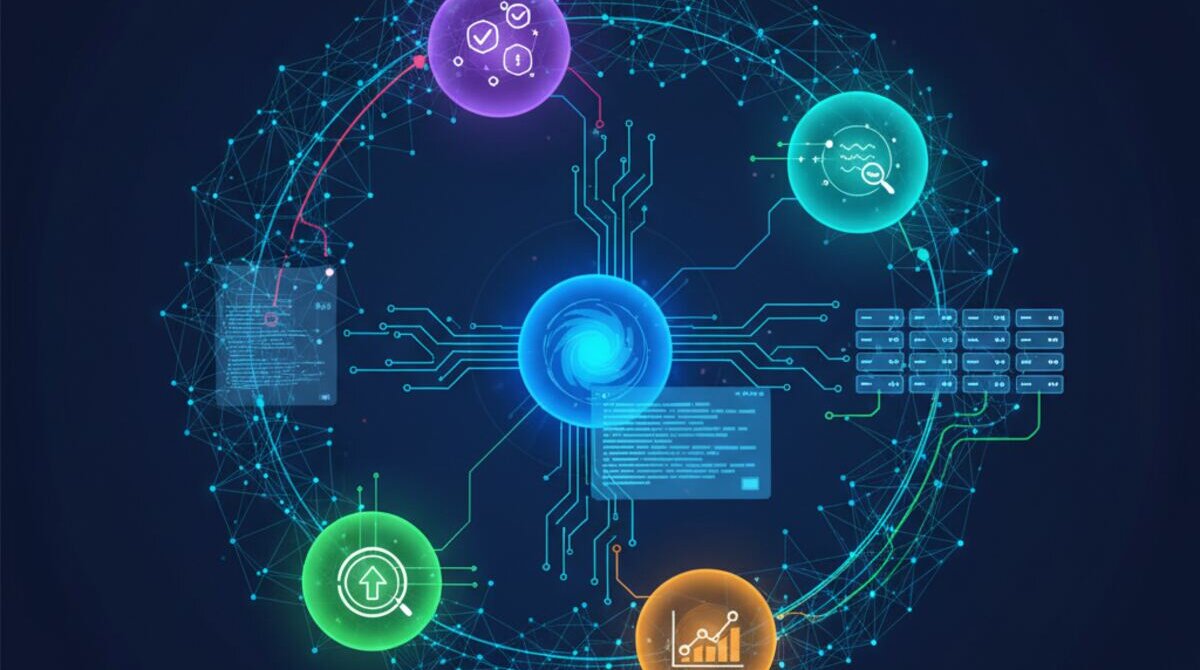
"We had a team of AI agents build, test, and deploy a complete website while I slept. I woke up, reviewed it over coffee, made a few tweaks, and published it before lunch. That used to be a two-week sprint with a dev team."— Mike Schwarz, Founder & CEO, MyZone AI
For entrepreneurs, this means you can iterate on products in real-time. Get market feedback today, build an improvement tomorrow, ship it the next day. Your competitors are still in sprint planning when you've already shipped v2.
The Industry Is Waking Up
Multi-agent systems are no longer theoretical. Gartner reported that inquiries about multi-agent systems surged 1,445% from Q1 2024 to Q2 2025. Enterprise software companies, startups, and forward-thinking SMBs are all racing to understand the architectural patterns, cost models, and deployment strategies.
The shift is happening because the economics are undeniable. The barrier to entry for custom software has collapsed. Small teams with clear product vision and the ability to articulate requirements now have the same technical firepower as teams with 50+ engineers—at a fraction of the cost.
What This Means for Small Business Owners
If you are running a company with 10 to 100 employees, multi-agent development changes your competitive equation in three fundamental ways.
First, you can build custom tools instead of buying them. That $2,000-per-month SaaS platform that only covers 60 percent of your needs? A multi-agent team can build a custom alternative tailored to your exact workflow in days, not months. The total cost of building and maintaining it will often be less than one year of SaaS subscription fees. You stop compromising on off-the-shelf solutions and start operating with tools built specifically for how your business works.
Second, you can iterate at market speed. Customer feedback on Monday becomes a shipped improvement by Wednesday. Competitive threats get responded to in days, not quarters. Your product roadmap becomes a living document that evolves in real time, not a quarterly planning exercise that is outdated before the quarter ends.
Third, you can experiment without risk. When building a prototype costs $500 in token fees and a few hours of your time, you can test ideas that would never survive a traditional cost-benefit analysis. Launch three variations of a product feature. See what works. Kill the losers. Scale the winner. This experimental velocity is how startups beat incumbents — and now it is accessible to any business with a clear vision and a microphone.
Getting Started: The First Multi-Agent Project
If you have never worked with AI agents before, your first multi-agent project should be small, specific, and self-contained. Do not try to rebuild your entire tech stack on day one. Pick a single deliverable — a landing page, an internal tool, a data analysis workflow — and use it as a learning exercise.
Start with two agents: a builder and a reviewer. The builder creates the work. The reviewer checks it. This simple pattern teaches you the fundamentals of agent coordination without the complexity of a full multi-agent deployment. Once you are comfortable with two, add a third for testing. Then a fourth for documentation. Scale the team as your confidence grows.
The learning curve is real, but it is shorter than you think. Most business owners who commit to daily practice report feeling competent within two to three weeks and genuinely productive within six. The key is consistency — work with agents every day, even if only for an hour, until the patterns become second nature.

If you're an entrepreneur and you're not thinking about how multi-agent AI can accelerate your product roadmap, you're already falling behind. The companies shipping with AI agent teams aren't just moving faster. They're operating in a different economic reality.
Ready to Build With AI Teams?
Learn how MyZone AI's Ai1 Platform can help you assemble and coordinate your own multi-agent team.
Get Started