Agentic Development
Best Practices, Part 2.

This is the 200 level. Part 1 was about directing one agent. Part 2 is about running a whole fleet of them at once. The full recording, the workshop arc, real stories from the call, the questions the room asked, and a plain-English glossary for every term Mike used. About 94 minutes, covered in full below.

54
agent sessions Mike ran at once, a new personal record
91
specialized agents in his crew today, heading for 600
100×
the output jump he credits to orchestration
~5
where most people tap out without it

WHO THIS RECAP IS FOR, founders and operators who've moved past one or two agents and want to build and run a whole team of them. Leaders who need to see what's actually possible so they can bring their own teams along, and anyone curious what running 50-plus agents at once really looks like. New to this? Start with Part 1, then come back.

94 minutes, in 12 beats.

Timestamps are from the recording above.

Beat 0104:50 to 09:08

Why This Is the 200 Level

Mike opens with a late-night call from a peer running 600 specialized agents. Mike runs 91 today and wants 600. His point for the room: the trailblazers are only two to four weeks ahead, the curve is steep, and if you're still on one or two agents you need to start thinking about building a whole team.

Beat 0209:08 to 13:25

What Orchestration Actually Is

Jeannette asks the question the room kept asking: what is multi-agent orchestration, really? Mike walks the maturity ladder. Instead of you talking to one agent, an orchestrator on a cheaper model listens, breaks work into tasks, and hands them to specialists. Most people burn out at about five sessions. Mike hit 54 at once.

Beat 0313:25 to 16:10

Everything Breaks

The honest part. Scaling a fleet means constant breakage, three steps forward and two back, and problems you thought were solved coming right back. Mike's habit: when a session gets painful, stop and run a reflection so the system, or your own process, gets a little better each time.

Beat 0416:10 to 20:25

Where to Actually Start

Mike shares a change of heart. He used to tell people to learn on single agents first. He no longer believes that's the fastest path and apologizes for it. Get onto a real orchestration platform sooner. He points to the open-source and paid options, and to his 12-year-old who skipped straight to running a team.

Beat 0520:25 to 30:20

Discovery, Not Just Requirements

Don't dump an idea on an agent and let it build. Mike renamed his requirements agent the discovery agent and made it three steps: give a two-minute overview, send research agents to gather real-world context, then let it interview you. Live, he turns an attendee's voice-notes app idea into a tight brief.

Beat 0630:20 to 34:11

When to Spend on the Big Models

The strongest models cost more and run longer, so Mike is deliberate about where they go. He preps them with rich, condensed context first, then uses a top model at the architecture step, pairs it with a plainer agent that turns the architecture into an executable plan, and only adds it to more steps when the job is big enough to justify it.

Beat 0734:11 to 39:41

Giving Every Agent a Brain

Self-improving software needs memory. Mike moved off one giant instructions file to a small wiki of linked notes an agent skims for only what it needs, a pattern he credits to Andrej Karpathy. A shared company brain holds the institutional knowledge. Each of his 91 agents keeps its own brain, which is what unlocked real learning.

Beat 0840:00 to 1:01:08

Learning Loops and Auto-Research

This is the part that got the room leaning in. Agents read their own activity logs, spot friction, and post their own improvement ideas straight to Mike's task board for a thumbs up. Put that on a schedule and you have a learning loop. Tie it to a score an evaluator can measure, and it can improve itself while you sleep.

Beat 091:02:35 to 1:08:25

Owning Your Own Software

Mike's bigger bet: the era of renting software is ending. When you build only the 5 percent of a tool you actually use, it's a fraction of the complexity and a strong model can build it in one pass. He points to the slide of falling software-company stocks and argues the value is moving to community, data, and trust.

Beat 101:08:25 to 1:16:09

Bringing the Team Along

Every agent Mike builds gets its own Slack channel, locked down to one job for safety. The team just talks to it, gets frustrated, and reflects, and the agent quietly turns that into ideas on the board. Next up: routing those ideas to the right teammate automatically, so Mike stops being the bottleneck.

Beat 111:16:09 to 1:23:14

The Human Cost

The most personal stretch of the call. Mike is candid about four and a half hours of sleep, the emotional rollercoaster, and the very real pull of the work. He's getting a coach, setting boundaries, and planning a break. Jeannette pushes on it: design systems so you're not the bottleneck, and lean on your team and your community.

Beat 121:23:56 to 1:31:05

Hardening, and the Close

Mike's picture for the last stretch: a fleet is a living organism, green and growing where agents are still figuring things out, hardened into cheap, reliable classic software where they aren't. About 90 percent of what looks like an AI job, he says, is really just software waiting to be hardened. He closes on a blunt choice for leaders.

Three moments that stuck with the people who attended.

Real examples from the call, told the way they came up.

L
LeonWorkshop attendee
His voice-notes app became the live demo

Leon wanted something simple: one button on his Android phone to record a brain dump, transcribe it, and drop it into Asana as a task. Mike used it on the spot to show the difference between a plain requirements interview and his new discovery step, where research agents go find how similar tools were built before the agent ever interviews you.

A two-minute idea plus real research beats a long interview every time.
Mike Schwarz
Mike SchwarzFounder · MyZone AI
He one-shot a knockoff of a paid tool he uses

Instead of describing his idea for a voice-to-text app, Mike sent research agents to crawl the paid tools and open-source projects that already do it. They came back with a tight brief and far sharper questions, and he built a working version of it in a single pass rather than the long back-and-forth it used to take.

A tool you already pay for is a legitimate, fast source of what to build next.
B
BrennanSales team · MyZone AI
His frustration became a feature, without a ticket

Brennan kept having to tell his sales agent to swap in his own photo on every proposal. He never filed a bug or an idea. The agent noticed the repeated friction in its own activity log, proposed dynamic decks that recognize who's asking, and posted it to Mike's board. Mike gave it a thumbs up and it got built.

The best feature requests never get filed. Agents mine them from how the team actually works.

The lines that landed.

Spoken quotes from the session, lightly trimmed for reading.

The initial jump is 10x, but it can progress to 100x, and going and going from there.

Mike Schwarz · on orchestration

Everything breaks. It's just constant breakage, and that's the hardest part.

Mike Schwarz · on scaling a fleet

Eight steps forward and three steps back, and that's considered success.

Mike Schwarz

It's 1995. You're running a bookstore, and I'm saying you've got to get on this e-commerce thing, and there's no Shopify yet.

Mike Schwarz · on where to start

The cost of software development is rapidly approaching the cost of electricity.

Mike Schwarz

You're planting a seed and watering it with your brain and with tokens and servers, and it evolves on its own from there.

Mike Schwarz · on learning loops

About 90 percent of what you think you need AI for can be done with classic software.

Mike Schwarz · on hardening

The gap between the companies that nail it and the companies that don't is going to be insurmountable in six to twelve months.

Mike Schwarz · the close

The questions the room asked, and what Mike said.

Pulled from the live chat and the recording, answered with what was actually said on the call.

The terms that kept coming up.

A blunt choice, and an open door.

Mike ended on the part he most wanted leaders to hear.

His warning to the room: the gap between the companies that nail this and the ones that don't could become impossible to close within six to twelve months. He framed it as a binary choice for leaders, either turn your company into the agentic version of itself, or take your cash and move on. There isn't much middle ground, and there's a world of abundance on the other side.

He was just as direct about staying human through it: get a coach, set boundaries, lean on your community, and protect the people around you. If you're in a protected industry, use the time. If you're in professional services, run hard.

And he left the door wide open, offering to share almost everything he's doing with anyone who asks, because in his view the value was never the software itself. His sign-off: "Have a great rest of your day. Take care."

Who was driving the session.

Two hosts, back and forth, with Thomas (Tamas Perlaky) weighing in from the room on learning loops and change management.

Mike Schwarz
Mike Schwarz
Founder · MyZone AI

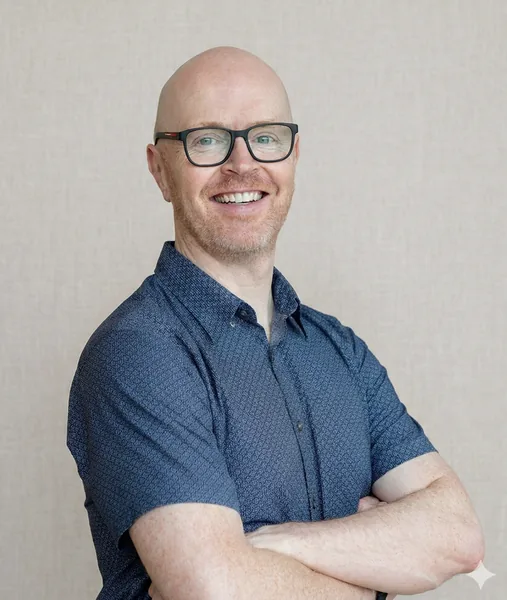
Built the MyZone Ai1 agent platform and runs the AI Plus Entrepreneurs workshop series. He now directs a crew of 91 specialized agents, is aiming for 600, and by his own account hasn't written a line of code in months.

MyZone.ai ↗
J
Jeannette
Co-host · Facilitator

Played the role Mike leans on with his own agents, turning a deeply technical topic into plain English. She guided the whole session with the questions the room was actually thinking, kept Mike on track, and ran the live Q&A.