

Bookkeeper
Agent. Categorizes every line and runs the reconciliation.
The books reconciliation is a skill in Ai1, the AI agent platform by MyZone AI. The Bookkeeper runs it on the bank, card and ledger exports you upload: it matches each statement line to a ledger entry by amount, date and reference until the difference is exactly zero. Anything that will not match becomes an exception for a person to resolve.
A true zero
Each account ties out once timing items are counted, or the gap is listed. It never forces a match.
Missing entries found
Charges on the statement that are not in the books become drafted entries for approval.
Changes explained
Account balances are compared with last period or budget, with the reason for each big move.
At a glance
| Reads | Bank and card statements and ledger exports you upload as files |
|---|---|
| Matches by | Amount and date, with a boost when the reference agrees |
| Result | A difference of exactly zero, or an exception with its date |
| Also explains | Balance changes against last period or budget, with a confidence |
| Run by | The Bookkeeper, with the CFO agent reviewing the close pack |
| Never | Posts entries, pays bills or moves money |
A reconciliation that is off by a small amount is often closed with a plug figure, and the real cause, such as a missed charge or a payment coded twice, stays in the books. Tying out to exactly zero, with every timing item named, means the month-end numbers can be trusted and the gaps get fixed while they are still easy to trace.
How this differs from the Bookkeeper as a whole: the agent also categorizes every line and preps the month-end close; this skill is the tie-out at the centre of that work.
How it works
Four steps. Your statements stay private, and nothing is posted for you.
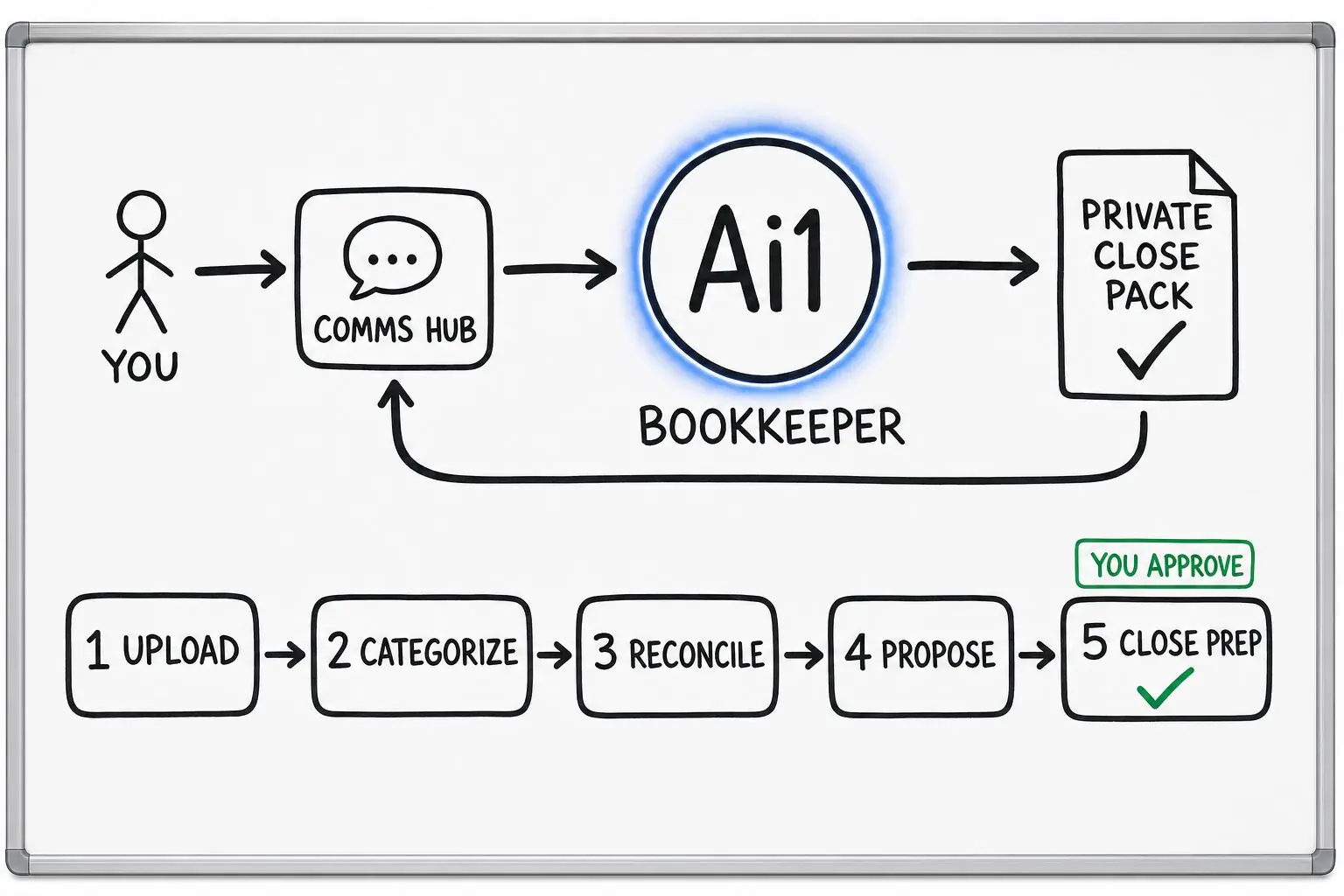
Send the statements and the ledger export as files in chat.
Each statement line is paired with a ledger entry, and transfers between your own accounts are paired up.
Cheques still to clear are shown as timing items. Anything else that will not match becomes an exception.
Missing entries are drafted as proposals. You choose, and a person posts them in your accounting system.
Example reconciliation
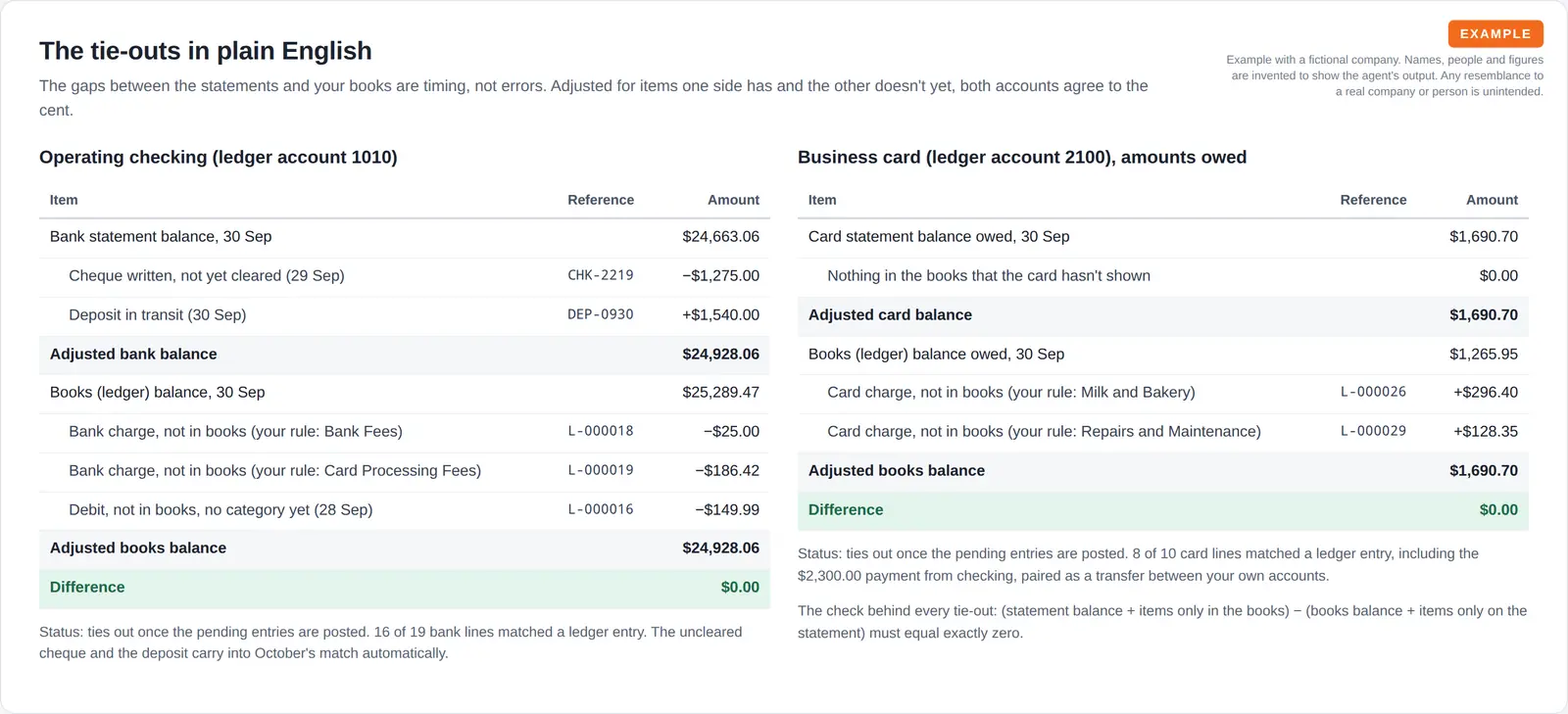
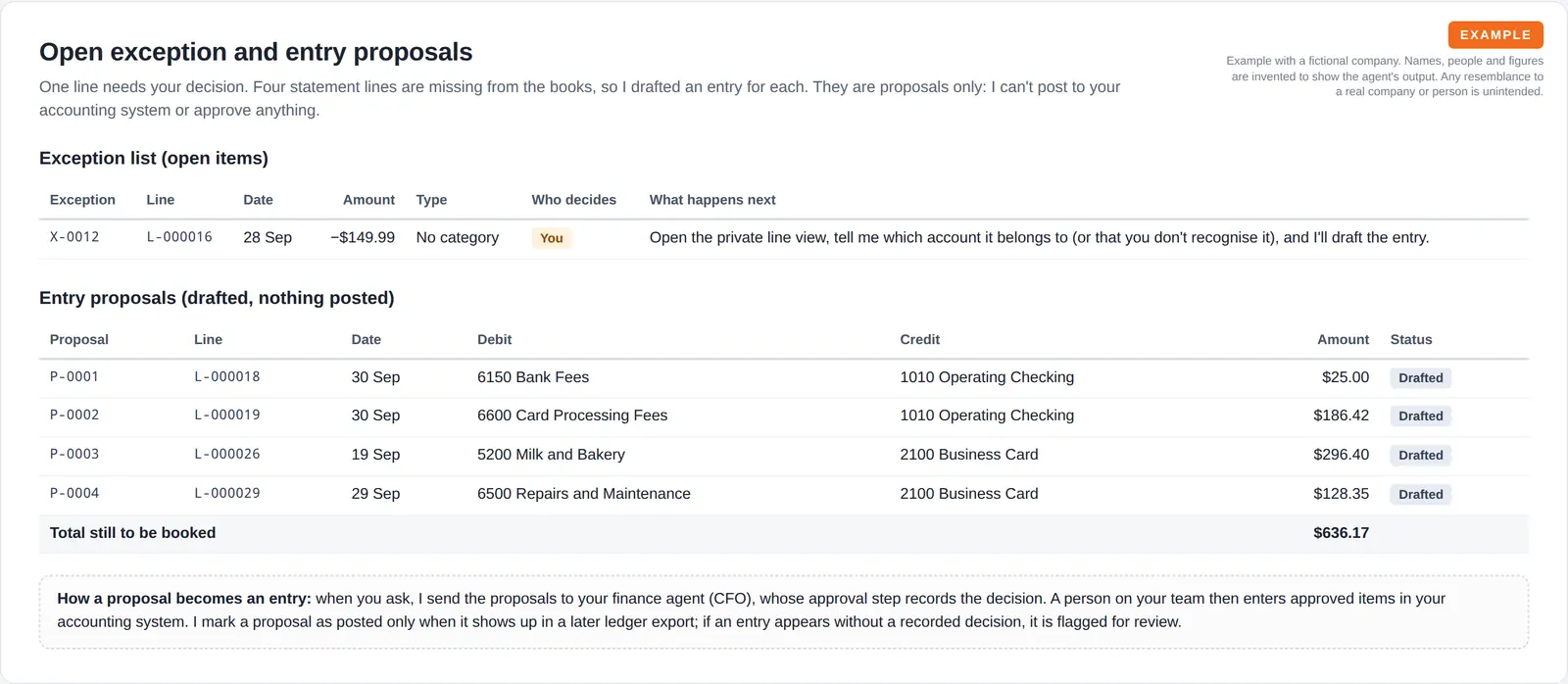
Example with a fictional business. Names and figures are invented to show the kind of output you get.
What it was asked: Here are September's bank and card statements and the ledger export: reconcile both accounts and tell me if we're ready to close September.
| Tie-out | Exactly $0.00 on both the checking account and the business card. The only gaps left are timing items, such as a $1,275.00 cheque still to clear. |
|---|---|
| Missing from the books | Four charges, $636.17 were on the statements but not in the ledger, so four entries were drafted as proposals. Nothing was posted. |
| Exception | One $149.99 debit has no category, so September stays open until the owner chooses one. |
Built-in guardrails
How the books reconciliation keeps your books under your control.
Better together
The agents that run this reconciliation, and the skills and recipes it works with.
Agent. Categorizes every line and runs the reconciliation.

Agent. Reviews the close pack and keeps your cash forecast current.
Skill. Projects cash forward from the reconciled actuals.
Recipe. Takes the reconciled accounts on to a close pack.
Common questions
That the account and your ledger agree once timing items, such as a cheque still to clear, are counted, with no gap left over. If a gap remains, it becomes an exception to resolve, never a plug figure.
Your bank and card statements and a ledger export, uploaded as files in chat. It reads files only, so it never needs access to move money.
No. Missing entries and miscodes are drafted as proposals and tracked until they appear as posted in a later export. A person posts them in your accounting system.
Bring a month of statements and a ledger export and we will show you the tie-out.