

CFO Agent
Agent. Drafts the pack and runs the close and forecast behind it.
The board report is a skill in Ai1, the AI agent platform by MyZone AI. The CFO Agent runs it when the board or your investors want a pack: it pulls the figures together, writes plain-English commentary on what moved and why, and links every figure to the document or ledger entry it came from. You check the pack before anything is shared.
Commentary your board can follow
The numbers come with plain-English notes, so directors and investors see what changed without decoding a spreadsheet.
Figures you can defend
Each figure links to its source document or ledger entry, so a question in the meeting has an answer.
Checking, not assembling
The pack arrives drafted, so you review finished work instead of building it the night before.
At a glance
| Prepares | Board and investor packs for the period |
|---|---|
| Adds | Plain-English commentary on the numbers |
| Shows | The source document or ledger entry behind each figure, with a confidence level |
| Run by | The CFO Agent |
| Before it goes out | You review it; nothing reaches anyone outside the business without your approval |
| Never | Signs financial statements or gives audit sign-off |
A board pack usually means a late night copying figures from the accounts into slides and then writing the story around them. The figures are already in your books. What takes the time is pulling them together and explaining them clearly. The board report does that first draft, so you spend your time on the judgement calls and the questions you expect in the room.
How this differs from the CFO Agent as a whole: the agent also runs your supplier bills, the month-end close and the cash forecast; this skill is the pack it drafts for your board and investors.
How it works
Four steps. The pack stays with you until you approve it.
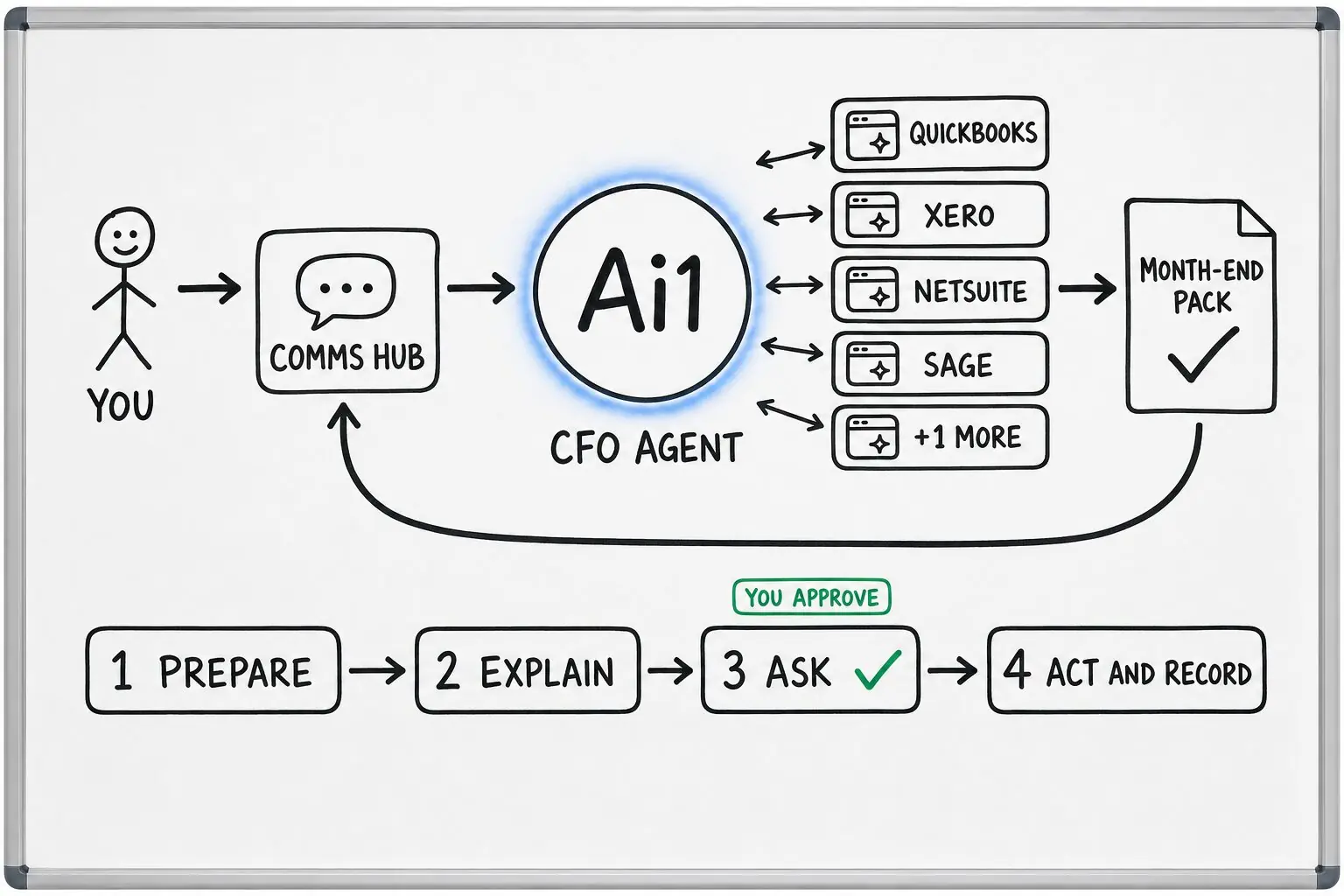
Say who the pack is for and which period it covers.
Each figure is taken from your finance data and linked to the document or ledger entry behind it.
Notes explain what moved and why, each with a confidence level. Where it is unsure, it asks you.
The pack waits for your review. It goes to the board or investors only when you say so.
Example board pack
Example with a fictional company. Names and figures are invented to show the kind of output you get.
What it was asked: Put together the quarter's board pack for Thursday's meeting, with commentary our two investors can follow.
| Sales | Up 14% on last quarter. Commentary: two new builder accounts brought in most of the growth; showroom sales were flat. |
|---|---|
| Gross margin | Down from 41% to 37%. Commentary: worktop prices rose in July and quotes signed earlier were honoured at the old price. |
| Open question | Flagged, low confidence. One supplier credit of $6,200 had no matching document, so the pack asks the owner before the figure is used. |
Built-in guardrails
How the board report keeps the pack in your hands.
Better together
The agent that drafts this pack, and the agents and skills it works with.
Agent. Drafts the pack and runs the close and forecast behind it.

Agent. Turns the month's finance numbers into a polished report your team can open from a link.
Skill. A rolling forecast with what-if scenarios, so you can see your runway.
Common questions
You do. The pack is a draft for your review, and nothing goes to anyone outside the business until you approve it.
Every figure is linked to a source document or ledger entry, and each answer comes with a confidence level. If it is not sure, it asks you rather than guessing.
No. It does the preparation. Your accountant, controller or auditor still reviews the work, signs off and files.
Bring last quarter's figures and we will show you the pack and its commentary, ready for your review.