
Something fundamental shifted in the AI landscape in early 2026. Not incrementally. Not a marginal improvement in benchmarks or a slightly better chatbot response. The shift was structural: AI agents went from clever assistants that lost their train of thought after a few minutes to autonomous systems that could work independently for hours, retain context across hundreds of pages, and coordinate with other agents through natural communication channels.
For Mike Schwarz, founder of MyZone AI, this wasn't an abstract observation. It was the culmination of a career in digital transformation that began in 2000, and the catalyst for building what would become the Ai1 Platform: a fully managed AI agent ecosystem designed specifically for CEOs and founders of growing businesses.
This is the story of how it happened, why it matters, and what it means for the future of how businesses operate.
Twenty-six years of watching technology transform business
Mike Schwarz has been working in digital transformation since 2000. He watched businesses navigate the transition from physical operations to digital workflows, from on-premise software to cloud platforms, from manual marketing to automated campaigns. He built businesses around helping companies make these transitions, and learned, sometimes the hard way, what works and what doesn't when technology meets organizational reality.
Then the landscape changed under his feet. His business got wiped out. Instead of retreating, he reinvented, launching MyZone AI with a singular focus on the most powerful technology wave he'd seen in nearly three decades: artificial intelligence applied to business operations.
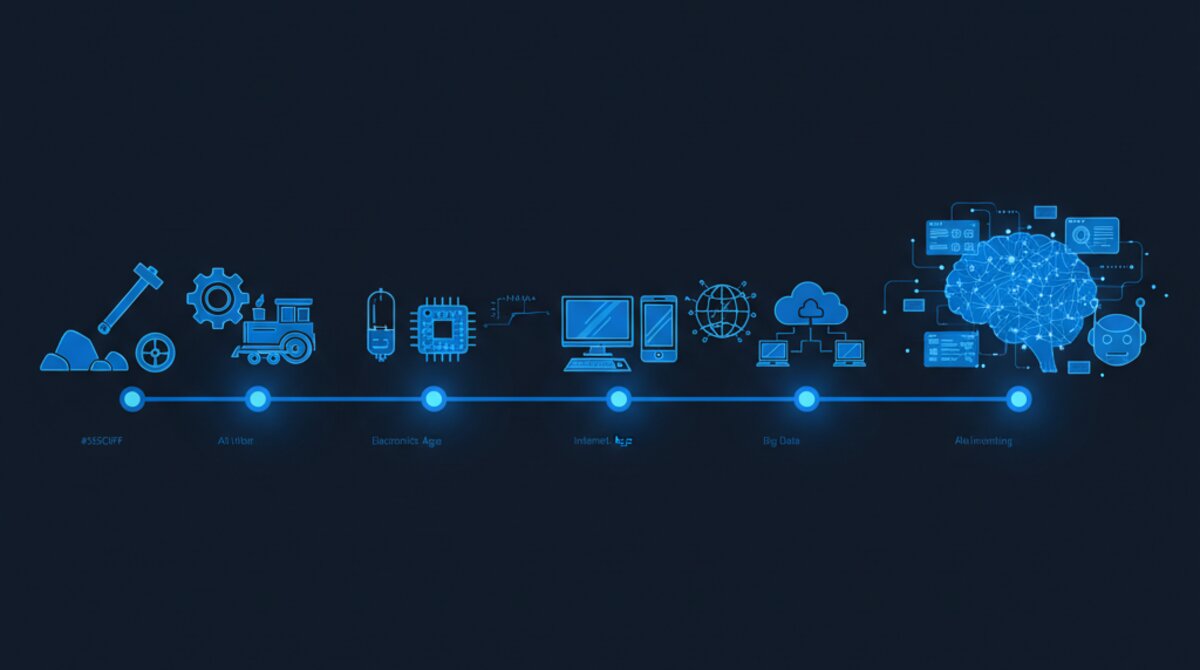
What followed was an accelerated evolution through every major phase of the AI-for-business revolution, each phase building directly on the lessons of the one before it.
The five phases: from teaching ChatGPT to building autonomous agent teams
PHASE 1
Training & Coaching
The first phase was foundational: teaching entrepreneurs and teams how to use tools like ChatGPT properly. Not just basic prompting, but connecting AI to their actual business data, building custom GPTs tailored to their workflows, and creating internal chatbots that understood their industry context. The insight from this phase was clear, most businesses didn't need more AI tools. They needed someone to show them how to use the ones that already existed.
PHASE 2
Advanced Tools Training
As clients grew more sophisticated, so did the training. This phase focused on advanced prompting techniques, retrieval-augmented generation (RAG), structured output formatting, and integrating AI into existing tech stacks. The demand was moving from "How do I use AI?" to "How do I make AI work inside my business systems?"
PHASE 3
No-Code Automations (Make.com & N8n)
The natural next step was building actual automations. Using visual platforms like Make.com and N8n, the team built workflows that connected CRMs, email systems, Slack, Google Workspace, and dozens of other tools into automated pipelines. This was powerful, but it hit a ceiling. Visual automation platforms are great for linear workflows. They struggle with the complex, branching, context-dependent decision-making that real business operations demand.
PHASE 4
Cloud Connects & Custom Integrations
To break through the no-code ceiling, the team moved into deeper custom integrations, connecting systems at the API level, building bridges between platforms that don't natively talk to each other, and creating data pipelines that could handle the volume and complexity of real enterprise operations.
PHASE 5: THE BREAKTHROUGH
Claude Code & Multi-Agent Development
And then everything changed. The team started working with Claude Code, Anthropic's command-line agentic coding tool, and discovered that AI could now write production-quality software with human-level competence. Not templates. Not boilerplate. Real, working systems. This phase didn't just improve their workflow; it fundamentally redefined what was possible. It led directly to the multi-agent development framework that now powers everything MyZone AI builds.
The Opus 4.6 moment: when everything changed
On February 5, 2026, Anthropic released Claude Opus 4.6. For most people, it was another model update. For anyone building with AI agents, it was a before-and-after moment.
The headline number was the context window: it went from 246,000 tokens to 1 million. To put that in perspective, 246,000 tokens is roughly 80 pages of text, about the length of a short novel. One million tokens is over 300 pages. That means an AI agent can now hold the equivalent of an entire business operations manual, a full codebase, weeks of conversation history, and detailed project specifications all in its working memory at the same time.
But the context window was only part of the story. Opus 4.6 introduced compaction, the ability for agents to automatically summarize their own context so they can work on tasks of theoretically infinite length without losing track. It added progress reports, to-do list tracking, and structured compilation of work output. These agents were no longer losing their way after a few minutes. They could work independently and with autonomy for hours, retaining memory through persistent markdown files that survived session restarts.
THE SHIFT IN NUMBERS
4x
context window increase
(246K to 1M tokens)
300+
pages of working memory
per agent session
∞
effective task length
with compaction
For the MyZone AI team, this wasn't a theoretical improvement. It meant their agents could now hold an entire project scope, requirements, architecture, code, tests, and deployment config, in context simultaneously. They could reason across the full picture instead of working with fragments.
The multi-agent development framework
With the new capabilities in hand, the team built something unprecedented: a multi-agent development framework where teams of specialized AI agents coordinate in real-time to build production software.
The architecture mirrors a real software team. There's a technical lead agent that owns architectural decisions and code standards. A project manager agent that tracks progress, manages dependencies, and keeps the team aligned. Multiple developer agents that write code in parallel across different parts of the system. Security agents that review code for vulnerabilities and enforce access controls. Quality assurance agents that test, validate, and flag issues before deployment.
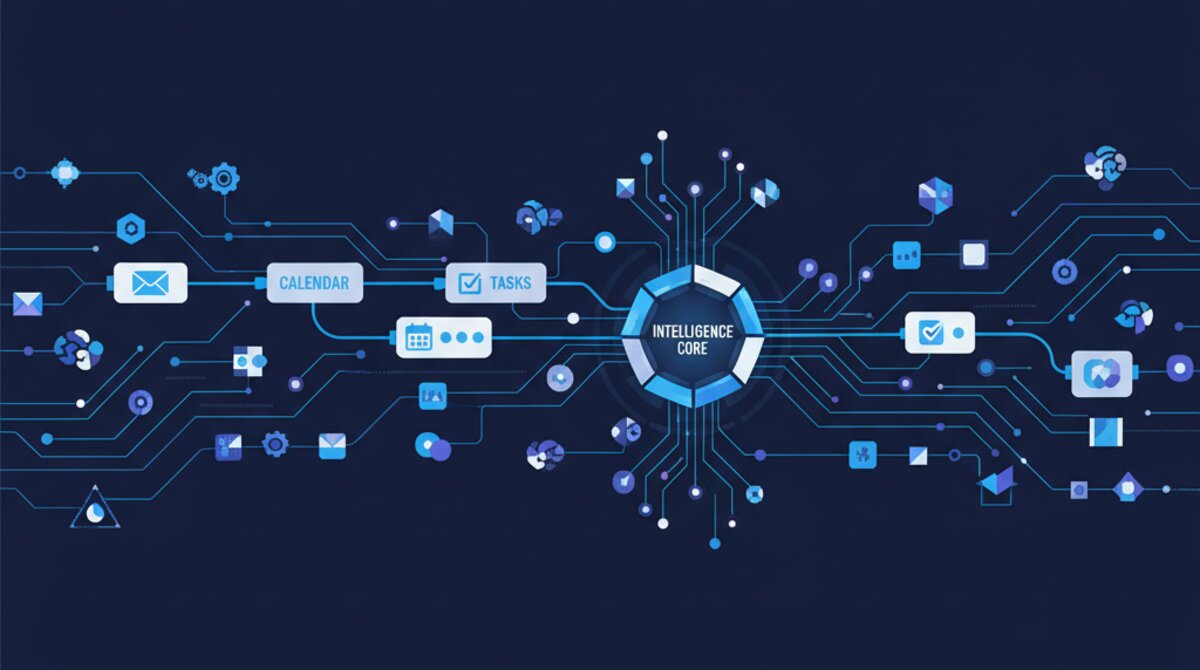
These agents orchestrate and align through Slack, the same communication platform their human counterparts use. They post updates, flag blockers, request reviews, and coordinate handoffs. They work through the night, building according to technical scoping documents and requirement specifications, and deliver working software by morning.
How fast does it actually build?
The website you're reading right now, this entire marketing site with multiple product pages, blog articles, responsive design, interactive components, and SEO optimization, was built in under three hours using this multi-agent framework. Not a template. Not a WordPress theme. Custom-built, from scratch, in a single afternoon. And the Ai1 Platform itself, a comprehensive CEO automation system with 11 integrated modules, security architecture, self-healing infrastructure, and multi-model AI support, was built in approximately three to four weeks. The estimated cost to build this platform with traditional software development teams? Over $250,000.
The Ai1 vision: what an AI-first organization actually looks like
"Ai1" stands for AI-first. It represents a new organizational model where a visionary, system-oriented leader sits at the top and manages a network of AI agents that handle the bulk of operational work. Those agents are connected to fractional, on-demand humans-in-the-loop who provide quality assurance, strategic oversight, and help the system get smarter over time.
This isn't science fiction. It's the operating model that MyZone AI uses internally and now offers to clients through the Ai1 Platform. The concept is straightforward: instead of hiring a full-time executive assistant ($4,500+/month), an operations consultant ($5,000+/month), a marketing coordinator, a research analyst, and a project manager, you deploy a team of AI agents that covers all of these roles, managed by professionals who ensure quality and continuous improvement.
We see this as the future of companies. It's going to disrupt a lot of industries in 2026 and beyond. The data supports this: more than three-quarters of CIOs expect their organizations to have invested in agentic AI by the end of 2026, and 85% of enterprises plan to adopt AI agents in some capacity.
Why not just build it yourself?
Fair question. The AI agent builder market in 2026 is crowded. Lindy AI lets you create agents in minutes without code. Relevance AI offers a visual interface for building AI workforces. Make.com and Zapier have added AI agent capabilities to their automation platforms. CrewAI provides open-source frameworks for multi-agent teams. Sintra AI offers pre-built agents for specific business functions.
So why would a busy CEO choose a managed platform over a DIY tool?
Because building AI agents is only about 20% of the challenge. The other 80% is everything that comes after: security architecture, token optimization, credential management, monitoring, error handling, quality assurance, integration maintenance, prompt engineering at scale, model selection, and the ongoing work of tuning agents to produce reliable output in production, not just impressive demos.
There's a large group of entrepreneurs who just don't have time for this. They want to focus on their business, on strategy, relationships, product development, and growth. They don't want to spend weekends debugging prompt chains or figuring out why their automation broke after an API update. They want to outsource the entire AI operations layer to a team that specializes in it.
That's what the Ai1 Platform offers. MyZone AI becomes your fractional CIO, setting up your agent environment, managing the infrastructure, ensuring security and compliance, and continuously improving the system based on how your business actually operates.
WHO IT'S BUILT FOR
The Ai1 Platform is designed for CEOs and founders of companies with 10 to 200 employees, businesses that are big enough to have real operational complexity but not big enough to justify building an in-house AI team. This includes members of organizations like Entrepreneurs' Organization (EO), Young Presidents' Organization (YPO), and Vistage, as well as companies running structured operating systems like EOS (Traction) or Scaling Up.
If you're a CEO who spends 15+ hours per week on operational tasks instead of strategic work, email triage, meeting preparation, research, follow-ups, reporting, the Ai1 Platform is built specifically for you.
What the Ai1 Platform actually does: the complete feature set
The Ai1 Platform isn't a single tool, it's a modular ecosystem of 11 integrated agent modules, each handling a different aspect of CEO and operational workflow. Here's what's included:
1. Strategy & Planning
Strategic Command Center with SWOT analysis, competitive intelligence, quarterly planning, and strategy execution tracking. Integrates directly with frameworks like EOS and Scaling Up so your AI understands your business operating system.
2. Communications & Channels
AI-managed email triage, draft responses, Slack channel monitoring, and multi-channel message routing. The agent reads your emails, prioritizes by urgency and sender importance, drafts context-aware replies, and handles routine correspondence autonomously.
3. CEO Brain & Knowledge Management
A persistent knowledge base that learns your preferences, writing style, decision patterns, and business context over time. The more you use it, the smarter it gets. Think of it as an institutional memory that compounds in value, the opposite of starting from scratch every time you open a new chat window.
4. Deep Research & Intelligence
Multi-source research agents that conduct market analysis, competitive intelligence, industry monitoring, and deep-dive investigations. Results are delivered as structured briefings with sources, confidence levels, and actionable recommendations, not just raw data dumps.
5. Operations & SOPs
Automated standard operating procedure execution, task delegation, process monitoring, and operational reporting. Define how your business should work; the agents execute it consistently.
6. Digital Marketing & Specialists
AI-driven content creation, SEO optimization, social media management, ad copy generation, and conversion rate optimization. Includes a CRO auditor that analyzes your landing pages and suggests data-driven improvements.
7. Relationship Nurturing & CRM
Automated lead follow-up, relationship tracking, personalized outreach sequences, and CRM synchronization. The agent maintains your professional relationships at scale, remembering context, tracking touchpoints, and suggesting timely reconnections.
8. Calendar & Scheduling
Intelligent meeting preparation, scheduling optimization, agenda creation, and post-meeting action item extraction. The agent prepares briefing docs before your meetings and captures decisions and next steps afterward.
9. AI Readiness & Education
Ongoing AI literacy development for you and your team. Regular updates on relevant AI advancements, practical implementation guides, and custom training materials based on your industry and tech stack.
10. Security & Token Management
Enterprise-grade security architecture including credential separation, encrypted secret storage, automated token rotation, config drift detection, self-healing infrastructure, and real-time monitoring with alerting. Every agent runs with least-privilege access and comprehensive audit logging.
11. Reporting & Dashboards
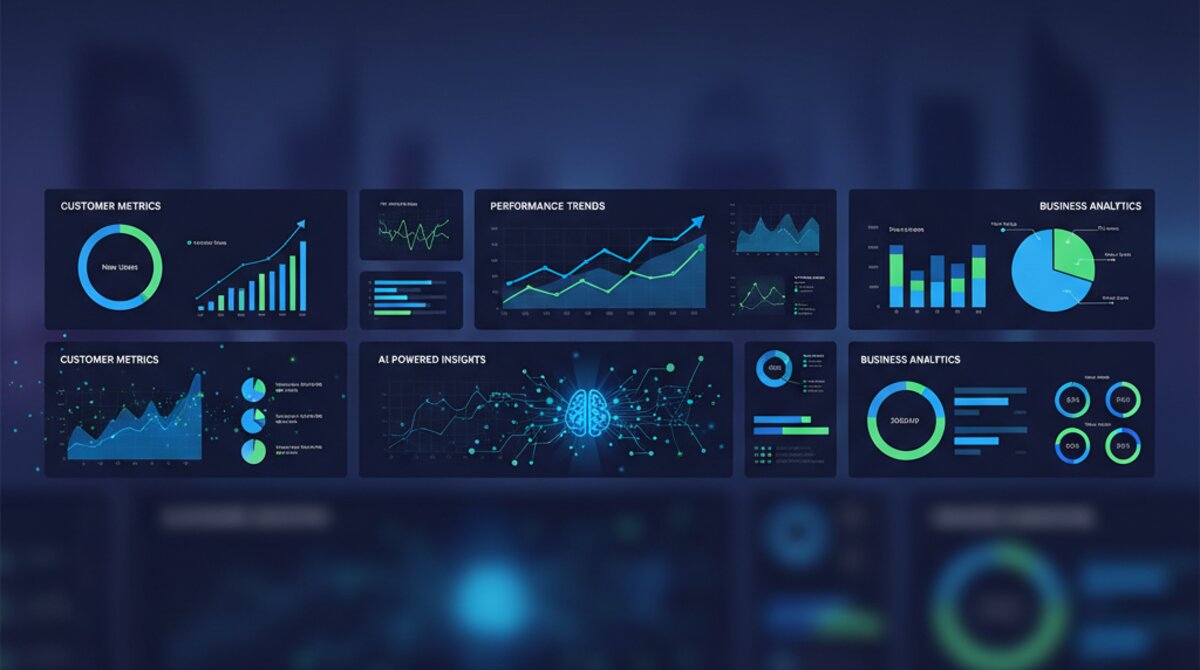
Automated daily and weekly reports covering agent performance, task completion, token usage, system health, and business metrics. You get a clear view of what your AI operations team accomplished, without having to ask.
Under the hood: architecture that scales
The Ai1 Platform is built on a headless-first architecture designed for flexibility and client isolation. Each client deployment runs in its own isolated environment, there's no shared infrastructure between clients, which eliminates cross-contamination risk and allows full customization per deployment.
The platform uses a modular plugin architecture, meaning features can be added, removed, or upgraded independently. It supports multiple AI models simultaneously, Claude, Gemini, GPT, and Perplexity, with intelligent routing that selects the best model for each task type. Token optimization runs automatically, ensuring you get maximum performance per dollar spent on AI compute.
Self-healing infrastructure monitors every component continuously. If a process crashes, a watchdog system detects and restarts it automatically. If configuration drifts from the known-good state, the system auto-repairs and alerts the team. Health checks run every 15 minutes across 10 automated validation points.
What it costs (and what it replaces)
The Ai1 Platform runs on a simple pricing model: a one-time setup fee of $10,000 to configure your environment, integrate your systems, and deploy your initial agent team, plus a monthly fee of $5,500 ($2,500 platform fee plus $3,000 monthly build and optimization package).
For context, the equivalent human team, an executive assistant, an operations consultant, and the fractional time of a marketing coordinator and research analyst, would cost $12,000 to $15,000 per month minimum. And those humans don't work 24/7, don't have perfect memory, and can't scale instantly when workload spikes.
COST COMPARISON
TRADITIONAL TEAM
$12-15K
/month minimum
Ai1 PLATFORM
$5,500
/month all-in
What happened next
Since this post first went up, Ai1 has grown one piece at a time. By April 2026 every client ran on a private server that belongs to their business alone, with their own AI provider account paid directly and no markup from us, and a ready-made library of agents with training sessions for their team. Agents now draft emails and replies overnight, and nothing goes out until you say yes.
June brought one live board for all your agents' work, a CRM your agents keep up to date, a panel of AI advisers that weighs a big decision step by step, and Ai1 Tasks, one list your staff and your agents work from. Whisper voice notes followed in August. In September came a status page for each piece of work and the Needs panel, where every question your agents have for you waits in one list. Each step was shaped by what clients used, and you can see every dated step on our timeline.
The bigger picture: why 2026 is the tipping point
The convergence happening right now is unprecedented. Context windows are large enough for agents to hold entire business domains in memory. Compaction allows them to work indefinitely without losing coherence. Multi-agent coordination has matured to the point where teams of AI agents can collaborate as effectively as human teams. And the cost of AI compute continues to drop while capability increases.
Deloitte's 2026 Tech Trends report frames this as the emergence of "AI-native organizations", companies where AI isn't layered on top of existing processes but woven into the fundamental operating fabric. According to PwC's 2026 AI predictions, this is the year where AI agents transition from proof-of-concept to core business infrastructure.
The businesses that move now will have a compounding advantage. Every month of agent operation adds to the CEO Brain, refines the automation patterns, and deepens the system's understanding of the business. Waiting means starting behind.
See the Ai1 Platform in Action
Explore how MyZone's fully managed AI agent ecosystem gives CEOs and founders their own autonomous digital workforce, without the enterprise price tag.
Explore the Platform →