If you're an entrepreneur running a team of 10 to 200 people, you already know the feeling: too many hats, not enough hours, and the nagging sense that you should be doing more with AI but aren't sure where to start. For years, "automation" meant scheduling social media posts or setting up email drip campaigns. Those days are over. In 2026, AI agents — autonomous software that can reason, plan, and execute multi-step tasks — are fundamentally changing what's possible for SMBs with lean teams.
Here's the uncomfortable truth most consultants won't tell you: the gap between businesses that adopt AI agents now and those that wait is widening every quarter. We're not talking about marginal efficiency gains. We're talking about a structural advantage — the kind that lets a 20-person company outperform a competitor with five times the staff. The businesses that figure this out first don't just survive. They set the pace for everyone else.
And no, this isn't about replacing your team. It's about giving them superpowers. The best small businesses in 2026 aren't choosing between people and AI. They're using AI agents to amplify what their people already do well — and to fill the gaps they can't afford to hire for yet.
What Is an AI Agent, Exactly?
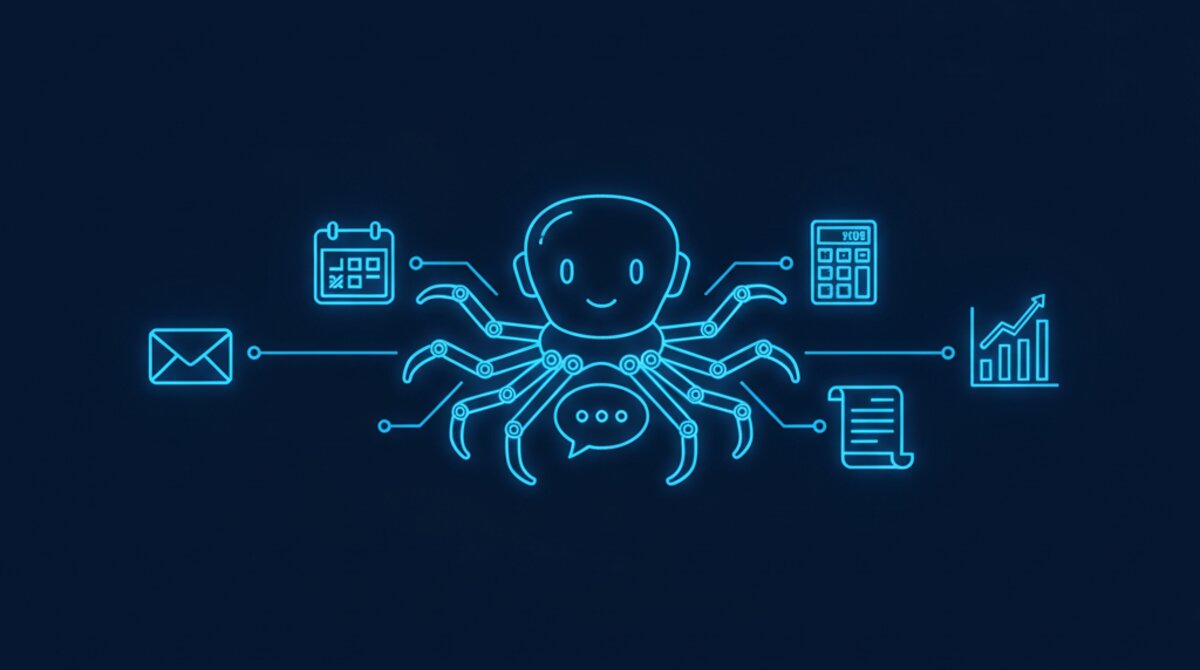
Think of an AI agent as a digital team member that can handle complex, multi-step tasks without constant human oversight. Unlike a simple chatbot that answers questions, an AI agent can research a topic, draft a report, send it to stakeholders for review, incorporate feedback, and publish the final version — all from a single instruction.
The distinction matters more than you might think. A chatbot waits for you to ask a question. An AI agent takes initiative. You tell it "prepare our quarterly board update," and it pulls revenue data from your CRM, cross-references it with marketing metrics, drafts the narrative, formats the deck, and flags the two data points that need your attention before it sends. That's not automation. That's delegation.
Most small businesses have experimented with AI in some form — maybe a writing assistant or a code helper. But agents operate at a fundamentally different level. They chain together multiple tools, make judgment calls about next steps, and handle exceptions without escalating every edge case back to you. The difference between using ChatGPT and deploying an AI agent is the difference between having a search engine and having a junior analyst on staff.
At MyZone AI, we've been building and deploying AI agents for entrepreneurs and SMBs across North America through our Ai1 Platform. The pattern we see is consistent: founders who adopt AI agents don't just save time — they unlock capabilities that were previously only available to companies with 10x the headcount. A 15-person startup suddenly operates like a 75-person company. The operational leverage is real, and it compounds fast.
Where AI Agents Make the Biggest Impact
The businesses seeing the most dramatic results are deploying AI agents in three key areas:
Customer operations. AI agents can handle customer inquiries across email, chat, and social media — not just with canned responses, but with genuine contextual understanding. They pull from your knowledge base, past interactions, and product data to deliver responses that feel personal and accurate. Picture this: a customer emails about a delayed shipment at 11 PM. Your AI agent checks the carrier tracking API, sees the package is stuck in customs, drafts an apology with an updated delivery estimate, offers a discount code for the inconvenience, and logs the interaction in your CRM — all before you wake up. That's the kind of responsiveness that used to require a 24/7 support team. For a business doing 200+ support tickets a week, agents can resolve 60-70% of inquiries without human involvement, freeing your team to handle the complex cases that actually need a human touch.
Research and analysis. Need competitive intelligence? Market research? An AI agent can monitor competitor websites, analyze pricing changes, track industry trends, and deliver weekly briefings — tasks that would take a human analyst hours or days. One of our clients — a 30-person SaaS company — had their AI agent monitoring 14 competitor pricing pages daily. When a major competitor dropped their entry-tier price by 20%, the agent flagged it within hours, pulled together a competitive analysis, and drafted three response scenarios for the leadership team. That kind of market awareness used to require a dedicated competitive intelligence hire at $80K+ per year. Now it runs in the background for a fraction of the cost. If you're not using agents for research yet, start with one narrow use case — competitor monitoring or industry news aggregation — and expand from there.
Sales pipeline management. From lead qualification to follow-up sequencing, AI agents are taking the manual drudgery out of sales operations. They can score leads, draft personalized outreach, and even schedule meetings — letting your sales team focus on actually closing deals. Here's what this looks like in practice: a new lead fills out your contact form at 2 AM. By 2:05 AM, an AI agent has enriched their profile with LinkedIn data, scored them against your ideal customer criteria, drafted a personalized follow-up email referencing their company's recent news, and queued it for delivery at 8:30 AM. Your sales rep arrives to a fully qualified lead with context and a warm email already sent. The reps we work with report spending 40% less time on admin and more time in actual conversations. If your sales team is still manually qualifying inbound leads, you're leaving money and speed on the table.
The Shift from Tools to Teammates
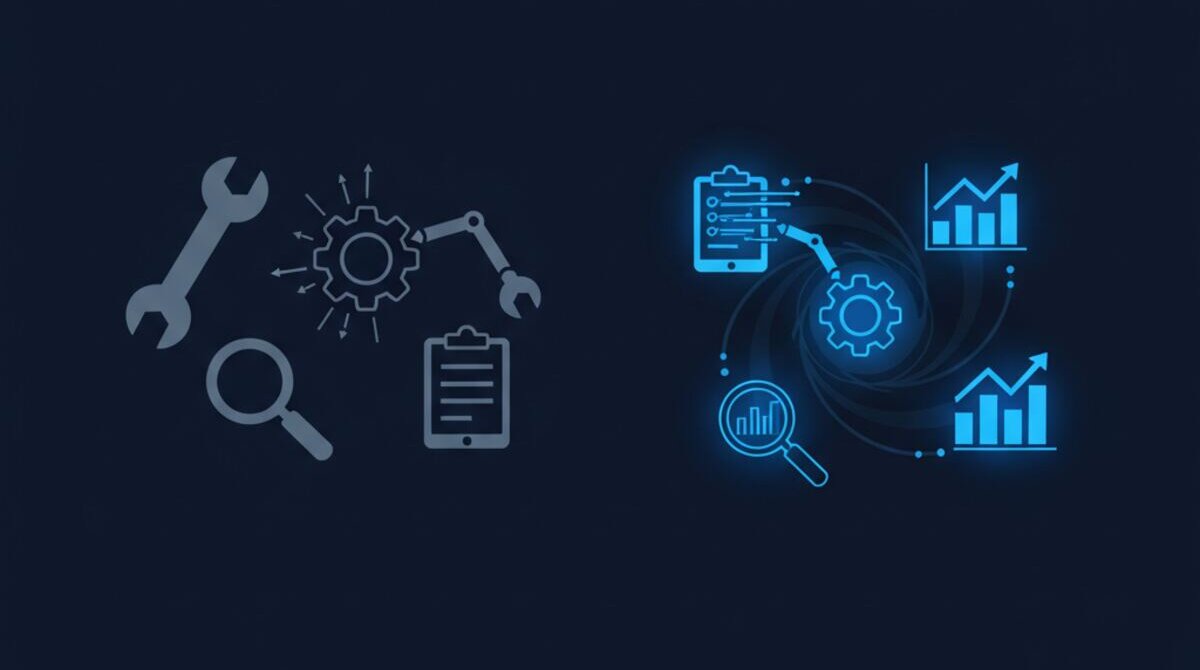
The biggest mindset shift we see in our workshops is this: AI agents aren't tools you use — they're teammates you delegate to. The entrepreneurs who get the most value are the ones who stop thinking "What can AI do for me?" and start thinking "What would I hand off to a capable new hire?" That reframe changes everything. And if you've built a business from scratch, you already have the most important skill: the ability to delegate and trust.
We see this play out constantly. A founder who's been doing their own bookkeeping for years will hesitate to let an AI agent categorize expenses — even though the agent is more accurate and faster than they are. The breakthrough comes when they realize they don't need to trust the agent blindly. They need to trust it the way they'd trust a new hire: verify the first batch of work, give feedback, then gradually expand the scope. Within two weeks, most founders go from skeptical to wondering how they ever ran without it.
The practical approach is simple. Make a list of every task you did last week that didn't require your unique judgment or relationships. That's your AI agent backlog. Prioritize by time spent, and start with the task that eats the most hours. For most SMBs, that's some combination of data entry, report generation, email triage, or content drafting. Don't try to automate everything at once. Pick one workflow, deploy an agent, measure the results, and iterate.
This is exactly what we cover in our AI Agents Workshop — a hands-on session where you'll build your first AI agent and see firsthand how it fits into your business operations. Whether you're managing customer operations, running sales pipelines, or analyzing data, we'll show you how to apply agents to your specific challenges.
Ready to see AI agents in action?
Join our next live AI Agents Workshop on March 12, 2026. Hands-on, strategic, and built for business leaders.
View Workshops →There's never been a tougher time to be an entrepreneur — and there's never been more opportunity. Industries are shifting, uncertainty is everywhere, and the pace of change is relentless. But here's what we know: the founders and SMB leaders who will thrive in the next 5 years aren't the ones with the biggest teams or the deepest pockets. They're the ones who learn to leverage AI agents now.
The math is straightforward. If an AI agent saves each team member 5 hours per week — and that's a conservative estimate based on what we see across our client base — a 20-person company reclaims 100 hours of productive capacity every single week. That's 5,200 hours a year. At a blended cost of $50/hour, that's $260,000 in recaptured value annually. Not theoretical value. Actual hours your team can now spend on strategy, relationship-building, and the creative work that moves the needle.
Your creativity, your adaptability, your ability to learn fast — those are exactly the skills this moment demands. The question isn't whether you should adopt AI agents. It's how fast you can get started.
Concrete Examples: AI Agents in the Real World
Let me get specific about what AI agents do in each of those three impact areas, because the abstract descriptions do not do justice to how transformative the results actually are.
Customer Operations: Beyond the Chatbot
Forget what you think you know about automated customer service. The old-school chatbot that asks "Did you mean billing or technical support?" and then routes you to a FAQ page is not what we are talking about. A modern AI agent reads the customer's full message, pulls up their account history, checks their recent orders and support tickets, and crafts a response that actually addresses their specific situation.
One of our clients — a 25-person e-commerce company — deployed an AI customer operations agent that handles 73% of incoming support requests without human intervention. Not simple ones either. It processes returns, applies discount codes, updates shipping addresses, and escalates genuinely complex issues to human agents with a full context summary so the customer never has to repeat themselves. Their average response time went from 4 hours to under 90 seconds. Customer satisfaction scores increased by 28%.
The key detail: the AI agent connects to their order management system, their shipping provider API, and their CRM simultaneously. It does not just answer questions — it takes actions. That is the difference between a chatbot and an agent.
Research and Analysis: Your 24/7 Analyst
A 15-person consulting firm we work with used to spend about 12 hours per week on competitive intelligence and market research. Their senior consultant would manually check competitor websites, scan industry publications, and compile findings into a report. It was valuable work, but it consumed time that should have gone to billable client work.
Their AI research agent now does this automatically. Every morning at 6 AM, it scans 47 competitor and industry sources, identifies what changed since the last scan, and delivers a prioritized briefing to Slack by 7 AM. It catches pricing changes within hours instead of weeks. It identifies new service offerings the day they launch. It even monitors competitor job postings to flag strategic direction shifts — when a competitor starts hiring AI engineers, that tells you something about their product roadmap.
The time savings alone — 12 hours per week returned to billable work — paid for the entire AI implementation in the first month. But the real value was the quality and consistency of intelligence. The consultant was good, but nobody can check 47 sources daily without missing things. The agent never misses.
Sales Pipeline Management: From Data Entry to Deal Closing
The average sales rep spends only 28% of their time actually selling. The rest goes to CRM updates, email drafting, research, scheduling, and administrative work. AI agents attack that 72% directly.
A client running a 6-person sales team deployed AI agents for three specific tasks: lead qualification scoring (analyzing new leads against their ideal customer profile and historical win data), follow-up email drafting (personalized sequences based on the prospect's industry, role, and engagement history), and meeting scheduling (handling the back-and-forth of calendar coordination). The result was a 41% increase in meetings booked per rep per week — not because the reps worked harder, but because they spent dramatically more time on actual selling.
Real Results: What AI Agents Deliver
I want to share specific metrics because vague promises of "efficiency gains" are not useful. These are real numbers from businesses with 10 to 100 employees that deployed AI agents through our platform.
Customer response time: Average reduction from 4.2 hours to 1.8 minutes. First-contact resolution rate improved from 34% to 71%.
Content production: Output increased by 5-8x without adding headcount. One 30-person marketing agency went from producing 12 client deliverables per week to 67 — same team, same hours.
Sales productivity: Average 35-45% increase in meetings booked per rep. CRM data accuracy improved from roughly 60% to 94% because agents handle the data entry automatically.
Operational cost reduction: Businesses report 20-35% reduction in operational overhead within the first 6 months. Most of this comes from eliminating manual processes that previously required dedicated staff time.
A 15-person startup with AI agents does not just save time. It operates with the capability of a 75-person company. That is not an efficiency play — it is a fundamental competitive advantage.
Getting Started: Your First AI Agent
If you are ready to deploy your first AI agent, here is the practical path I recommend based on working with hundreds of SMBs.
Start with Your Biggest Time Sink
Look at your team's week and identify the single task that consumes the most hours relative to its strategic value. For most businesses, it is one of three things: responding to routine customer inquiries, writing follow-up emails, or compiling reports and data. Pick one. Just one.
Define the Inputs and Outputs
Before you build anything, write down exactly what the task requires. What information does the person need to start? What systems do they access? What does the finished output look like? What are the edge cases where a human should take over? This documentation takes 30 minutes and saves weeks of iteration later.
Deploy with a Safety Net
Start with the agent in "draft mode" — it does the work but a human reviews before anything goes to a customer or gets published. This builds confidence, catches errors, and helps you refine the agent's behavior. Most clients move to fully autonomous operation within 2-4 weeks once they see the quality of output. Our AI coaching program walks you through this process step by step.
Measure and Expand
Track time saved, quality metrics, and business outcomes from day one. These numbers tell you where to deploy the next agent. If you are not sure where your organization stands on AI readiness, our AI Readiness Assessment gives you a clear picture of where to start and what to prioritize. Once the first agent is running smoothly, look for related tasks that use the same data connections and build outward from what works.