
The Meeting That Changed Nothing
Last quarter, I sat in on a client's weekly leadership meeting. Twelve people in a room for 90 minutes. Good energy, great discussion, real decisions being made. At the end, everyone nodded, said "good meeting," and went back to their desks.
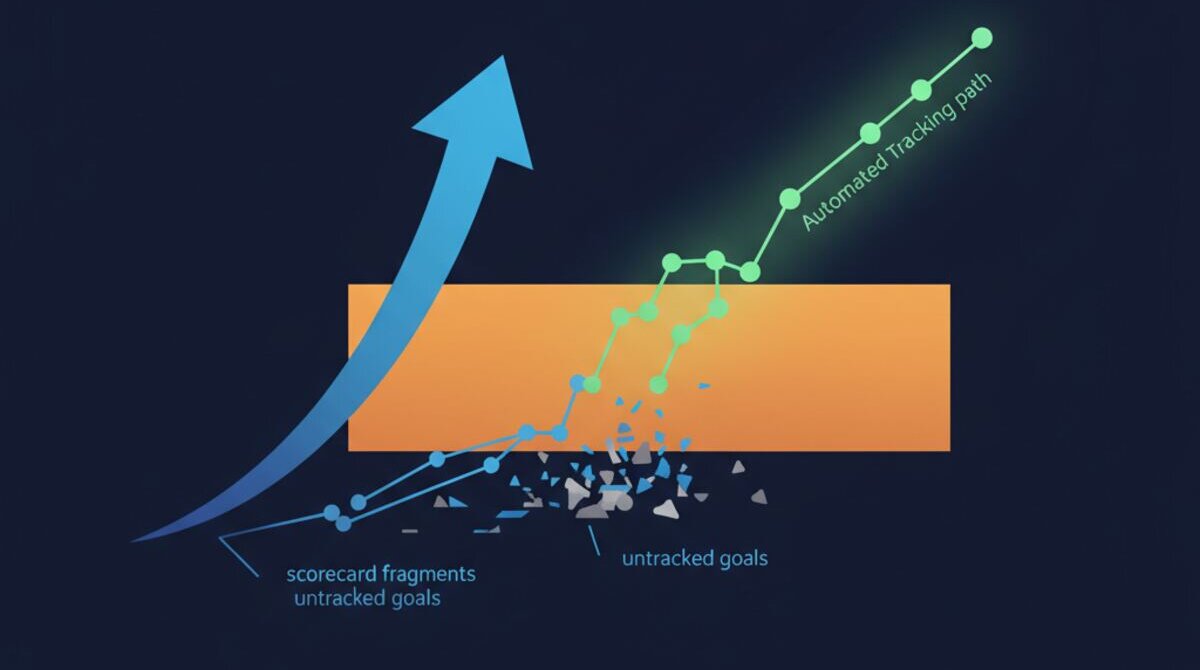
Two weeks later, I asked the CEO how those decisions were going. He paused. "Which decisions?" He could not remember what they had agreed on. Neither could anyone else I asked. The meeting had produced genuine insight and clear direction, but none of it had been captured, assigned, or tracked. It might as well have never happened.
This is not an unusual story. It is the default state of meetings in most organisations. People meet, they talk, they agree on things, and then those agreements dissolve into the ether of everybody's competing priorities.
The Real Cost of Untracked Meetings
The average executive spends 23 hours per week in meetings. For a leadership team of 6, that is 138 hours of collective meeting time every single week. At a blended cost of $150 per hour, you are investing over $20,000 per week in meetings.
The question nobody asks is: what is the return on that investment? If only 73 percent of action items actually get completed — which is what we see on average — then 27 percent of every meeting's output is wasted. That is not just lost time; it is lost decisions, lost momentum, and compounding delays that ripple through every project.
But the invisible cost is worse. When people learn that meeting commitments do not get tracked, they stop taking meetings seriously. They agree to things they do not intend to do. They stop preparing agendas because it does not seem to matter. The meeting culture degrades one unchecked commitment at a time.

The Three Meeting Pathologies
After analysing hundreds of meeting patterns across our clients, I have identified three pathologies that account for the vast majority of meeting waste.
The first is the status meeting that should be a dashboard. When 60 percent of a standup is spent sharing information that already lives in Asana or Jira, that is not collaboration — it is expensive reporting. AI can identify these meetings instantly by comparing what is discussed against what is already documented in your project management tools.
The second is the meeting that keeps growing. What started as a focused 4-person working session gradually accumulates attendees until 12 people sit in a room where 4 contribute and 8 observe. Nobody removes themselves because the social cost of leaving feels higher than the time cost of staying. AI tracks participation patterns and flags meetings where attendee count exceeds contributor count.
The third is the recurring meeting that has outlived its purpose. A weekly sync created for a project that ended three months ago keeps running because nobody thinks to cancel it. These ghost meetings are surprisingly common — we typically find 3 to 5 per team.
The Small Business Meeting Tax
For small businesses running on frameworks like EOS, the meeting problem is especially acute. You have a Level 10 meeting every week. You have departmental standups. You have client calls. You have one-on-ones. For a company of 25 people, that easily adds up to 200 or more meeting-hours per week across the team. At a blended rate of $75 per hour for a mid-market SMB, that is $15,000 per week invested in meetings — or roughly $780,000 per year.
Now ask yourself: what percentage of that investment produces measurable outcomes? In our analysis, the answer is typically 40 to 60 percent. The rest evaporates. Not because the discussions are bad, but because the bridge between discussion and execution is broken. Decisions get made but not recorded. Action items get assigned verbally but never tracked. Context from one meeting does not carry over to the next.
For a small business, this is not a minor inefficiency. It is the difference between hitting your quarterly goals and wondering why you fell short despite having "good meetings" every week. The meeting tax is invisible because nobody measures it. Once you start measuring, the waste becomes impossible to ignore.
How the Problem Compounds Over Time
Untracked meetings create a compounding accountability deficit. In week one, two action items slip through the cracks. In week two, four more join them. By the end of the quarter, you have dozens of unresolved commitments creating hidden bottlenecks throughout the organization. Projects slow down for reasons nobody can articulate. Deadlines slip. People start padding their estimates because they know dependencies from other teams are unreliable.
The worst part is that the root cause is invisible. Leadership sees the symptoms — missed deadlines, scope creep, customer complaints — but cannot trace them back to the 15-minute segment of a meeting three weeks ago where a critical decision was made and never followed up on. Without meeting intelligence, you are always treating symptoms rather than causes.
What Meeting Intelligence Actually Looks Like
Meeting intelligence is not about recording every word or creating surveillance culture. It is about closing the gap between what gets discussed and what gets done.
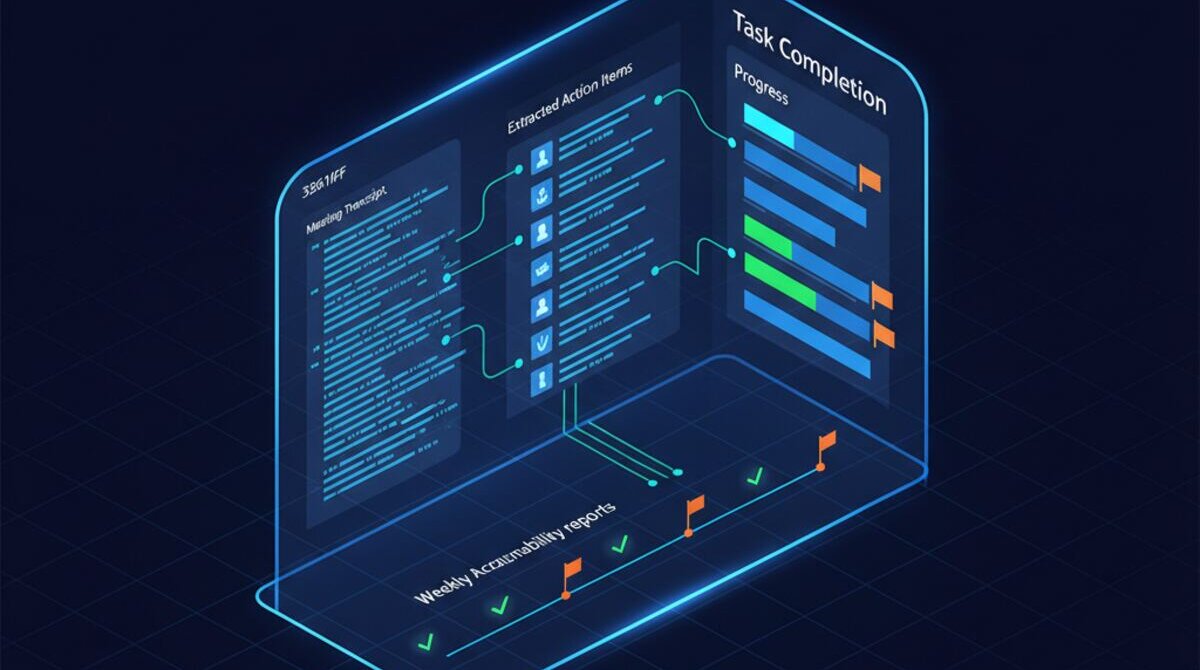
After every meeting, AI extracts the action items, decisions, and commitments. It matches each one to a responsible person. It creates tasks in your project management tool. Then, crucially, it follows up — checking whether those commitments were kept before the next meeting happens.
At the end of each week, you get a report that tells you: how many meetings happened, how many action items were created, how many were completed, which teams are following through and which are not, and which meetings are consistently producing nothing worth tracking.
The first time a leadership team sees this report, the reaction is always the same: surprise that so many commitments are falling through the cracks, followed by immediate motivation to fix it. The data makes the invisible visible.
The Accountability Flywheel
Here is what happens when you start tracking meeting outcomes: everything gets better, fast. Follow-through rates go from 73 percent to 85 percent within the first month. People start preparing agendas because they know outcomes will be tracked. Meeting duration drops because status-sharing gets replaced by async updates. The meetings that remain become genuinely valuable.
It is a flywheel: better tracking leads to better follow-through, which leads to better meetings, which leads to better outcomes, which makes people want to keep tracking. The hardest part is starting — once people see the data, the improvement becomes self-sustaining.

Practical Implementation: Getting Started in 30 Days
You do not need to overhaul your entire meeting culture overnight. Here is a 30-day implementation plan that gets you from zero meeting intelligence to actionable data without disrupting your team's workflow.
Week 1: Audit your meeting calendar. Count every recurring meeting across your team. Calculate the total hours per week and the blended cost. Identify the three meetings that feel least productive. This baseline data is essential — you cannot improve what you do not measure.
Week 2: Introduce AI transcription. Start recording and transcribing your top three meetings. Most teams are initially uncomfortable with recording, but the resistance fades fast once people see the value of having accurate, searchable meeting records. Reassure your team that transcription is about capturing decisions, not surveillance.
Week 3: Activate action item extraction. Connect the transcription output to your project management tool. Every decision and commitment that comes out of a meeting should automatically generate a tracked task with an owner and a deadline. This single step eliminates the biggest source of meeting waste — the commitment that nobody writes down.
Week 4: Review your first weekly intelligence report. After three weeks of data, you will have enough to generate meaningful insights. How many action items were created? How many were completed? Which meetings are producing outcomes and which are not? Share this report with your leadership team and watch the conversation shift from "I think we have too many meetings" to "the data shows exactly which ones we should change."
What Changes After 90 Days
The teams that stick with meeting intelligence for a full quarter report consistent results. Average meeting count drops by 20 to 30 percent as ghost meetings and status meetings get eliminated. The meetings that remain get shorter because participants come prepared, knowing outcomes will be tracked. Action item completion rates climb from the typical 73 percent to 85 or even 90 percent.
But the biggest change is cultural. People stop dreading meetings because the meetings that remain are focused and productive. Follow-through becomes the norm rather than the exception. And leadership gains a real-time view of organizational execution velocity — not through more reporting, but through intelligence that runs itself.
See It in Action
We built meeting intelligence into Ai1 because we were losing too many decisions to the post-meeting void ourselves. If you want to see how it works with your actual calendar data, watch the interactive demo or book a walkthrough.
Ready to Make Your Meetings Count?
See how AI-powered meeting intelligence captures every action item and holds your team accountable.
Book a DemoSee the Meeting Intelligence Automation in Action
Watch how Ai1 captures and acts on every meeting with our meeting intelligence automation workflow.
Explore the Automation →