
What is Ai1 under the hood?
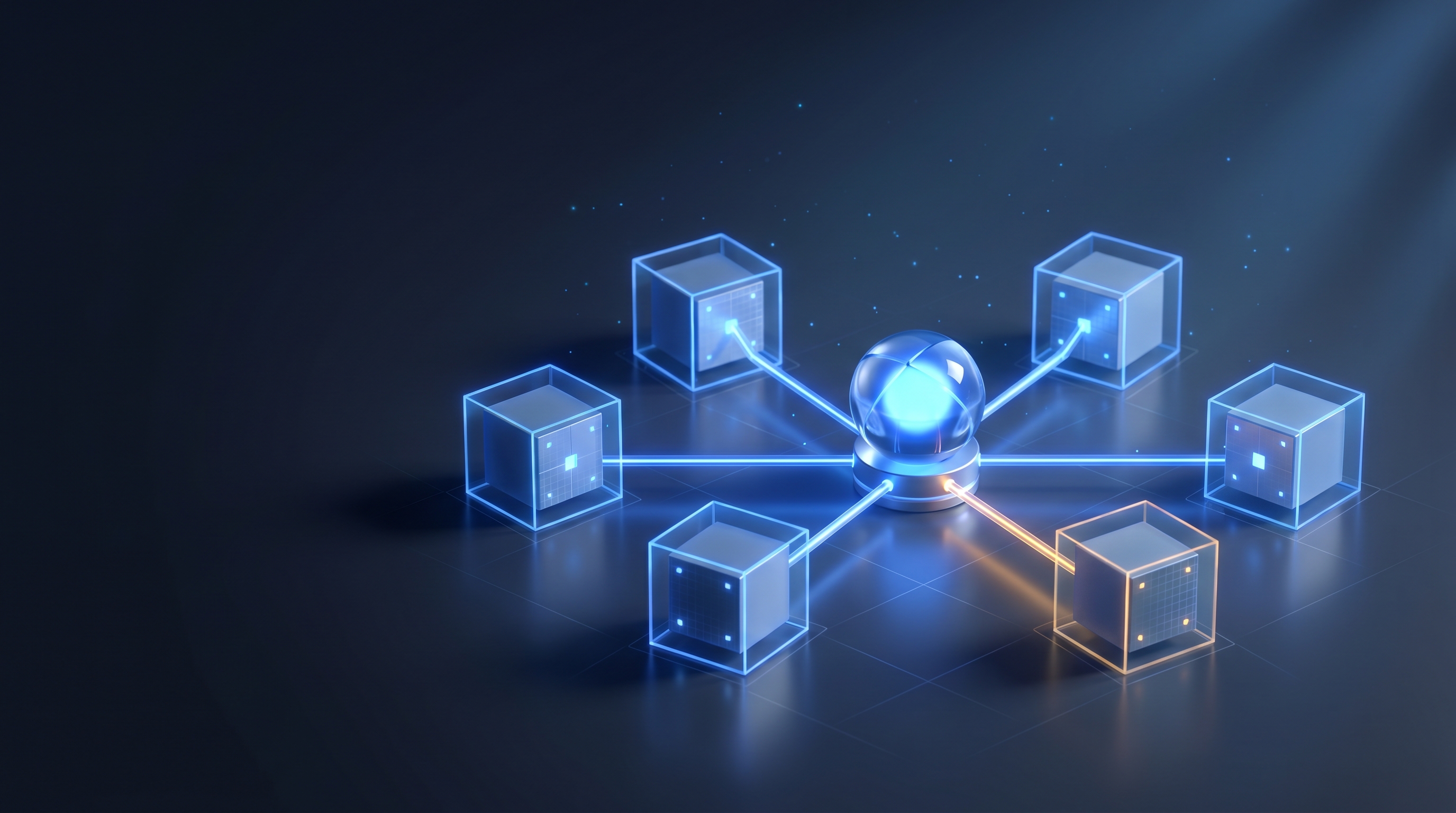
Instead of one monolithic assistant, Ai1 runs a fleet of specialist agents that share a common pool of composable, versioned capabilities and execute repeatable procedures, on a schedule or on demand.
These are reusable building blocks we've created across all our clients. We snap them together to assemble custom automations fast. The library grows every week.
What are the building blocks of Ai1?
Everything is built from these four, and they combine like LEGO. Author a capability once, reuse it everywhere.
Skills
A self-contained capability an agent reads and follows: instructions, references, and optional scripts to do one thing well, like publish an article, query analytics, or generate an image.
Agents
A configured role with a curated set of skills, a model tier chosen by need, and its own private long-term memory. Many narrow specialists beat one generalist.
Jobs
Scheduled or on-demand background work: syncs, reports, backups, and monitoring. This is how the platform does work with no human in the loop.
Recipes
Step-by-step pipelines that chain skills and agents into a reliable, repeatable process, with QA and human-approval gates built in.
The one-line version: skills give agents capability, recipes give them procedure, delegation gives them teamwork, memory gives them continuity, and jobs give them autonomy.
| Primitive | Role | What it is |
|---|---|---|
| Skills | Capability | A self-contained capability an agent reads and follows: instructions, references and optional scripts to do one thing well. |
| Agents | Specialist worker | A configured role with a curated set of skills, a model tier chosen by need, and its own private long-term memory. |
| Jobs | Automation | Scheduled or on-demand background work: syncs, reports, backups and monitoring. |
| Recipes | Procedure | Step-by-step pipelines that chain skills and agents into a repeatable process, with QA and human-approval gates built in. |
How is each client's data kept separate?
A central control plane maintains the canonical library of capabilities. Each client runs an isolated, single-tenant deployment that receives those capabilities and runs its own agents, data, and jobs. Capabilities flow down. Your data never flows up or sideways.
Capabilities are authored centrally, audited, and shipped down to each deployment. There is no shared data pool, so one organization's data is kept separate from another's by design.
The Composable Asset Model
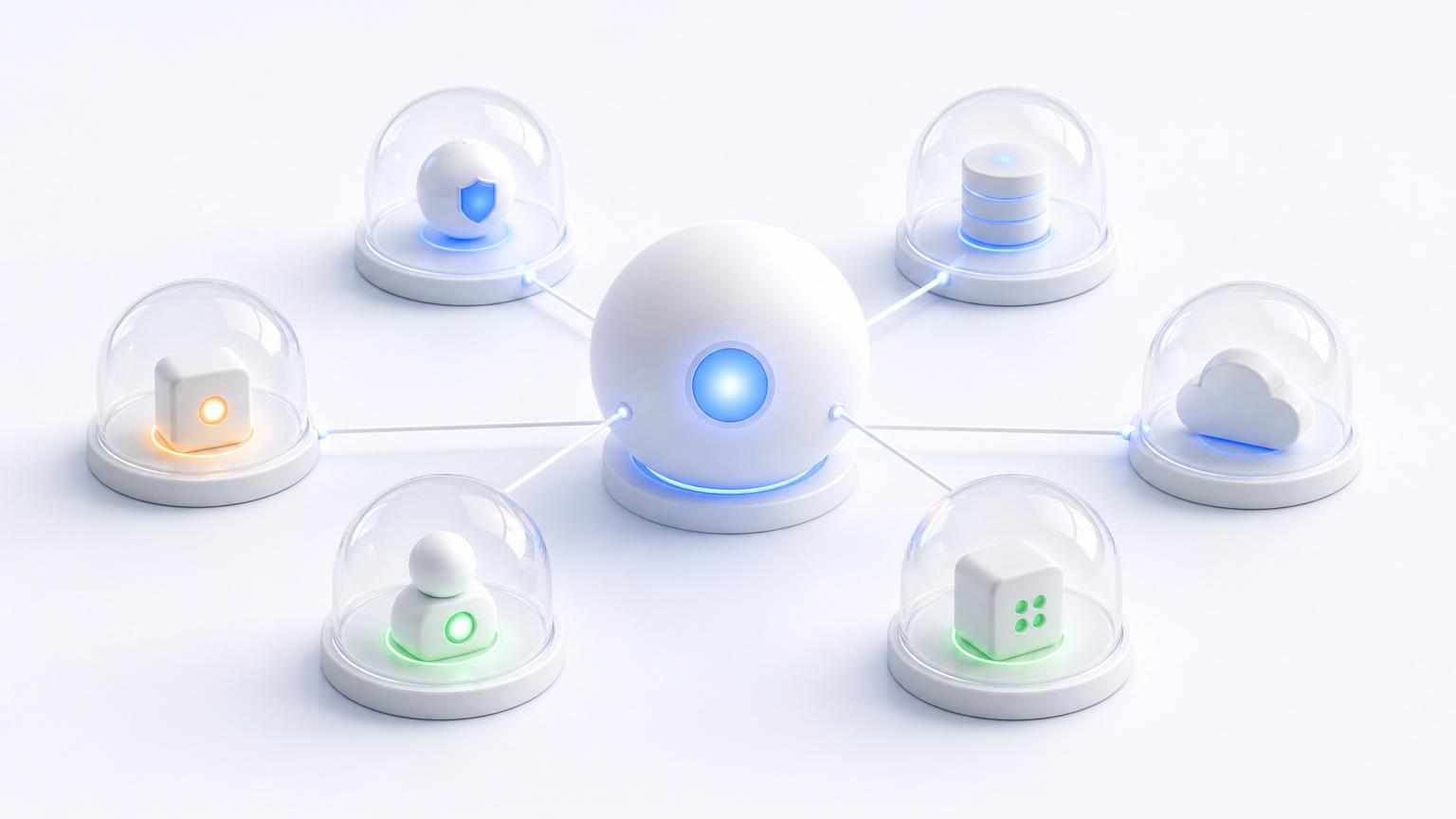
Skills, recipes, agents, jobs, memory, and documents are all managed the same way: database-backed content, addressable by name, semantically searchable, and versioned on every edit.
Semantic discovery
Agents don't hard-code which capability to use. They search for it by meaning, then load the match on demand. Each agent's context stays small while the library grows without bound.
Safe, versioned writes
Every content change records who changed it and a change summary, giving a full audit trail and the ability to diff history. Encoding and escaping are handled for you.
Progressive disclosure
An agent loads only the capabilities a task actually needs, exactly when it needs them. That's the core efficiency trick that keeps the system fast and cheap.
The agent model
What is an Ai1 agent?
An agent is a role: a curated set of skills, a model tier matched to the work, and its own structured long-term memory that persists across every session. That memory is what lets a specialist improve over time. Feedback and new patterns get written back, so the next session starts smarter.
- Model routing by need. Judgment-heavy roles get a higher-reasoning model; mechanical or routing roles get a faster one.
- Least privilege. Each agent carries only the skills its role requires, plus a small safety baseline.
- MCP for live tools. Agents mount Model Context Protocol servers for live external actions, on top of their skills.
- Writer / reviewer split. The agent that produces work never signs off on it. A fresh-context reviewer gives an unbiased second pass.

How do agents hand work to each other safely?
Agents collaborate through an asynchronous, queue-backed delegation system. A parent hands work to a child specialist and immediately stops. The platform wakes the parent when the child reports back. No polling, no blocking.
Idempotency keys
A retried delegation with the same key returns the existing child instead of spawning a duplicate.
Bounded retry
Rate-limit responses retry a small, fixed number of times with backoff, then fail fast. No infinite loops.
Circuit breaker
A parent that spawns too many delegations too fast is refused until it cools down.
Human-in-the-loop
Pipelines pause at defined checkpoints for human approval before any high-impact step.
These rails were hardened after a real runaway-delegation incident. The platform encodes the lessons as enforced behavior, not just guidance.
How are new capabilities released?
Because capabilities are authored centrally and shipped to many deployments, publishing one is treated like shipping software, with mandatory gates, audit logs, and continuous optimization.
Stage
A capability is staged for release.
Audit
A mandatory pre-ship audit runs, including secret scanning and a sandbox install test.
Approve
Critical findings block the release. A human approves.
Publish
It ships to deployments, with a forensic log entry.
A worked example
A client asks for a new published article. The request lands in a channel bound to the SEO role. The agent loads its memory and brand context, follows the publishing recipe, and delegates drafting to a writer specialist. Skills compose on demand, multi-dimension QA runs, the pipeline pauses at a human-approval gate, and only then does it publish. Later, a scheduled job refreshes metrics and monitors the page, with no human needed.