
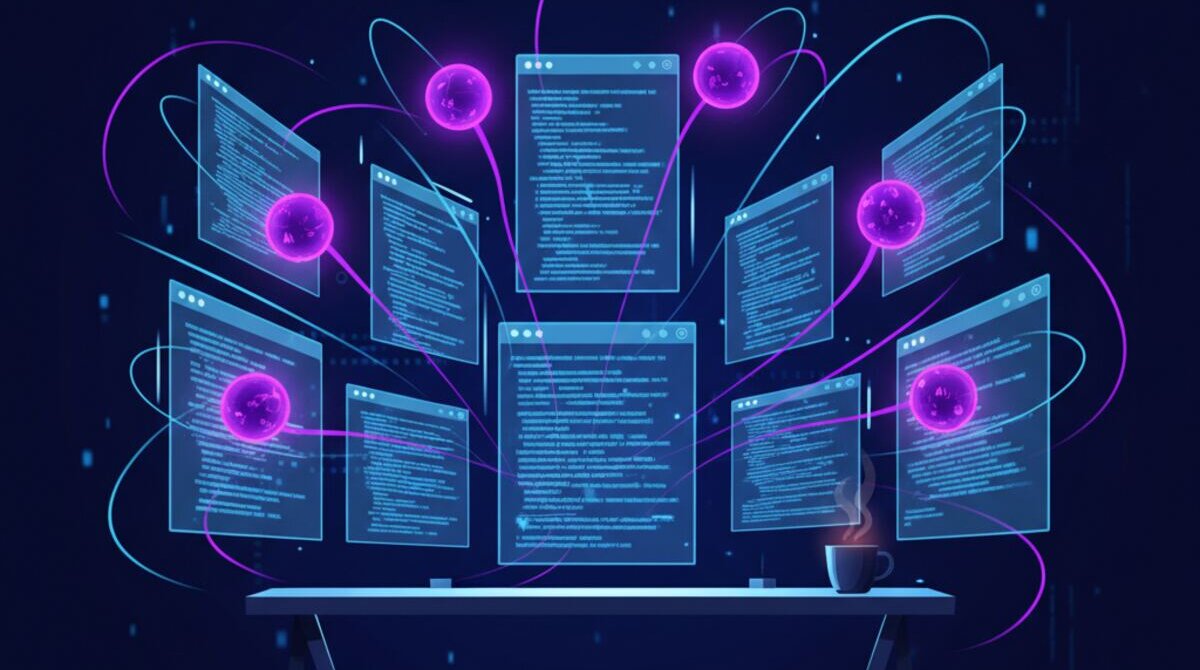
I need to tell you something that sounds insane. Six weeks ago, I couldn't write a single line of code. Not Python, not JavaScript, not HTML, nothing. I'm a business guy. I've been running digital companies for 26 years, building teams, managing products, selling solutions. But I have never been a developer. Not even close.
Today, I am personally shipping enterprise-grade software, full-stack applications, dynamically adaptive websites, multi-agent coordination systems, at a pace that would have required a team of a hundred developers just twelve months ago. And I'm doing it by talking into a microphone.
I know how that sounds. I wouldn't have believed it either. But here's the thing: this isn't hype. This is what I'm actually doing, every single day, right now. And I want to share everything I've learned, because I think it's going to change how every business builds software within the next year.
The Bender
Let me set the scene. In mid-January 2026, I decided to go all in on what I'm calling "agentic development", the practice of directing AI agents to build software for you. Not using AI as an autocomplete for code. Not asking ChatGPT to write a function. I mean sitting in a chair, opening a voice-to-text tool called Wispr Flow, and having full-blown conversations with AI agents who then go and build, test, deploy, and iterate on real production software.
I put my head down and just hyper-focused. Four to six hours a day minimum, sometimes twelve. Every single day. Weekends included. I was obsessed. My wife thought I'd lost it. My team thought I was on some kind of Silicon Valley bender. They weren't wrong.
But here's what I can tell you after coming out the other side: if you want to learn anything in this world, just do it every day for four hours until you collapse. You will very quickly get good at it. This one has a really deep learning curve, but layer by layer, it gets more and more powerful. And the results speak for themselves.
"I'm probably four times faster than I was two weeks ago. And two weeks before that, I couldn't do this at all. The acceleration is exponential."
Mike Schwarz, Founder & CEO, MyZone AI
How It Actually Works: Voice to Production Code
Let me walk you through what a typical session looks like, because it's genuinely bizarre when you see it for the first time.
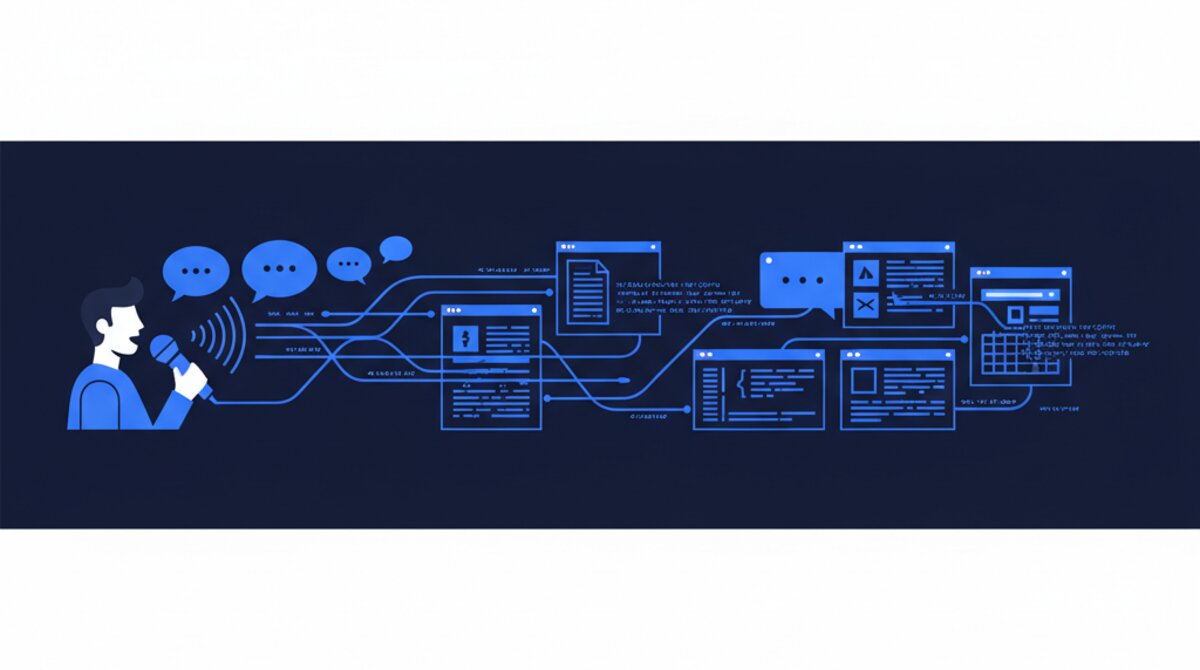
I open Claude, Anthropic's desktop app, and I start a session. I give the agent a name, a personality, a specialisation. Sometimes it's a front-end developer. Sometimes it's a security auditor. Sometimes it's an architect who's going to plan a complex feature before any code gets written. I use Wispr Flow, which is a voice-to-text tool that runs on my Mac, and I just... talk. I describe what I want built. I describe how it should work. I ask it questions. It asks me questions back. We go back and forth like two colleagues at a whiteboard.
And then I hit enter, and the agent goes and does it. It writes the code. It creates the files. It runs the tests. It commits to GitHub. It coordinates with other agents through Slack. It updates the project board in Asana. And twenty minutes later, there's a live feature on a production website that I just described out loud in my office.
I am building dynamically adaptive websites and full-stack software applications by literally having conversations at a microphone with a computer. Read that sentence again. That's where we are.

The Four Rules That Changed Everything
Through a lot of trial and error, and I mean a lot, I distilled everything I've learned down to four rules. These aren't theoretical. These are hard-won lessons from six weeks in the trenches, and they apply whether you're building a landing page or an enterprise SaaS platform.
Rule One: Build small. This is the single most important lesson. AI agents are brilliant, but they lose coherence when you give them too much at once. Every task should be a single, well-defined deliverable. Not "build me a CRM", that's a project. More like "build the contact form component with validation and error handling." Small, atomic, testable. When I started breaking everything into bite-sized pieces, my success rate went through the roof.
Rule Two: Use plans, not API tokens. Before you write a single line of code, have the agent create a plan. I literally tell the agent: "Before you do anything, interview me about what I want. Ask me questions. Then write up a plan and get my approval before you touch a file." This interview pattern is everything. It forces clarity. It catches misunderstandings before they become broken code. And it creates a document that other agents can reference later.
Rule Three: Challenge your agents. AI agents are confident. Annoyingly confident. They'll tell you they've completed something perfectly when they've actually hallucinated half the implementation. So I challenge them constantly. "Show me proof." "Run the test." "Take a screenshot." "Read back what you just wrote." The agents that get challenged produce dramatically better work than the ones you just trust blindly.
Rule Four: Always create handoffs. Every agent session should end with a handoff document, a clear summary of what was done, what's left, and what the next agent needs to know. Think of it like a shift change at a hospital. The incoming doctor doesn't re-diagnose the patient from scratch. They read the chart. Same principle. Without handoffs, you lose continuity and agents start repeating work or contradicting each other.
"Build small. Plan first. Challenge everything. Hand off cleanly. Those four rules took me from chaos to shipping production software daily."
— Mike Schwarz, Founder & CEO, MyZone AI
The Persona Technique: Bringing in the Experts
One of the most powerful things I discovered is what I call the persona technique. Instead of just saying "write me some code," I create a fully fleshed-out expert persona for the agent. I'll say something like: "You are Bob, a senior front-end developer with 15 years of experience specialising in accessible, responsive design systems. You are meticulous about semantic HTML and you always test at four breakpoints." And then Bob goes and does his thing, and the quality is dramatically different from a generic prompt.
I have different personas for different jobs. A security auditor. A QA tester. A documentation writer. An architect. A DevOps engineer. Each one has a name, a specialisation, and a personality. And here's the wild part: they coordinate. One agent builds a feature. Another agent reviews it. A third agent writes the tests. A fourth runs a security scan. It's like managing a team, except the team works 24 hours a day and never calls in sick.
Ready to Try Agentic Development?
See how MyZone AI uses multi-agent teams to build production software at unprecedented speed.
Explore the Ai1 Platform →