

The Cancellation That Changed Everything
Three years ago, I lost a client I thought was our happiest. They had been with us for 18 months. They always paid on time. Their project manager attended every meeting. They referred us two other clients.
Then I got a one-paragraph email on a Tuesday morning: "We've decided to go in a different direction." No warning. No negotiation. Just done.
When I went back through the trail, the signs were everywhere. Their response times had tripled over the previous six weeks. They had cancelled two of the last four strategy calls. Their primary stakeholder had quietly changed roles three months earlier, and the new person had never really engaged. We just were not watching.
In Ai1, the Customer Sentiment Analyst does this work for your team.
The Problem With "How Are Things Going?"
The standard approach to client health in most agencies and service businesses is the quarterly business review. Sometimes it is a monthly check-in. Sometimes it is just an account manager asking "how are things going?" in a casual email.
The problem with all of these approaches is the same: they rely on the client telling you there is a problem. By the time a client tells you they are unhappy, they have usually already made up their mind. The decision to leave happens weeks or months before the conversation does.
I have talked to dozens of agency owners about this, and they all describe the same experience. The client was "fine" right up until they were gone. The signals were there — we just did not have a system for reading them.
What Churn Actually Looks Like in the Data
When we started building our customer health scoring system, we went back through two years of client data — every email, every Slack message, every meeting, every support ticket, every invoice. What we found was that churn follows remarkably consistent patterns.
Email response times creep up gradually. Not dramatically — nobody goes from responding in 2 hours to responding in 2 days overnight. It is a slow drift: 2 hours becomes 4, then 6, then 8. Each increment is too small to notice on its own, but the trend is unmistakable.
Meeting attendance drops. Not by cancelling meetings — by having junior team members attend instead of decision makers. The champion who originally bought the engagement quietly disappears from the invite list. Again, no single meeting triggers alarm bells. But over 8 weeks, the pattern is clear.
Communication sentiment shifts. Messages get shorter, less personal, more transactional. Questions become instructions. Collaborative language becomes directive language. A human reading any individual message would not notice, but an AI comparing sentiment scores across 200 messages over three months sees it immediately.
The Health Score: One Number That Tells the Story
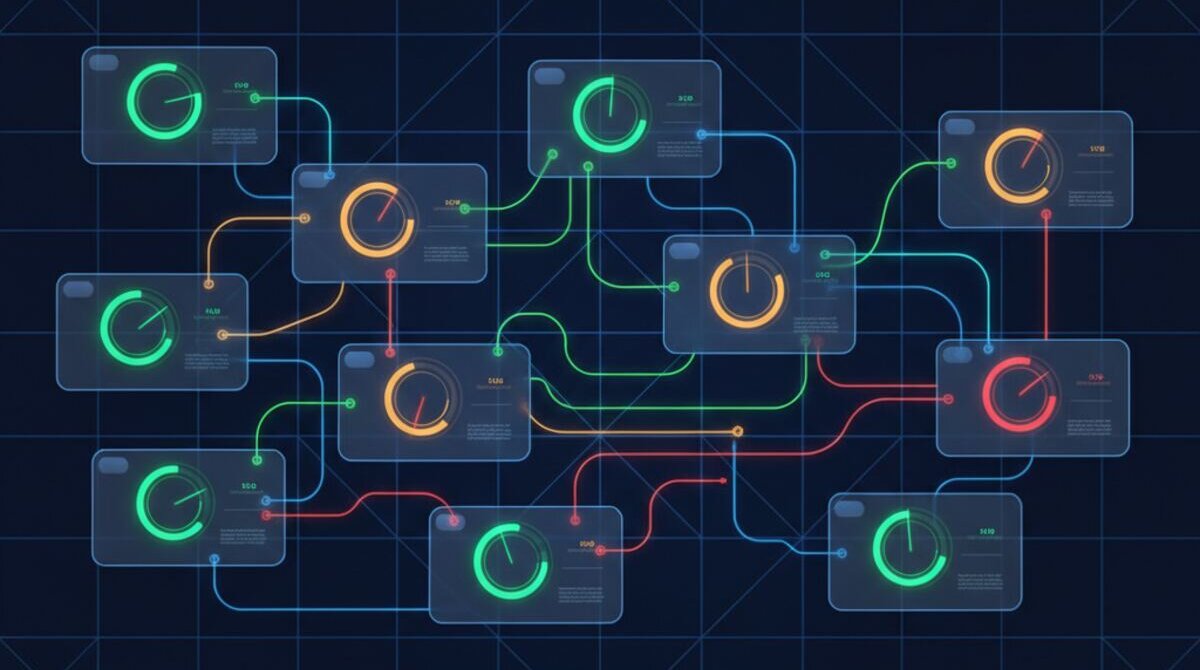
The concept behind customer health scoring is simple: take every signal across every touchpoint and distil it into a single 0-to-100 score that tells you exactly where each client relationship stands right now.
Green means healthy — strong engagement, positive sentiment, consistent communication. Yellow means watch closely — some signals are weakening, action may be needed. Red means intervene now — multiple churn indicators are firing, this client is at risk.
What makes AI-powered health scoring different from a spreadsheet tracker is that it weighs signals dynamically. A missed meeting means something different for a client who misses one meeting in 12 months than for a client who has missed three in the last six weeks. A slow email response means something different on a holiday week than on a regular Tuesday. Context matters, and AI can hold all of it at once.

The Expansion Signal Nobody Talks About
Here is the thing about client health monitoring that surprised me the most: it is not just about preventing churn. The same signals that predict cancellation also predict expansion.
Clients who are about to ask for more work show mirror-image patterns to those about to leave. Response times get faster. They start asking more questions. They bring new stakeholders into meetings. They mention future plans without being prompted.
Without health scoring, expansion conversations happen by accident — a client mentions something in passing, and an alert account manager picks up on it. With health scoring, you know which clients are primed for expansion before they even ask. That changes the dynamic from reactive selling to proactive partnership.
The Renewal Conversation You Should Be Having 90 Days Out
Most businesses start thinking about renewals 2 to 4 weeks before the contract is up. By then, it is too late to fix anything that is broken. If the client is unhappy, four weeks is not enough time to turn the relationship around.
AI health scoring gives you a 90-day early warning system. When a renewal is 90 days out and the health score is green, you can approach the conversation with confidence. When it is yellow, you have time to address issues and rebuild trust. When it is red, you know you are fighting to save the relationship — and you can make a clear-eyed decision about whether the fight is worth having.
The clients who surprise you are the expensive ones. The $65K renewal you thought was a lock that suddenly goes sideways. The expansion opportunity that evaporates because the champion left and nobody noticed. Health scoring eliminates the surprise.
See It in Action
We built customer health scoring into Ai1 because we needed it ourselves — and because every service business I have ever talked to has the same blind spots. If you want to see how it works with your actual client data, meet the Sales Dashboard or book a walkthrough.
See the Customer Health Score Automation in Action
Watch how Ai1 monitors customer health signals in real time with our customer health score automation workflow.
Meet the Sales Dashboard agent →