The Bottleneck Nobody Talks About
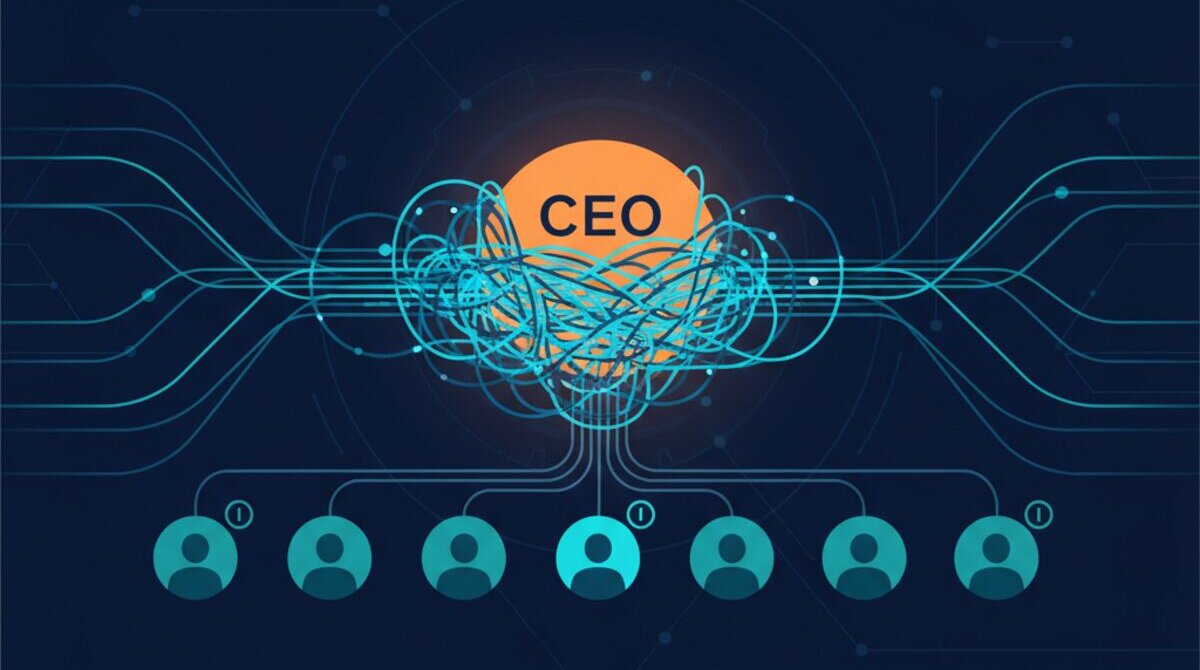
Every growing business hits the same invisible ceiling. It is not cash flow, it is not hiring, and it is not strategy. It is the CEO's inbox. Specifically, it is the 40 to 60 messages a day that all boil down to the same thing: someone needs an answer that only the CEO has.
What is our refund policy for enterprise clients? How do we handle scope creep on retainer accounts? What did we decide about the Vancouver office lease? Who is our contact at that vendor we used last year? What is the process for approving expenses over $5,000?
These are not strategic questions. They are institutional knowledge questions — and the answers already exist somewhere. They were discussed in a Zoom call three months ago, mentioned in a Slack thread, buried in an email chain, or captured on a pendant recording during a walking meeting. The knowledge exists. It is just locked inside conversations that nobody can search.
Why Traditional Knowledge Management Fails
Every company I have worked with has tried some version of knowledge management. A wiki. A shared Google Drive. A Notion workspace. A Confluence instance. And every single time, the same thing happens: it works for about three weeks, then people stop updating it, and within six months it is so outdated that nobody trusts it.
The fundamental problem is that traditional knowledge management requires people to do extra work. After making a decision in a meeting, someone has to go write it down in the wiki. After resolving a client issue, someone has to document the process. After negotiating a vendor deal, someone has to update the reference sheet. Nobody does this consistently because it feels like overhead — and it is.
What If Knowledge Captured Itself?
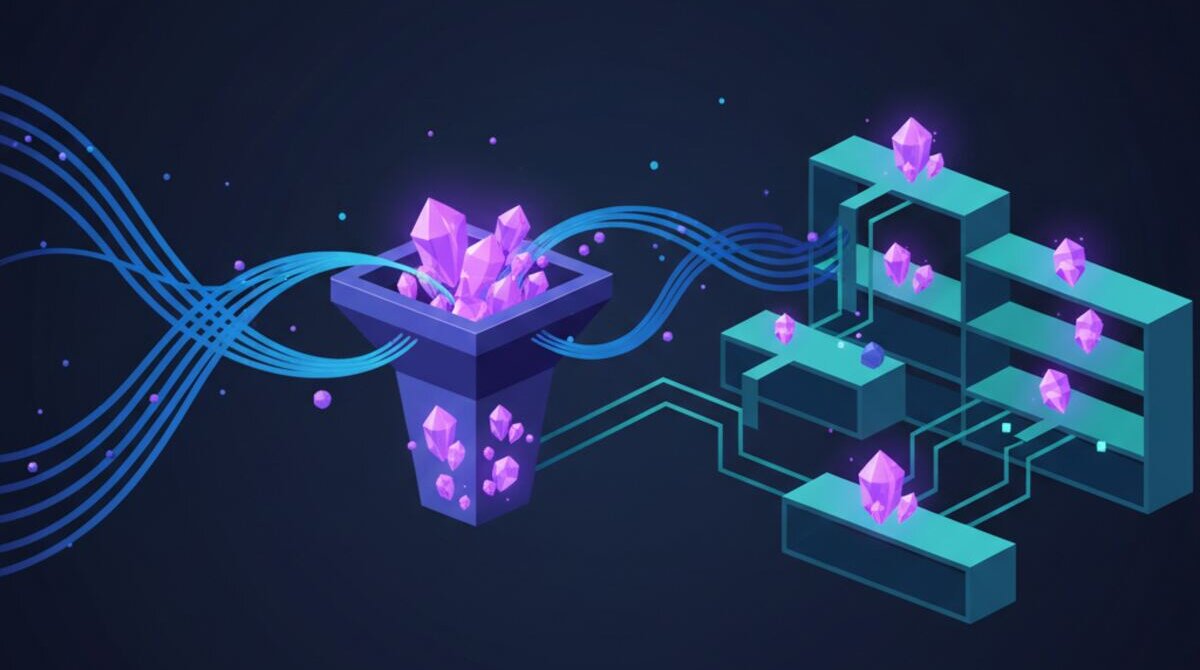
This is the core insight behind Auto Learn from Comms. Instead of asking humans to manually document knowledge, an AI agent continuously scans every communication channel — email, Slack, Zoom recordings, Teams meetings, pendant recordings — and automatically extracts the evergreen knowledge hidden inside.
The key word is evergreen. Not every message is knowledge. Most communication is one-off — scheduling, small talk, status updates, quick questions. The AI's job is to distinguish between a one-off exchange and a reusable piece of institutional knowledge. When you tell someone on a Zoom call "our standard enterprise contract includes a 30-day full refund window," that is evergreen. When you say "let us schedule that for Thursday," that is not.
The AI classifies every piece of communication it scans, extracts the evergreen items, deduplicates them against the existing knowledge base, and adds them to the brain. No human effort required.
The #Train Hashtag: Teaching on Your Terms
Automatic extraction handles the majority of knowledge capture, but sometimes you want to explicitly teach the brain something. That is where the #train hashtag comes in. When you reply to a message with #train, the AI knows to add that content to the brain permanently — regardless of whether it would have been automatically classified as evergreen.
Conversely, if you do not include #train, the AI will not add your reply as knowledge. This gives you complete control over what the brain learns from your direct interactions while still benefiting from automatic extraction across all channels.
Over time, the combination of automatic extraction and intentional #train submissions creates a knowledge base that is comprehensive, current, and trusted — because it is built from real conversations, not theoretical documentation.
The Auto-Reply Revolution
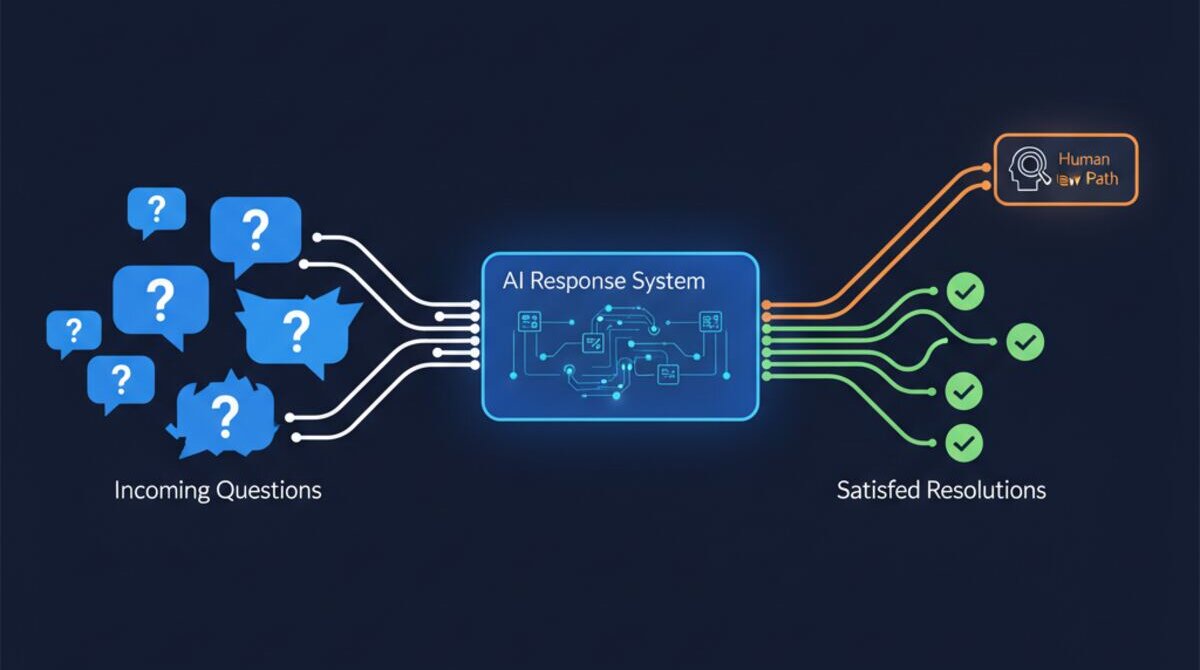
Here is where the system becomes truly transformative. Once the brain has enough knowledge, it starts answering questions automatically. When someone asks "what is our refund policy for enterprise clients?", the brain checks its knowledge base, finds the answer with 94% confidence (sourced from Mike's Zoom call with the legal team on January 15), and replies within 8 seconds.
If the brain is not confident enough — say, the question is ambiguous or the knowledge is outdated — it routes the question to the appropriate human. No guessing, no wrong answers, no hallucination. Just high-confidence auto-replies or transparent human routing.
The numbers are compelling. In our experience, the brain reaches a 60% auto-answer rate within 60 days and 75% within 90 days. That means three out of four questions that used to interrupt the CEO's day are now handled automatically, in seconds, with cited sources.
The Compounding Effect
What makes this system fundamentally different from a static wiki is that it gets smarter every single day. Every new conversation scanned is a potential knowledge item. Every #train submission makes the brain more comprehensive. Every auto-reply that goes uncorrected increases confidence. Every question that gets routed to a human and answered becomes a new learning opportunity.
After six months, you have a knowledge base that no human could have built manually — because it was built from thousands of real conversations across six communication channels, capturing nuances and context that would never make it into a wiki entry. And every month, the CEO gets more time back as the auto-answer rate climbs.
What This Means for Your Business
If you are a CEO spending more than an hour a day answering questions that feel repetitive, this system is built for you. If you have ever thought "I have answered this before" while typing a response, the brain should have caught that. If you worry about institutional knowledge walking out the door when employees leave, this is your insurance policy.
The brain does not replace human judgment. It handles the routine so you can focus on the strategic. It answers the "what is our policy" questions so you can spend your time on "what should our policy be" questions.
Watch the Auto Learn from Comms demo →
See the Auto Learn from Comms Automation in Action
Watch how Ai1 captures and learns from your communications with our auto learn from comms automation workflow.
Explore the Automation →