
If you haven't noticed, the conversation around AI has shifted. It's no longer about ChatGPT or whether to "adopt AI." In 2026, the real question is: are you deploying autonomous AI agents to run your business, or are you letting your competitors get there first? Our AI Agents Workshop is designed for business leaders who understand that the window of opportunity is closing fast.
- Chatbots answer questions. AI agents reason, plan and carry out multi-step work on their own.
- The workshop is four hands-on hours across four sessions: mindset, building an agent, real use cases and your strategy.
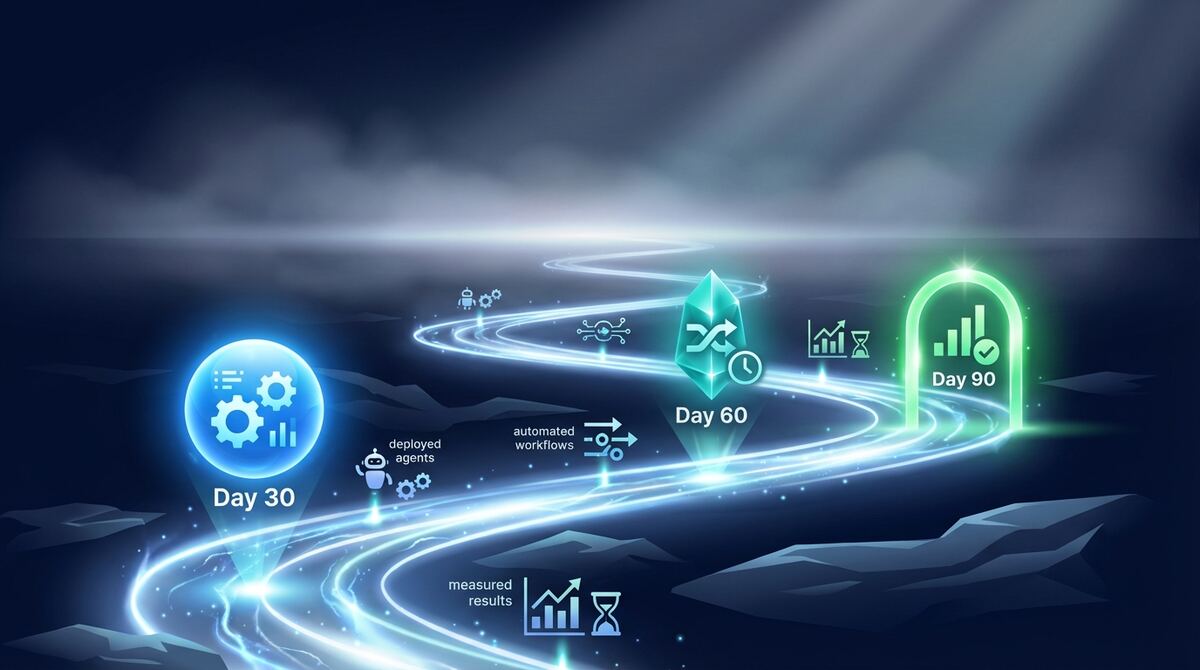
- You leave with a working AI agent and a 90-day implementation roadmap.
- No coding or prior AI experience is needed.
- Avoid the three common mistakes: starting too big, skipping a human oversight loop and ignoring your team.
The Shift from Chatbots to Autonomous Agents
For the past two years, business owners have been experimenting with chatbots—AI assistants that answer questions. They're useful. They're nice to have. But they don't scale your business. They're not teammates; they're tools with limited scope.
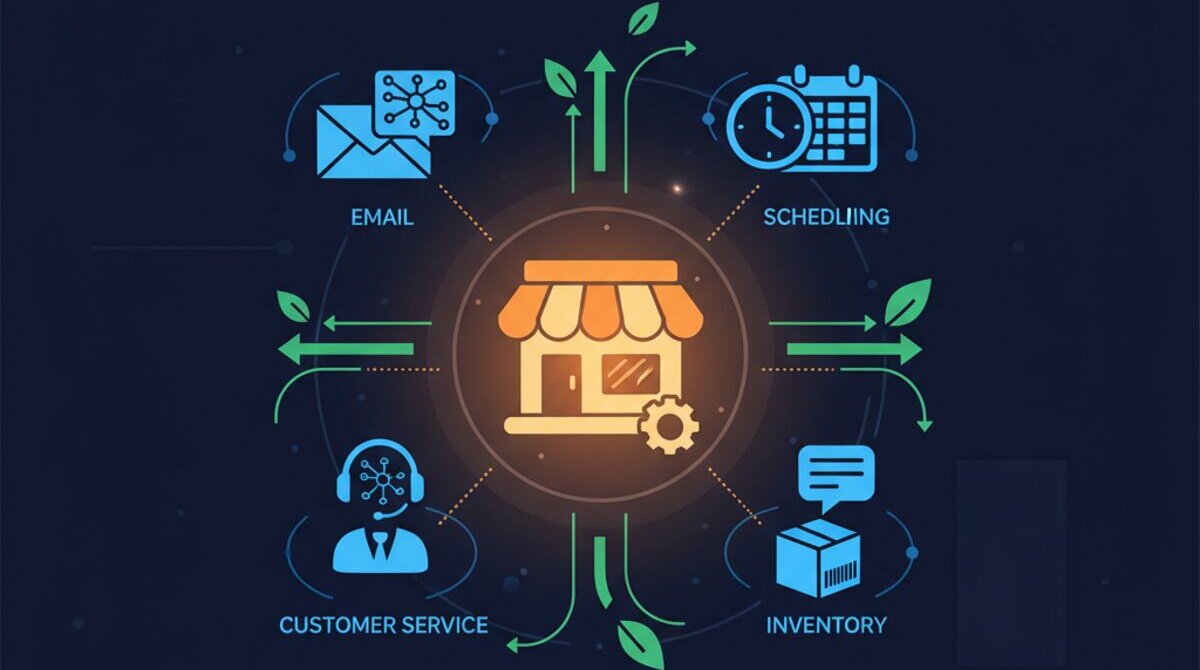
AI agents are fundamentally different. An autonomous agent can research a complex topic, synthesize multiple sources, draft a strategic recommendation, get stakeholder feedback, refine the recommendation, and deliver a production-ready output—all without human intervention. It can manage your customer service operations across email, chat, and social media. It can monitor vendor contracts, flag renewal deadlines, and renegotiate terms. It can automate your entire sales pipeline from lead qualification to deal closure.
This is not incremental improvement. This is operational transformation. And most business leaders are still figuring out where to start.
Why the Timing Matters for Small Businesses
If you run a company with 10 to 200 employees, this shift hits you harder than anyone else. Enterprise companies have entire digital transformation teams evaluating AI. Solopreneurs can experiment with low risk. But you are in the messy middle -- too big to ignore operational efficiency, too small to hire a dedicated AI team. That is exactly the gap AI agents were built to fill.
Consider the repetitive administrative work in an SMB: scheduling, data entry, report generation, customer follow-ups, and internal communications. Automating suitable parts of that work can free staff time, but the savings need to be measured for the actual workflow. You are not cutting headcount. You are redirecting your best people toward revenue-generating activities while agents handle the busywork. A 2023 NBER study found customer-support staff resolved more issues per hour with AI assistance.
The companies that understand this first gain a compounding advantage. Every month an agent runs, it gets better at your specific workflows. Every month you wait, your competitors who are already deploying agents pull further ahead. The window for early-mover advantage is measured in quarters, not years.

In Ai1, the Professor does this work for your team.
What the March 12 Workshop Covered
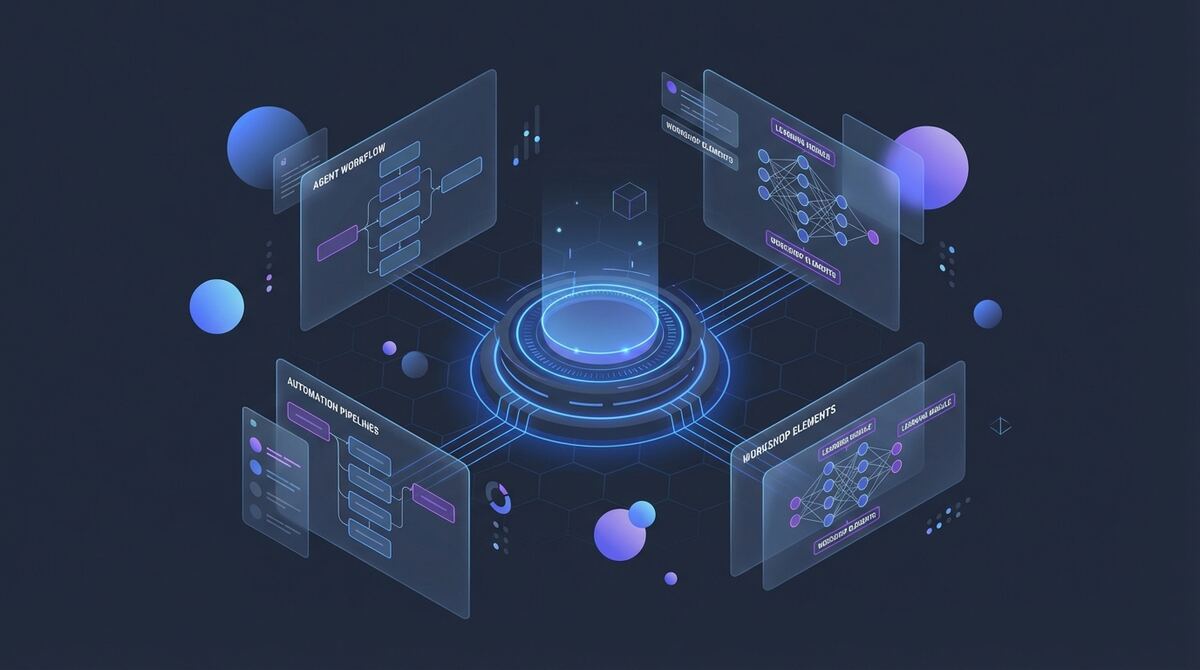
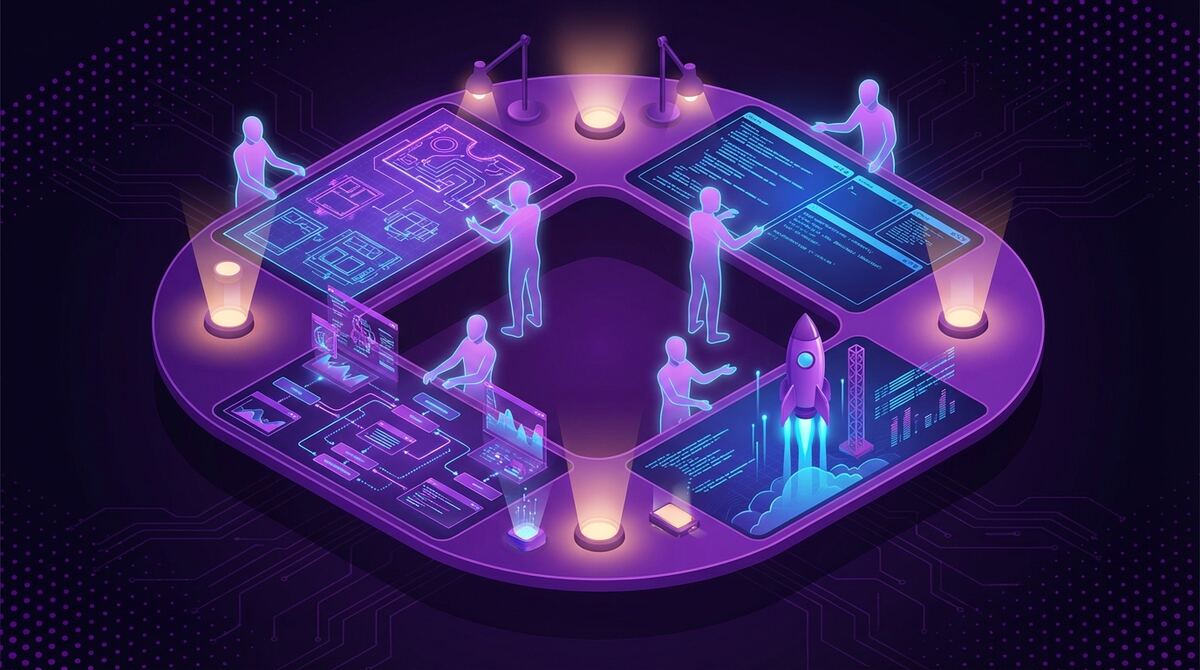
The AI Agents Workshop is hands-on, not theoretical. You'll spend four hours doing, not sitting. Here's what's on the agenda:
- Session 1: The Agent Mindset.
- Session 2: Hands-On Agent Building.
- Session 3: Real Business Use Cases.
- Session 4: Building Your Strategy.
Session 1: The Agent Mindset. We break down the shift from tools to teammates. You'll learn how to think like an AI operator—what tasks to delegate, how to set guardrails, and how to measure autonomy. By the end, you'll have a framework for identifying the top 5 workflows in your business that AI agents could transform right now.
Session 2: Hands-On Agent Building. You'll build your first AI agent from scratch. No coding experience required. Using the Ai1 platform, you'll create a fully functional agent that solves a real business problem—research, customer service, sales pipeline management, whatever you choose. You'll see it work in real time.
Session 3: Real Business Use Cases. We walk through five agent deployments from MyZone’s own client experience, including a 20-person SaaS company that automated 60% of customer support, a consulting firm that scaled research operations 10x, and a B2B sales team that qualified 200+ inbound leads per week autonomously. These are examples from MyZone’s own client work; results vary by business.
Session 4: Building Your Strategy. We help you draft your first 90-day AI agent roadmap. What agent do you build first? Who owns it? How do you measure ROI? What's the budget? You'll leave with a concrete implementation plan.
Why the ROI is Immediate
You can't afford to wait. Here's why:
Productivity Gains: Agents can reduce repetitive work in customer-service triage, research preparation, lead qualification, and scheduling. Time saved and the share of inquiries handled without intervention depend on the workflow, data quality, and review requirements; measure them in a bounded pilot.
Competitive Advantage: Your competitors are still figuring this out. The founders and operators who deploy agents now will own their markets by 2027. You're not racing to "implement AI"—you're racing to do it better and faster than everyone else.
Cost Efficiency: Staffing costs depend on the role, location, hours, and experience. Ai1 Developer Core starts at USD $500 per month with a $2,500 one-time setup fee. Fully Managed starts at $5,000 per month, with a first month of $10,000 all-in. These are platform-plan prices, not a standalone per-agent fee, and AI provider usage is separate. The aim is to help your team do more valuable work. Compare the full costs of setup, operation, human review, and maintenance rather than assuming a fixed effectiveness multiplier or lower costs.
Strategic Clarity: The workshop forces you to think deeply about your business workflows. Which processes are worth automating? What guardrails do we need? This clarity alone pays for itself.
Real Numbers From Real Deployments
Here are results from our own client deployments after previous workshops; yours will depend on your business. In one of them, a 22-person B2B SaaS company automated parts of its customer-support triage workflow. Before agents, three support staff spent 60 percent of their day categorizing and routing tickets. In that MyZone client example, after deploying a single AI agent, we reported that 78 percent of tickets were triaged automatically and average first-response time dropped from 4.2 hours to 11 minutes.
In another MyZone client example, a boutique consulting firm with 15 employees deployed a research agent to prepare client briefings. Work that previously took a junior analyst two full days now takes 90 minutes of agent processing plus 30 minutes of human review. In this MyZone example, the firm reallocated the analyst to client-facing work and estimated $180,000 in added annual billable capacity without hiring. Capacity is not the same as realised revenue.
In a MyZone-reported client example, a regional marketing agency used an AI agent to qualify inbound leads and schedule discovery calls. Their sales team went from processing 40 leads per week to over 200, with higher conversion rates because the agent pre-qualifies based on ideal customer criteria. In that MyZone example, the agency reported booking 3x more discovery calls in the first month without adding sales headcount. Results vary by deployment.

Common Mistakes to Avoid When Starting With Agents
One of the most valuable parts of the workshop is learning what not to do. We have seen dozens of businesses stumble in predictable ways, and we cover each one so you can skip the costly trial-and-error phase.
- Mistake 1: Starting too big.
- Mistake 2: No human oversight loop.
- Mistake 3: Ignoring your team.
Mistake 1: Starting too big. The most common failure mode is trying to automate an entire department on day one. Start with a single, well-defined workflow. Get it working. Measure the impact. Then expand. The businesses that succeed with agents build incrementally, not ambitiously.
Mistake 2: No human oversight loop. AI agents are powerful but imperfect. Every deployment needs a clear escalation path -- a point where the agent hands off to a human. Without this, you get hallucinated responses, incorrect data, and eroded client trust. We show you exactly how to design these guardrails. NIST's 2023 AI Risk Management Framework provides a voluntary structure for managing AI risks.
Mistake 3: Ignoring your team. Agents work best when your team understands what they do and how to interact with them. Deploying an agent without training your staff is like hiring an employee and never giving them a job description. We cover change management strategies that ensure adoption, not resistance.
Ready to Build Your First AI Agent?
The March 12, 2026 workshop has ended. Registration is closed.
Past workshop details →Who Should Attend?
Founders and CEOs who need to scale operations without scaling headcount.
Operations leaders managing customer service, sales, or research teams.
Business development teams looking for competitive advantage.
Anyone interested in hands-on, practical AI implementation (not hype, not theory).
No prior coding experience needed. No prior AI experience required. Just bring a willingness to learn and a business challenge you want to solve.
The Window Is Closing
In 2024, AI agents were experimental. In 2025, they were a differentiator. In 2026, they're table stakes. Every business leader in your industry is now thinking about this. The ones who move first—who build their first agent, understand the opportunities, and deploy at scale—will set the pace. Everyone else will be playing catch-up.
The March 12 workshop is designed to get you from "I'm curious about agents" to "I'm building my first deployed agent" in four hours. Everything you learn is actionable. Everything you build is deployable. You'll leave with clarity, confidence, and a concrete roadmap.