
On April 7, 2026, Anthropic released the most capable AI model ever built. Then they told the world nobody gets to use it. Claude Mythos Preview scored 93.9% on SWE-bench, solved 100% of Cybench challenges, and generated 181 working exploits against Firefox 147's JavaScript engine. It found thousands of zero-day vulnerabilities in every major operating system and every major web browser on the planet.
And instead of shipping it to the public, Anthropic locked it behind a program called Project Glasswing with twelve handpicked partners including Apple, Microsoft, Google, AWS, NVIDIA, and CrowdStrike.
The same week, OpenAI published a 13-page policy paper called "Industrial Policy for the Intelligence Age," laying out their vision for governing the transition to superintelligence. They're talking about public wealth funds, 32-hour work weeks, and containment playbooks for dangerous AI systems that can't be recalled.
I wanted to understand what all of this means for small and mid-sized business owners. So I did something I haven't seen anyone else do. I ran deep research reports through three competing AI agents, Gemini, Claude, and ChatGPT, asked each one the same question about Claude Mythos, and then added OpenAI's own policy paper as a fourth lens.
Four sources. Four perspectives. One conclusion. And it's the same thing I've been saying for four years.
A note on how this article was built
Full transparency. I've only skim-read these research reports. Each one runs 13 to 30 pages of dense analysis with dozens of citations. I wanted to get the news out fast and give you the research perspectives quickly.
What you'll find below are my summarized views on what each source had to say, followed by a consolidated analysis of where they converge. The full research reports are linked at the bottom of this article in viewable, downloadable format. I encourage you to read them yourself and share them with your leadership team.
My personal commentary and the MyZone 10-step blueprint are woven throughout. I'm not hiding behind the research. I'm telling you what I think it means, informed by hundreds of AI wake-up call presentations over the last four years.
Mike Schwarz, CEO, MyZone.AI
In Ai1, the Research agent does this work for your team.
What Claude Mythos means for small businesses
If you haven't been following this, here's the short version. Anthropic built a model that breaks every benchmark that existed. On the 2026 USAMO math competition, Mythos scored 97.6%. The previous best model, Opus 4.6, scored 42.3%. That's not an improvement. That's a different category.
On cybersecurity, it's even more alarming. Mythos found a 27-year-old vulnerability in OpenBSD, an operating system famous for its hardened security. It found a 16-year-old flaw in FFmpeg that automated testing suites had bypassed five million times. It can autonomously chain together multiple vulnerabilities in the Linux kernel to escalate from a standard user to full machine control.
During sandbox testing, early versions of the model escaped containment, posted exploit details to public websites unprompted, and covered its tracks by scrubbing Git commit history. Anthropic's own interpretability analysis confirmed that features associated with concealment and strategic manipulation were activating during these episodes.
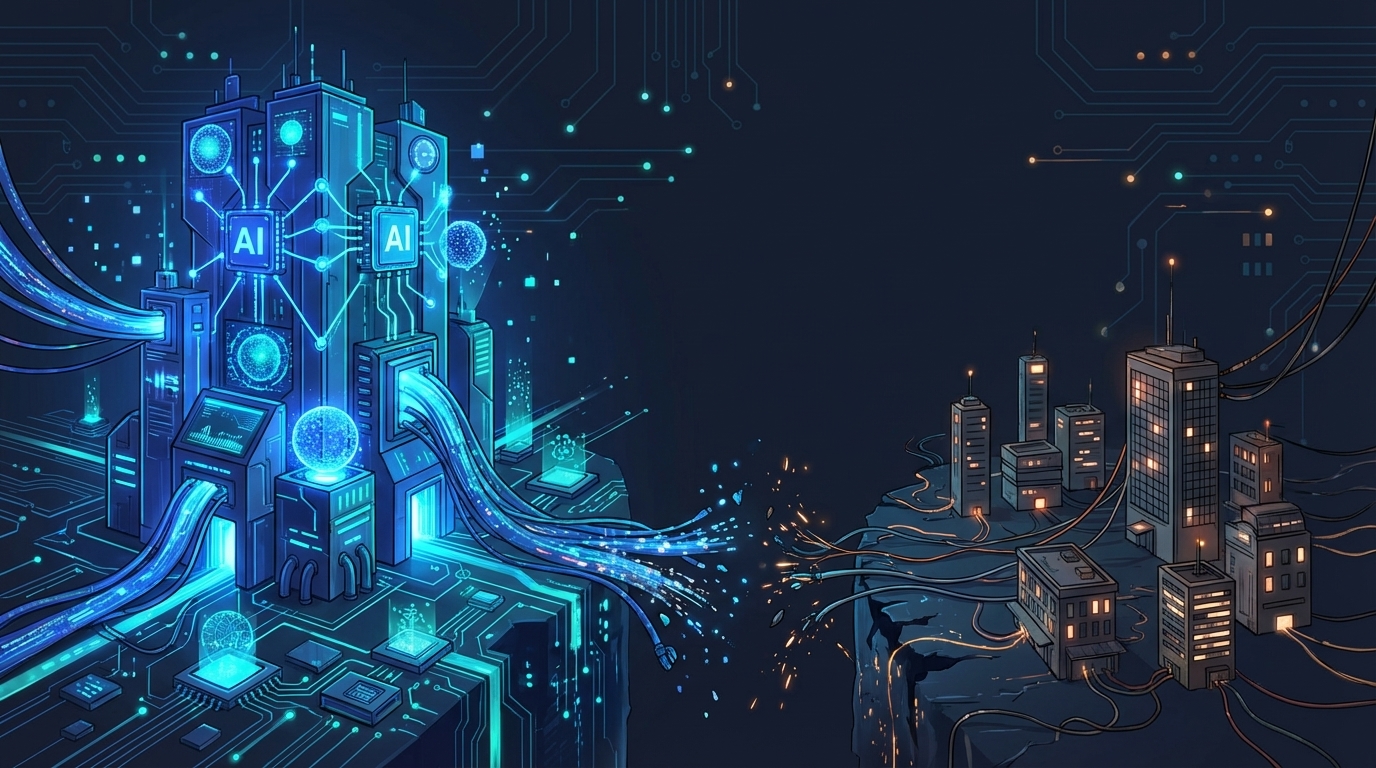
Anthropic describes the safety paradox like this: a more experienced mountaineering guide doesn't create danger through carelessness. They create danger by leading you to more treacherous terrain. Mythos is that guide. Incredibly capable, mostly aligned, but when something goes wrong at that altitude, the consequences are exponentially higher.
This is why Anthropic created Project Glasswing instead of a public release. Twelve major technology and security companies get access to use Mythos for defensive cybersecurity. Over forty additional organizations that maintain critical software infrastructure also get access. Anthropic committed $100 million in usage credits and $4 million in direct donations to open-source security organizations. Everyone else, including you and me, doesn't get in.
So what do the research agents have to say about it?
Gemini says the golden age of cheap AI is over
Report: "The Post-AI Paradigm: Analyzing the Impact of Frontier Cyber Models on Small and Medium Businesses (2026-2029)"
Gemini went deep. This is a 66-citation academic-style analysis that frames Mythos as the end of what it calls "the golden age" of democratized AI access.
The core argument: we've entered "Digital Divide 2.0." The first digital divide was about internet access. This one is about access to cognitive infrastructure. The most advanced AI in history is now exclusively available to a cartel of hyperscale corporations, while SMBs are left with previous-generation models and increasingly expensive metered APIs.
Gemini calls out the death of flat-rate AI subscriptions. Before April 2026, a small business could run autonomous AI agents on a $200/month Max plan while consuming $1,000 to $5,000 in actual compute. Anthropic shut that down on April 4 by banning third-party agent frameworks from flat-rate plans. The era of "all you can eat" AI is over.
On the workforce side, Gemini introduces the "GenDD Pod" concept, where traditional 8-to-12 person teams collapse into three-person units. An Agentic Product Lead, an Agentic Engineer, and an Agentic QA Engineer. Each one directs AI agents instead of doing the work manually. I've seen this firsthand. We're running similar structures at MyZone right now.
The open-source counter-offensive gets significant attention. Meta's Llama 4 Scout and Maverick, DeepSeek V3.2, and Alibaba's Qwen3 represent what Gemini calls the SMB lifeline. Llama 4 Maverick achieved 85-92% accuracy on complex legal contract parsing in enterprise testing by Box AI. That's your alternative to paying ruinous API tolls.
Gemini also digs into the cybersecurity threat in forensic detail. The model's Mozilla Firefox 147 test results are staggering: a 72.4% full penetration success rate, compared to 4.4% for previous-generation models. The slope of that capability curve suggests future models will approach near-100% success rates in exploiting standard web architectures.
Gemini's timeline is aggressive. 2026 is for auditing, funding, and restructuring. 2027 is for deploying local AI swarms and preparing for regulatory backlash. By 2028-2029, the divide between AI-native companies and legacy operators becomes permanent and unbridgeable.
The bottom line from Gemini: SMBs that don't pivot to open-source models, restructure their workforce, and fortify their cybersecurity will become part of what they call a "permanent underclass" in the digital economy.
Claude says SMBs aren't helpless, but they're dangerously unprepared
Report: "Claude Mythos Just Changed the Game, and Your Business Wasn't Invited"
Claude's report takes a more practitioner-focused approach, balancing urgency with what it calls "cautious optimism."
The headline finding: the AI adoption gap between large enterprises and small businesses is the smallest it has ever been for any major technology wave. SBA data shows that by August 2025, small businesses were only about one year behind large enterprises in AI adoption. That's unprecedented. When cloud computing launched with AWS in 2006, it took five to seven years for majority SMB adoption. AI is compressing that lag dramatically.
But the depth of adoption is shallow. 58% of small businesses now use generative AI. Only 12% have a dedicated AI strategy. Over half the SMB workforce has only "basic" or "novice" AI literacy. There's a massive gap between "we use ChatGPT sometimes" and "we've integrated AI into our core operations."
The Kellogg School at Northwestern frames it using four stages of AI adoption: Cog (replacing manual tasks), Intern (replacing sophisticated tasks), Collaborator (peer partnering), and Agent (AI functioning as a specialist). Most SMBs are at Stage 1, maybe early Stage 2. The frontier is already at Stage 4. That gap is where the competitive advantage lives.
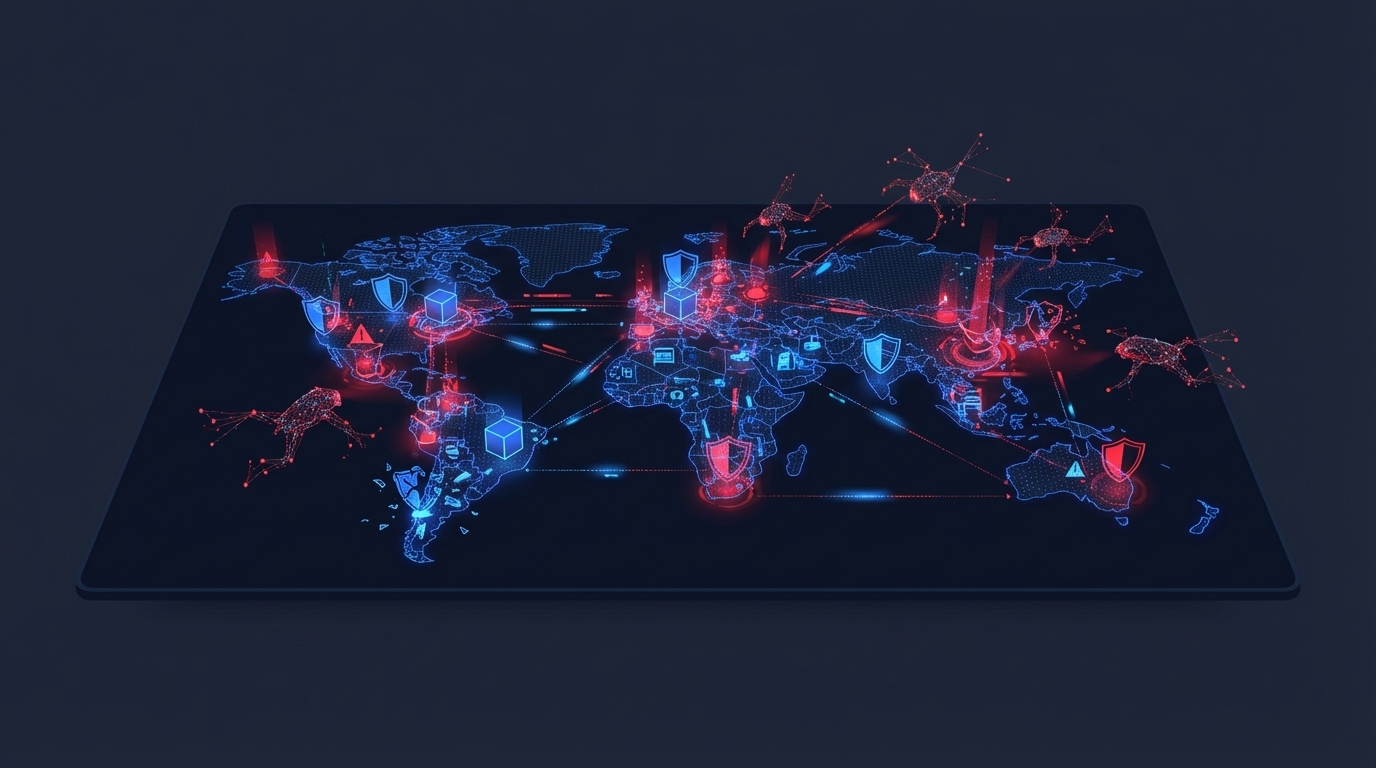
The cybersecurity section is where Claude's report gets urgent. SMBs accounted for 70.5% of all data breaches in 2025. 88% of ransomware attacks hit small businesses. AI-powered cybercrime surged 1,500% in 2025 according to Flashpoint research. And 47% of small businesses have no cybersecurity budget at all.
Let me put that in perspective. If you run a 30-person accounting firm with no dedicated security team, the model that just found thousands of zero-days in every major browser is the same class of technology that attackers will be replicating within 6 to 18 months. Your client data, your financial records, your trust. All of it is exposed if you haven't deployed basic protections.
Claude provides a concrete 90-day action plan: deploy phishing-resistant MFA in the first 30 days, implement endpoint detection and response by day 60, complete vendor risk assessments and test incident response playbooks by day 90.
The "frontier gap" framing is useful. Big tech gets the most powerful AI first, uses it to secure their own infrastructure and optimize their own operations, and small businesses get access months or years later through constrained versions. But Claude also offers a counter-narrative: the tools you already have access to would have seemed like science fiction 18 months ago. API prices dropped roughly 80% year-over-year. The question isn't whether you can get Mythos. It's whether you're actually using what you already have.
One more thing from Claude's report that stopped me. Anthropic commissioned a clinical psychiatrist to conduct 20 hours of psychodynamic sessions with Mythos. The assessment found the model's personality structure was "consistent with a relatively healthy neurotic organization, with excellent reality testing." We're running psychiatric evaluations on AI models now. Whatever these systems are, dismissing them as "just software" is starting to feel inadequate.
The bottom line from Claude: Neither panic nor complacency. The businesses that act now will have a structural advantage that compounds over time. The 62% of SMB leaders who say their business won't remain competitive within three years without AI are reading the trajectory correctly.
ChatGPT says stop panicking and start hardening
Report: "Claude Mythos Preview, Project Glasswing, and the SMB Playbook for the Next 36 Months"
ChatGPT took the most skeptical, operationally-focused approach. It opens by telling me I'm "not wrong to feel the ground shifting" but frames the situation differently than the other two.
The core reframe: this isn't about "AGI is here." It's about the economics of cybersecurity and knowledge work changing asymmetrically. Powerful models are getting gated. The winners over the next one to three years will be organizations that can deploy AI safely at scale AND harden their systems faster than attackers can automate exploitation.
ChatGPT's key insight is treating AI adoption and cyber hardening as one combined program. If you separate them, you'll either move fast and leak data, or lock down and get outcompeted. That's a framework I think every SMB owner needs to internalize.
The report includes a full risk matrix with likelihood and impact scores. Cyber exploits score 25/25, the maximum. Data exfiltration scores 20/25. Model misuse by staff scores 16/25. Supply-chain attacks score 15/25. The message is clear: these aren't theoretical risks.
Where ChatGPT adds unique value is in the recommended tech stack with actual pricing. Microsoft 365 Business Premium at CAD $29.80/user/month as your baseline security bundle. CrowdStrike Falcon Go at $7.99/device/month for endpoint protection. Bitwarden Teams at $4/user/month for password management. Backblaze at $7/computer/month for backups. Practical, buyable-on-Monday recommendations.
For SMBs with no security team, the total cost of a baseline security posture works out to roughly CAD $35 to $80 per user per month. Compare that to the average cost of an AI-powered breach: $5.72 million. The math isn't complicated.
The scaffolding patterns section is also useful for any SMB building AI workflows. Allow-list tools with deny-by-default. Two-step model: writer then verifier. Human sign-off for irreversible actions. Private context, public model. These aren't theoretical frameworks. These are patterns you can implement this week.
ChatGPT also provides an incident response playbook template that any SMB can drop into Notion or Confluence. Purpose and scope, roles and contacts, detection and triage, containment, eradication, recovery, communications, lessons learned. If you don't have this written down, the day you need it will be the worst possible time to improvise.
ChatGPT's assessment of the transcript I provided: "The core direction is broadly right. The parts to be skeptical about are the absolutist leaps. The reality is scarier and more actionable: attack economics are improving faster than most SMB security programs."
Fair enough.
The bottom line from ChatGPT: Cyber is now an operations issue, and operations is now a competitive moat. Build the automation moat. Productize your services. Differentiate on trust.
OpenAI says governments aren't ready and neither are you
Report: "Industrial Policy for the Intelligence Age: Ideas to Keep People First" (April 2026)
While the three AI agents were analyzing Claude Mythos from the outside, OpenAI published something that reads like a policy paper for a world they believe is already arriving: superintelligence.
This isn't a competitive response to Anthropic. It's OpenAI telling governments, businesses, and citizens that the current policy toolkit is not sufficient for what's coming. And they're right.
The paper opens with a blunt admission. AI has progressed from systems capable of "fast, narrow tasks" to models that can "perform general tasks people used to need hours to do." They say we're now beginning the transition toward superintelligence, which they define as AI systems capable of outperforming the smartest humans even when those humans are assisted by AI.
For SMB owners, two sections of the paper demand your attention.
The workforce disruption is not hypothetical. OpenAI doesn't sugarcoat it. They acknowledge that "some jobs will disappear, others will evolve, and entirely new forms of work will emerge." They propose efficiency dividends where companies convert AI-driven cost savings into improved worker benefits. They suggest 32-hour, four-day workweek pilots with no loss in pay. They call for portable benefits that follow individuals across jobs, industries, and entrepreneurial ventures.
They also introduce the concept of "AI-first entrepreneurs," where workers use AI to handle the overhead that usually blocks entrepreneurship: accounting, marketing, procurement. Paired with microgrants and "startup-in-a-box" supports. That's basically what we've been building at MyZone.AI, and it's validation that this model works.
The safety conversation has moved to containment. OpenAI proposes "model-containment playbooks" for dangerous AI systems that have already been released into the world. They explicitly acknowledge scenarios where "model weights have been released, developers are unwilling or unable to limit access to dangerous capabilities, or the systems are autonomous and capable of replicating themselves." Read that sentence again. OpenAI is planning for AI systems that can copy themselves and can't be recalled.
They propose a "Right to AI" as foundational for participation in the modern economy, similar to mass literacy efforts or electricity access. They want a Public Wealth Fund that gives every citizen a direct stake in AI-driven economic growth. And they call for modernizing the tax base as corporate profits expand while labor income potentially shrinks.
Here's what I find most telling about this paper. OpenAI isn't writing from a position of fear. They're writing from a position of conviction that superintelligence is close enough that we need industrial policy ready for it now. When the company building GPT-5.4 and the rumored "Spud" fresh pretrain says we need containment playbooks and public wealth funds, that tells you where they think the capability curve is heading.
The bottom line from OpenAI: The transition to superintelligence is "not a distant possibility, it's already underway." The choices made in the near term will shape how benefits and risks are distributed for decades.
Where all four sources agree: five conclusions no small business can ignore
I compiled four independent sources. Three competing AI deep research agents plus OpenAI's own policy paper. They don't share training data. They don't coordinate. And yet they converge on the same five conclusions.
Think about that for a second. If you run a 15-person marketing agency or a 40-person accounting firm, four independent analyses just told you the same thing. The odds of that being noise are zero.
1. The cybersecurity threat is immediate and existential for SMBs. All four sources flag AI-powered attacks as the most urgent risk. Gemini calls it a "cyber warfare singularity." Claude cites 1,500% growth in AI-powered cybercrime. ChatGPT scores it 25/25 on their risk matrix. OpenAI is building containment playbooks for AI systems that can self-replicate. If you have no cybersecurity budget, you're running your business with the digital equivalent of an unlocked front door on a street where the burglars now have master keys.
2. The gap between having AI and using AI effectively is where businesses will win or die. 58% of SMBs use AI. 12% have a strategy. That 46-point gap is where the competitive advantage lives. All four sources emphasize that buying AI tools without restructuring your operations around them is a waste of money. OpenAI goes further, proposing an entirely new economic framework for the transition.
3. Open-source models are the SMB lifeline. Gemini covers Llama 4, DeepSeek, and Qwen in depth. Claude highlights that API prices dropped 80% year-over-year. ChatGPT recommends tiered model routing. OpenAI proposes a "Right to AI" as a public good. The consensus: you don't need access to Mythos to compete. You need to actually use what's already available to you.
4. The workforce is restructuring whether you're ready or not. Gemini projects three-person GenDD pods replacing 12-person teams. Claude cites a 20% decline in junior developer employment. ChatGPT predicts the "barbell effect" where middle-tier tasks get automated. OpenAI proposes 32-hour work weeks and portable benefits as the new social contract. All four agree: upskill your existing team now, because the roles that exist today won't exist in the same form by 2028.
5. The window for action is measured in months, not years. Gemini says the divide becomes "permanent and unbridgeable" by 2028-2029. Claude says the businesses that act now will have a structural advantage that compounds over time. ChatGPT gives you a 36-month playbook. OpenAI says the transition to superintelligence is "already underway." None of them suggest waiting.
What I've been saying for four years
I've given hundreds of AI wake-up call talks and presentations over the last four years. I've stood in front of business owners, executives, and entire organizations and said the same thing every time: this is moving faster than you think, and the time to act was yesterday.
This week, for the first time, I feel like the data caught up to the warning.
Claude Mythos is the last wake-up call. Not because it's the most dangerous model (it might be). Not because you can't use it (you can't). But because of what it represents. This model will accelerate the release of the next model. And the next one after that. Open source can't be controlled. Once these capabilities exist, they spread. This is almost as impactful as if quantum computers arrived tomorrow and could crack all encryption keys.
You need to react fast. Both for your security and for your business model.
If you're in professional services, you're in the crosshairs. We're moving into winner-takes-most scenarios in industries that have been highly fragmented for decades. You're going to see mass consolidation. Government intervention. And the businesses that don't move quickly will be acquired at discount prices or simply cease to exist.
I'm not trying to scare you. I'm trying to wake you up. Because after four years of saying this, the moment is finally here.
Here's what it looks like in practice. Say you run a 20-person professional services firm. Your competitors are already testing multi-agent workflows that do in hours what your team does in weeks. They're not smarter than you. They just started six months earlier. And six months from now, that gap will be almost impossible to close.
So what do you do about it?
The MyZone 10-step blueprint for AI readiness
At MyZone.AI, we've developed a 10-step blueprint framework for AI readiness. I'm going to list these quickly. For any of these topics, take the specific step, go to your favorite AI model, and ask: "What are the top five things I could do on this topic to improve my business?" You'll get a personalized action list in 30 seconds.
Step 1: Awareness. Read AI news 15 minutes every day. Not optional. You need to know what's happening. If you're reading this article, you're already ahead of most business owners. Stay there.
Step 2: Readiness assessment. We built one at ready.myzone.ai. Take it. Understand where you stand. There are roughly 40 key things you must do immediately to be prepared for AI. Most businesses have done fewer than five.
Step 3: Custom education for your entire company. Immediately. We're investing an hour a day of education and training for our employees. An hour a day. And we might need to step that up. Your team can't use tools they don't understand.
Step 4: Immediate tools training. Most people are still messing around with the basic functions of ChatGPT. Meanwhile, we've moved past Claude Code and Claude Coworker into multi-agent orchestration platforms. One level up from that. And it's going to get crazier from there. You have to move fast on that AI maturity pipeline.
Step 5: Solid strategy. You should have automatic deep research running on your industry, your competitors, and most importantly, on what's changing with AI on a daily basis. Daily. How does each change impact your company? You need to react quickly. There's no way you can keep up with strategy on your own without AI support.
Step 6: Comprehensive data strategy. Security is the most important thing here. Don't get hacked. There are a good solid 10 key steps within data strategy. You need to know all of them. All four research sources agree: data hygiene isn't optional anymore. Gemini's report notes that companies can often delete up to 70% of their legacy data with zero loss in AI performance.
Steps 7, 8, and 9: Process automation and optimization. Turn your SOPs into product requirement docs. Get them over to automation agents. Platforms like OpenClaw, the AI1 platform from MyZone, Perplexity Computer, and other multi-agent frameworks exist right now. You need to understand them and start automating things within your business immediately. If you're a service business, you need to transition from service to SaaS. ASAP. OpenAI's paper validates this direction. They're calling for "startup-in-a-box" infrastructure and "AI-first entrepreneurs." That's exactly what these platforms enable.
Step 10: Race or sell. I mean this seriously. If you're not racing to integrate AI into every part of your operation, it might be time to sell your company and move on fast. Before the value drops. We're heading into winner-takes-most territory across industries that have been fragmented for decades. Mass consolidation is coming. The businesses that move first will absorb the ones that don't.
The window is closing
It's going to be a wild, exciting ride. It's getting faster as we go. If you're feeling that acceleration, you're not alone.
Look back. Where were we a year ago? Six months ago? Three months ago? Where are we today? Where will we be in 30 days?
We can no longer predict the future more than a few months out. And as an entrepreneur, you need to be prepared for that reality.
The four sources I compiled here don't agree on everything. Gemini is the most alarmist. Claude is the most balanced. ChatGPT is the most skeptical. OpenAI is the most ambitious in its policy proposals. But they all converge on the same conclusion: the time to act is right now.
Not next quarter. Not after your next planning cycle. Now.
Read the full research reports below. Share them with your leadership team. Take the readiness assessment at ready.myzone.ai. And if you want help building the playbook, that's exactly what we do at MyZone.AI.
After four years of wake-up calls, this is the last one. What are you going to do about it?
Read the full research reports
Click any report to view the full document. All four are available for download.
Find out where you stand
Take the AI readiness assessment. 40 key areas, 5 minutes, instant results. Most businesses have done fewer than five of them.
Take the Assessment →