I’ll tell you this: in the age of artificial intelligence, it has never been easier to optimise your pages, optimise your media buying spend, and convert traffic into more sales. Most companies are leaving 30 to 50% of revenue on the table. Why? Because their websites and landing pages don’t convert. They don’t optimise them. And one of the best systems in the entire world for optimising things is artificial intelligence. It is here. It is cheap. In many cases, it is free.
If you’re not yet using AI to CRO the hell out of your website, I can tell you your competitors are. And you need to get on that.
The Traditional Funnel — And Where It Breaks
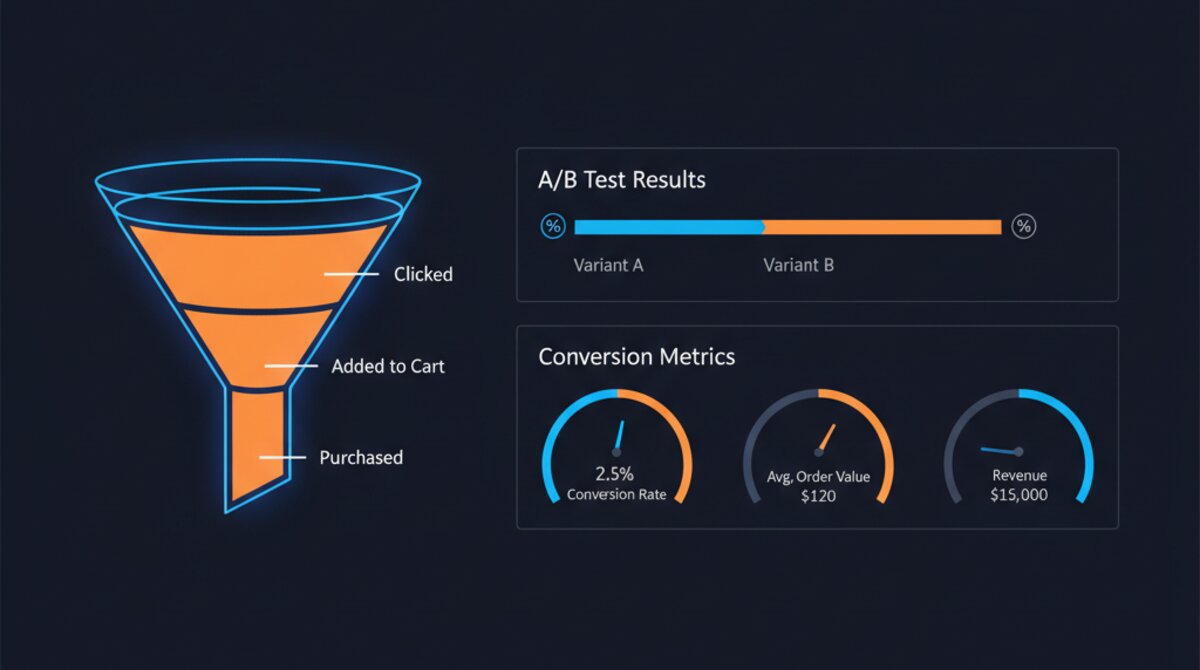
Let’s look at a traditional funnel. Say you’re running Google Ads to a custom landing page that feeds into a CRM. There’s a lot of optimisation opportunity directly within Google, and that’s where most people focus their time. They’ll optimise the spend on keywords, the ad copy, the creatives, the videos. They’ll design a pretty basic landing page — or worst case, and I mean actually over 60% of businesses do this, they just drive traffic straight to the homepage of their website. That is absolutely horrible. Never do that.
For the people who go all the way to building customised landing pages, they’re doing pretty good. But in the scheme of things, they’re still only at about a 4 or 5 out of 10 in terms of what they should be doing. So what’s the big thing? What comes next? What else do they need to be doing?
A/B Testing: The Old Way Was Painfully Slow
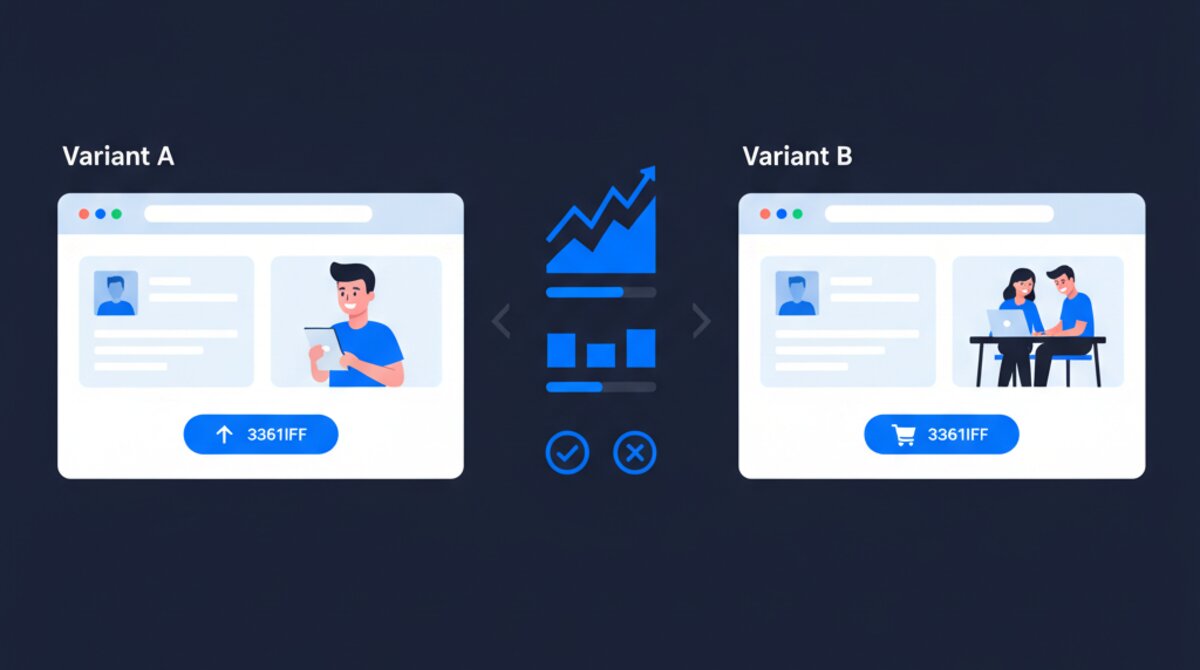
First and foremost, the landing page needs to be split tested. A/B tested. All traffic needs a variant of the page to compete against. In the old days, when you wanted to create a variant of a page, you had to copy it, paste it, and then go through and edit a whole bunch of text. Edit a whole bunch of images. Strategise. We’d spend 5 to 10 hours coming up with a single variant. Usually we’d look at our keywords in Google Ads, see what’s converting. We’d pull up Google Analytics. We’d make assumptions based on a couple of data points. Then we’d try a variant and test it out. Learn from it. Do another variant.
Maybe one or two variants per month for a client, because it was really expensive. We had to wait until the data was statistically significant. We had to create all these monthly reports. Everything was taking time. And most of our clients, if they were lucky, would get one to two A/B tests going per month without any artificial intelligence.
AI Just Blew the Doors Off
AI has changed that game completely. With the click of a button, about 15 cents worth of tokens, within 60 seconds or less, you can spin up a beautifully gorgeous landing page that used to cost $1,500 — and now costs less than a dollar. Think about that.
“A landing page that used to cost $1,500 and two weeks of agency time — you can now spin up in 60 seconds for 15 cents. That’s not an improvement. That’s a completely different universe.”
— Mike Schwarz, Founder & CEO, MyZone AI
Because it’s now almost free to create hyper-specific landing pages, you can go through and have AI that analyses all your click data, all your keyword data, all your Google Analytics, your Shopify sales records — whatever it is. Suck up all that data, and AI will intelligently predict what pages you should be A/B testing, what keywords to target, how granular you should go. It can analyse your traffic levels and make sure it’s doing everything in a statistically significant way, prioritising your most important pages, learning as it goes, and applying the learnings from one page to another. From a group of pages or category of pages to an individual page that might not have enough data to be optimised on its own.
It absolutely changes the game. And that was just one example. I only looked at one small idea. There are at least ten ideas that are this big. We don’t have enough space in this article for me to talk about them all, but let me hit a few of the heavy hitters.
CRM Intelligence: Finding the Pockets of Magic
Think about what happens when you can have AI analyse all of your leads and customers in your CRM and start to understand the relationships between them. The relationships between your unqualified leads and your marketing qualified leads and your sales qualified leads and your customers and your retained customers — the customers that have the longest lifetime value. AI can enrich all of that data. Look at every data signal. And tell you: what is the most valuable slice of the audience in the world that you should be targeting? The ones with the longest lifetime value, the easiest conversion path, the highest average order value.
We look at all of the enriched data signals, and AI will say, “Aha — did you know that family lawyers from Edmonton absolutely love you? You might want to try targeting them in Calgary.” Just little segments. Little pockets of magic. And historically, you wouldn’t even have the time to market to those segments. Who’s going to target a small group of lawyers in a small Canadian city specifically with ads and effort? It’s not worth it. You go Canada-wide. You go USA-wide. But now with AI, you can spin that up and optimise it and go all the way through the funnel — from Google Ads to the landing page into the CRM into the analytics into the purchasing into enriching the data.
With that, you get incredible insights. And then how does this relate back to CRO? We take all of the data, feed it back into the conversion machine, and suddenly your landing pages aren’t just optimised — they’re hyper-personalised for the exact audience that converts best.
Heatmaps, Session Recordings, and the End of Guesswork
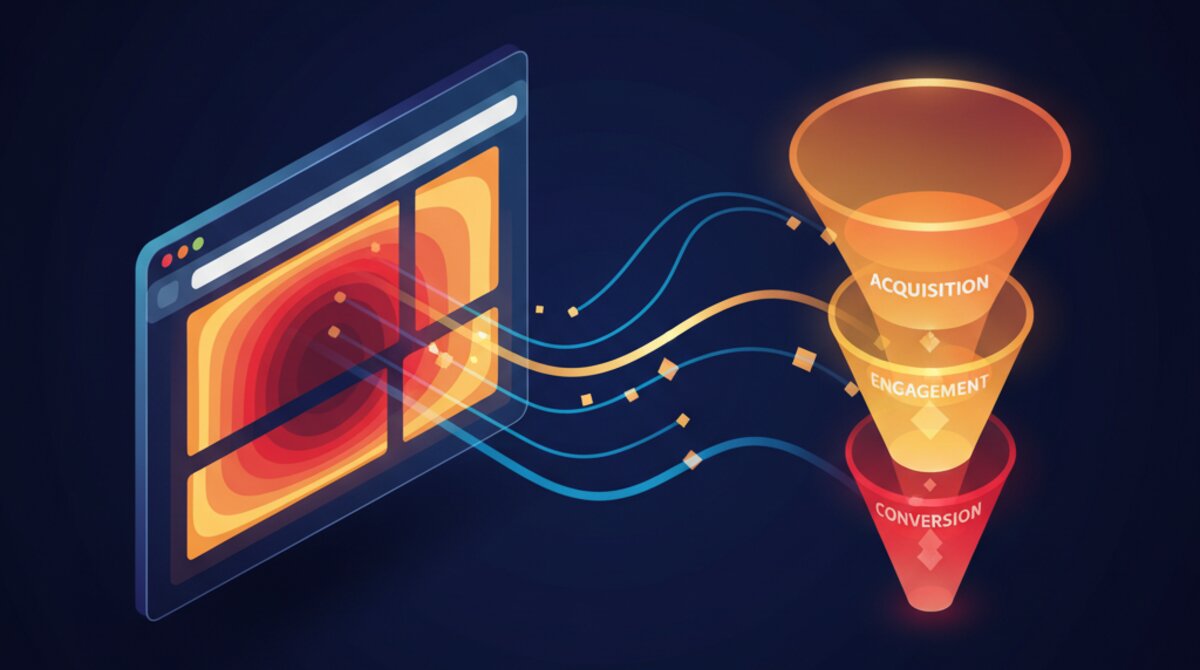
Here’s another one that’s massive. Heatmap and session recording tools like Hotjar and Microsoft Clarity have been around for years. They’re incredibly powerful — they show you exactly where people click, how far they scroll, where they rage-click in frustration, where they hesitate. Session recordings let you literally watch someone navigate your site in real time.
The problem? Nobody has time to watch hundreds of session recordings. Nobody has time to sit there studying heatmaps for every page across every device across every traffic source. It’s an ocean of data that most businesses just drown in. They install Hotjar, look at it once, go “oh that’s cool,” and never touch it again.
AI changes that completely. You can now feed all of that behavioural data — every click, every scroll depth, every rage-click, every u-turn — directly into an AI model that synthesises it in seconds. It doesn’t just tell you “people aren’t scrolling past the fold.” It tells you why. It correlates the behaviour with the content. It looks at your mobile versus desktop users and identifies that your CTA button is below the fold on iPhone 15 but above it on Samsung Galaxy, and that’s why your mobile conversion rate is 40% lower. It finds the rage-clicks on your pricing toggle and tells you the labels are confusing. It identifies that visitors from your email campaigns have completely different scroll patterns than visitors from paid search, and recommends different page structures for each.
“AI doesn’t just tell you people aren’t scrolling past the fold. It tells you why — and then builds the variant that fixes it.”
— Mike SchwarzForm Optimisation: Where Revenue Goes to Die
Forms. Let’s talk about forms. This is where so much revenue goes to die. You get someone interested enough to click your ad. Interested enough to read your landing page. Interested enough to scroll all the way down and click “Get Started.” And then you hit them with a form that has 14 fields, asks for their fax number, and doesn’t work properly on mobile. Congratulations, you just lost them.
The average form abandonment rate is somewhere between 60 and 80%. That is insane. Eight out of ten people who start filling out your form give up and leave. And most businesses have no idea which fields are causing the drop-off, or even that the drop-off is happening.
AI can now analyse every keystroke, every pause, every tab-out, every backspace in your form. It can tell you that people are dropping off at the phone number field because they don’t want to be cold-called. It can tell you that your “Company Size” dropdown confuses solo founders who don’t know whether to pick “1-10” or “Just Me.” It can tell you that your address fields are causing 23% of mobile users to abandon because the autocomplete isn’t working on iOS. And then it can generate the optimised variant for you, test it, and implement the winner — all without a human touching it.
Dynamic Pricing and Urgency: The Ecommerce Goldmine
If you’re in ecommerce, this one’s going to blow your mind. AI can now dynamically adjust pricing presentation, urgency signals, and social proof in real time based on the individual visitor’s behaviour. I’m not talking about shady stuff — I’m talking about intelligent merchandising.
Visitor comes in from a price-comparison site? AI knows they’re price-sensitive and leads with value propositions and bundles. Visitor comes from a brand search? They already know you — AI leads with social proof and urgency. Returning visitor who abandoned their cart three days ago? AI shows them the specific product they left behind with a subtle nudge about limited stock. And it’s not showing fake “Only 2 left!” messages — it’s pulling real inventory data and real purchase velocity to create genuine urgency.
The ecommerce stores that are doing this right now are seeing 15 to 30% lifts in conversion rate. Not from a redesign. Not from a rebrand. Just from letting AI personalise the experience for each individual visitor based on what’s actually happening in the data.
Page Speed: The Silent Conversion Killer
Here’s one that nobody thinks about as a CRO issue but absolutely is: page speed. Every 100 milliseconds of delay costs you about 1% of conversions. Let that sink in. Your page takes an extra second to load? That’s 10% of your conversions gone. Just evaporated. And most business owners have no idea their site is slow because it loads fast on their office Wi-Fi.
AI-powered CRO doesn’t just flag speed issues — it diagnoses them down to the individual resource level and prioritises them by revenue impact. It can tell you that your hero image alone is costing you $2,300 per month in lost conversions because it’s a 4MB unoptimised PNG that takes 3.2 seconds to load on a mobile connection. It can identify that your third-party chat widget is adding 1.8 seconds of render-blocking JavaScript and isn’t even generating any leads. And it can give you the exact fix for each issue, in priority order, with estimated revenue recovery for each one.
The Full-Funnel AI CRO Machine
Now here’s where it gets really crazy. Everything I just described — the A/B testing, the CRM intelligence, the heatmap analysis, the form optimisation, the dynamic personalisation, the speed diagnostics — these aren’t separate things anymore. With AI, they’re one connected machine.
Think about it. AI sees that your Google Ads are performing great — your click-through rate is 4.2%, well above industry average. But your landing page conversion rate is 1.8%, way below where it should be. It analyses the heatmaps and sees that people are reading the hero section and then bouncing. It checks the session recordings and identifies that mobile users are getting confused by the navigation overlay. It looks at your form data and sees that the 12% of visitors who do reach the form are abandoning at the company name field. It checks page speed and discovers the page takes 4.1 seconds to become interactive on 4G.
Now it has the complete picture. It generates a new page variant that fixes the mobile navigation, removes the company name field from the form, compresses the images, defers the non-critical scripts, and rewrites the hero copy to better match the ad messaging that’s driving the clicks. It deploys the variant, monitors it in real time, and when it hits statistical significance, it promotes the winner and starts the next iteration.
That entire cycle — from diagnosis to fix to test to implementation — used to take a month with a full agency team. AI does it in a day. And it does it continuously, for every page, for every traffic source, 24 hours a day, 7 days a week.
“The diagnosis-to-fix-to-test-to-implementation cycle used to take a month with a full agency team. AI does it in a day. And it does it continuously, for every page, 24/7.”
— Mike Schwarz, Founder & CEO, MyZone AI
Why This Matters More for Small Business Than Anyone Else
Here’s what kills me. The big enterprise companies — the Amazons, the Shopifys, the massive DTC brands — they’ve had teams of 20 CRO specialists doing this kind of work for years. They had the budgets. They had the data scientists. They had the engineering teams to implement every little tweak.
Small businesses? They got nothing. Maybe they hired a freelancer once to “optimise” their landing page, which really just meant making the button bigger and changing it from green to orange. Maybe they ran one A/B test in 2023 and gave up because they didn’t have enough traffic for statistical significance. Most small businesses are still running the same landing page they launched with, completely unoptimised, bleeding revenue every single day.
AI just levelled that playing field overnight. A solo founder with a Shopify store can now get the same calibre of CRO analysis and implementation that used to require a $50,000-a-month agency retainer. The same level of data analysis. The same statistical rigour. The same continuous optimisation. For essentially nothing.
That’s not a small thing. That’s a redistribution of competitive advantage on a scale we haven’t seen since the internet itself.
The Compounding Effect Nobody Talks About
One more thing, and this is the one that really keeps me up at night — in a good way. CRO improvements compound. This isn’t like SEO where you’re fighting for rankings in a zero-sum game. When you improve your conversion rate from 2% to 3%, that’s a 50% increase in revenue from the exact same traffic. You don’t need to spend another dollar on ads. You don’t need more content. You don’t need more backlinks. You just made 50% more money from the customers who were already showing up.
And then when you improve it again, from 3% to 4%? That’s another 33% on top of the already-improved number. And now your cost per acquisition has dropped dramatically, which means your ad spend is more efficient, which means you can afford to bid higher on more competitive keywords, which brings in more traffic, which feeds more data into the AI, which makes the optimisation even better. It’s a flywheel. Once it starts spinning, it just accelerates.
The businesses that start this flywheel in 2026 are going to be so far ahead by 2027 that their competitors won’t be able to catch up. Not because the technology won’t be available — it will — but because the early movers will have months of compounding data and optimisation that late adopters will never recover from.
See It in Action
We built an AI-powered CRO audit automation into the Ai1 platform that does exactly what I’ve been talking about. It connects to Google Analytics 4, Hotjar, Microsoft Clarity, Google Tag Manager, PageSpeed Insights, and half a dozen other tools. It runs the full analysis. Generates a detailed report with prioritised recommendations and estimated revenue impact for each fix. And it does it in under two minutes for less than the cost of a coffee.
You can watch the whole thing happen in real time on our CRO Audit demo page. Every tool connection, every data pull, every analysis step. It’s completely transparent — you see exactly what the AI is doing and why.
The window is open. Your competitors are figuring this out right now. The question isn’t whether AI-powered CRO works — it’s whether you’ll be the one using it, or the one wondering why your conversion rate keeps falling behind.
See the CRO Audit Automation in Action
Watch how Ai1 audits your conversion rate optimization end-to-end with our CRO audit automation workflow.
Explore the Automation →