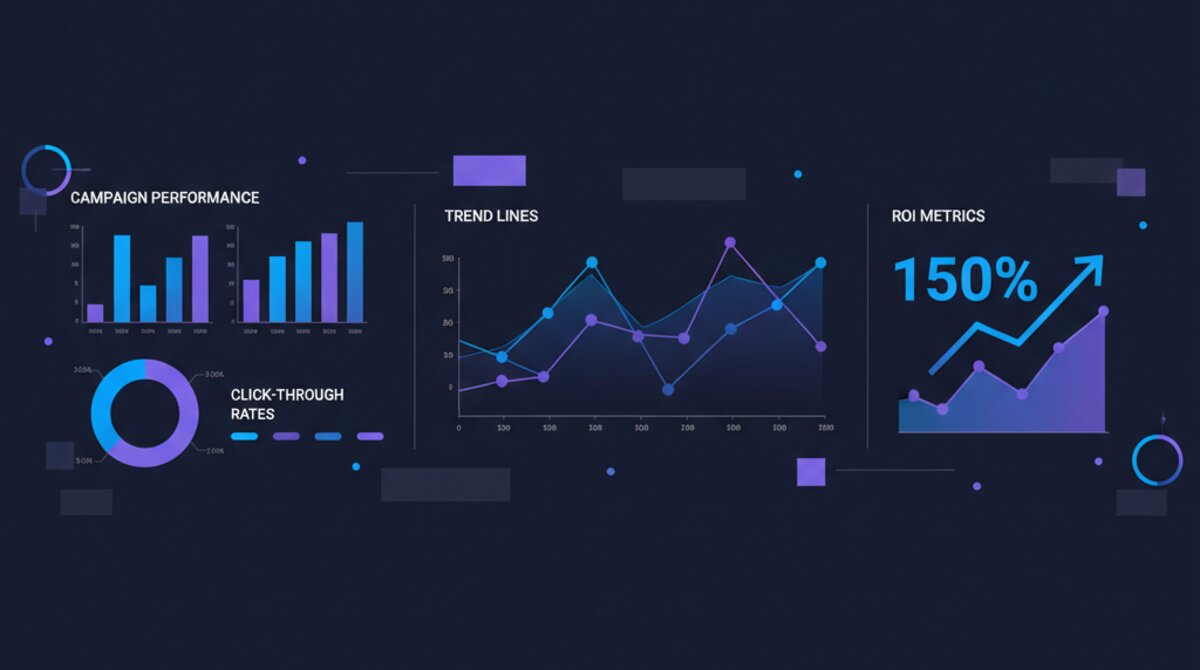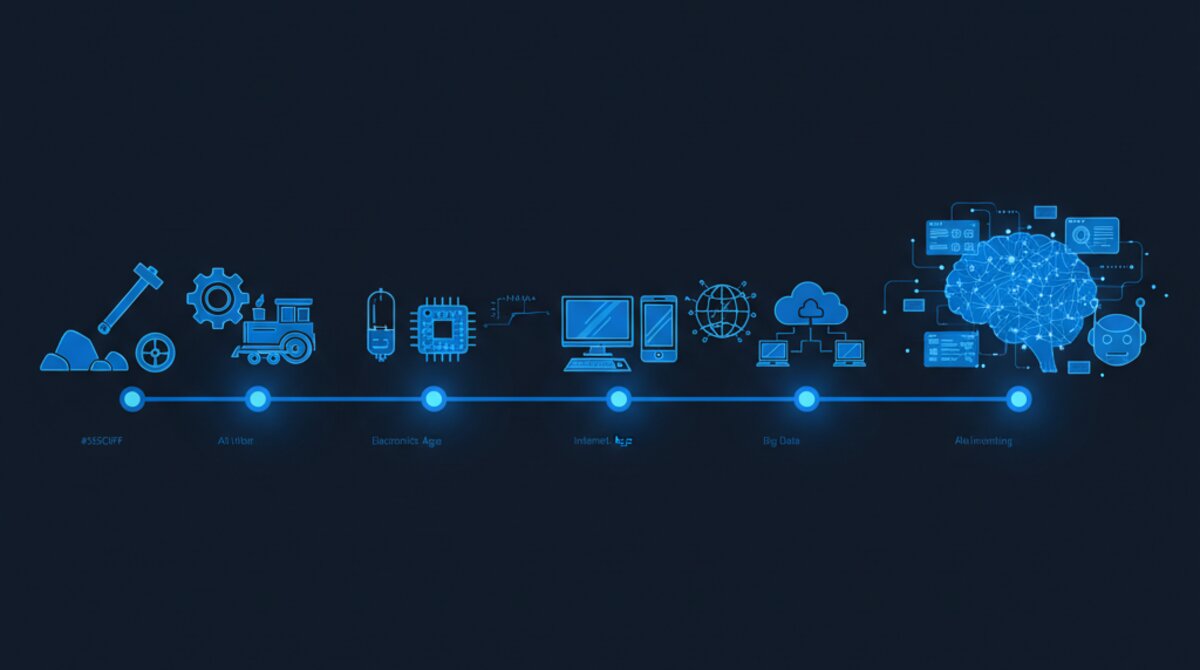

Landing-page conversion rates vary with the audience, offer and traffic source. Relevance is one factor you can test: does the page answer the question that brought the visitor there?
Most businesses send every visitor to the same page. A dental software company running ads to dentists, hospital admins, and office managers shows all three groups the same hero image, the same headline, the same message. The dentist sees it and thinks, "This is probably for hospital systems." The hospital admin thinks, "This feels too small-business." Both leave.
AI agents have changed this equation completely. For the first time, salespeople can draft segment-specific landing pages for review — complete with custom images, personalized copy, and brand-compliant design — without a designer, without a developer, and without waiting three weeks for an agency.
Why your current landing page is costing you customers
Here's the uncomfortable truth: paid traffic is expensive, and most of it is wasted.
You spend weeks perfecting your Google Ads targeting. You test headlines. You optimize bidding strategies. Then you send every winning click to the same landing page you built 18 months ago. That's the equivalent of a restaurant spending a fortune getting people in the door, then seating everyone at the same table with the same menu — regardless of whether they came for a quick lunch or a special occasion dinner.
A personalized call-to-action can make the next step more relevant to a visitor. Test it against your existing version rather than assuming a particular conversion lift.
The personalization problem nobody solved — until now
The problem was never understanding that personalization matters. Everyone knew that. The problem was execution. Building a custom landing page takes 20-40 hours of design and development time. Multiply that across 10 audience segments and you're looking at a months-long project and a $30,000 agency bill.
So businesses rationalized their way out of doing it. They added a name token to the headline. They swapped one hero image. They called it "personalized" and moved on.
That was the best available option — until AI agents arrived.
In Ai1, the Designer does this work for your team.
What AI agents actually build — and how
The AI1 platform changed what's possible for our clients. We can now instruct an AI agent to build a fully custom landing page for a specific segment — and it does it end-to-end, following the brand's style guide with the precision of a senior designer.
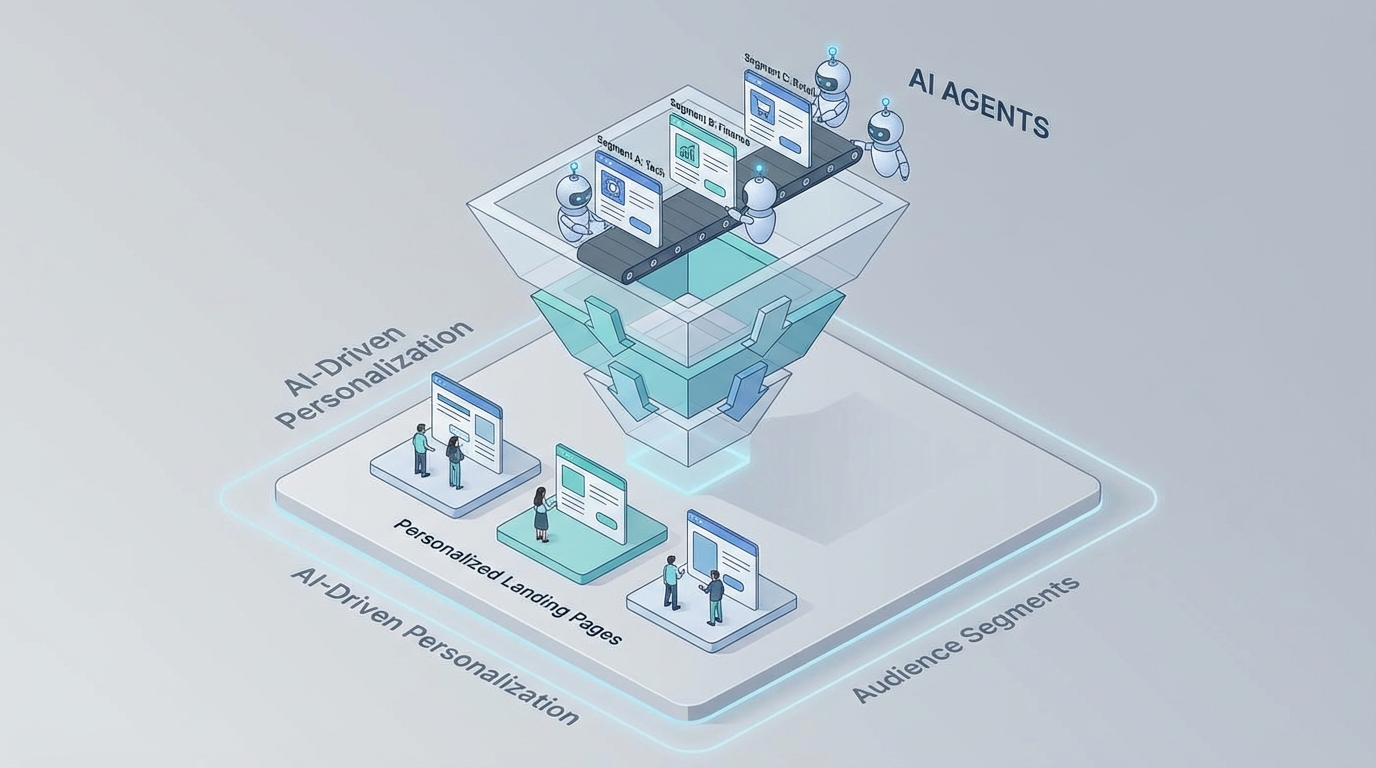
Here's what that actually looks like. A B2B software company wants to run Google Ads to three segments: CFOs, IT directors, and operations managers. Each of these personas has a different primary concern, different language they respond to, and different objections to overcome.
The AI agent reads the brand style guide — fonts, color tokens, spacing rules, component patterns — and builds three pages. Not three variations of a template. Three fully realized pages, each with:
- A headline written for that specific persona's primary concern
- Hero copy that speaks to their world — their language, their metrics, their objections
- Custom AI-generated images that match the visual context of that audience
- Proof points selected for relevance (CFOs see ROI data; IT directors see security certifications)
- A CTA matched to where that persona is in their buying journey
In our own MyZone example, three pages were built and deployed in under two hours. That is one deployment, not a delivery-time guarantee.
Style guides: a reference for reviewing AI-built pages
The quality question comes up every time I explain this. "Won't they look generic? Off-brand?"
Not when the AI has a style guide. This is the part most people don't understand about how modern AI agents work. A style guide isn't just a PDF of brand colors. It's a codified set of rules the agent enforces with zero deviation: exact color values, spacing ratios, font weights, button styles, grid layouts, image tone requirements.
Give a human designer a style guide and they'll follow it mostly. They'll have good days and bad days. They'll interpret it with personal judgment sometimes — occasionally brilliant, occasionally wrong.
A style guide gives an AI agent clear design constraints. Review each generated page for brand compliance, layout problems and accessibility before publishing.
The consistency advantage
When you run 10 ad campaigns to 10 different segments, every landing page looks like it came from the same design team. That brand consistency builds trust — and trust converts. Inconsistency, even subtle inconsistency, creates subconscious friction that kills conversions.
AI images: the visual personalization layer that changes everything
Most people think about personalization as copy and messaging. That matters. But visual personalization — the images on your page — has an outsized impact on conversion that's consistently underestimated.
Think about the difference in emotional response between a healthcare company seeing a landing page with clinical-setting imagery versus the same page with a generic office stock photo. The clinical image signals, "We understand your world." The stock photo signals, "We're not really talking to you."
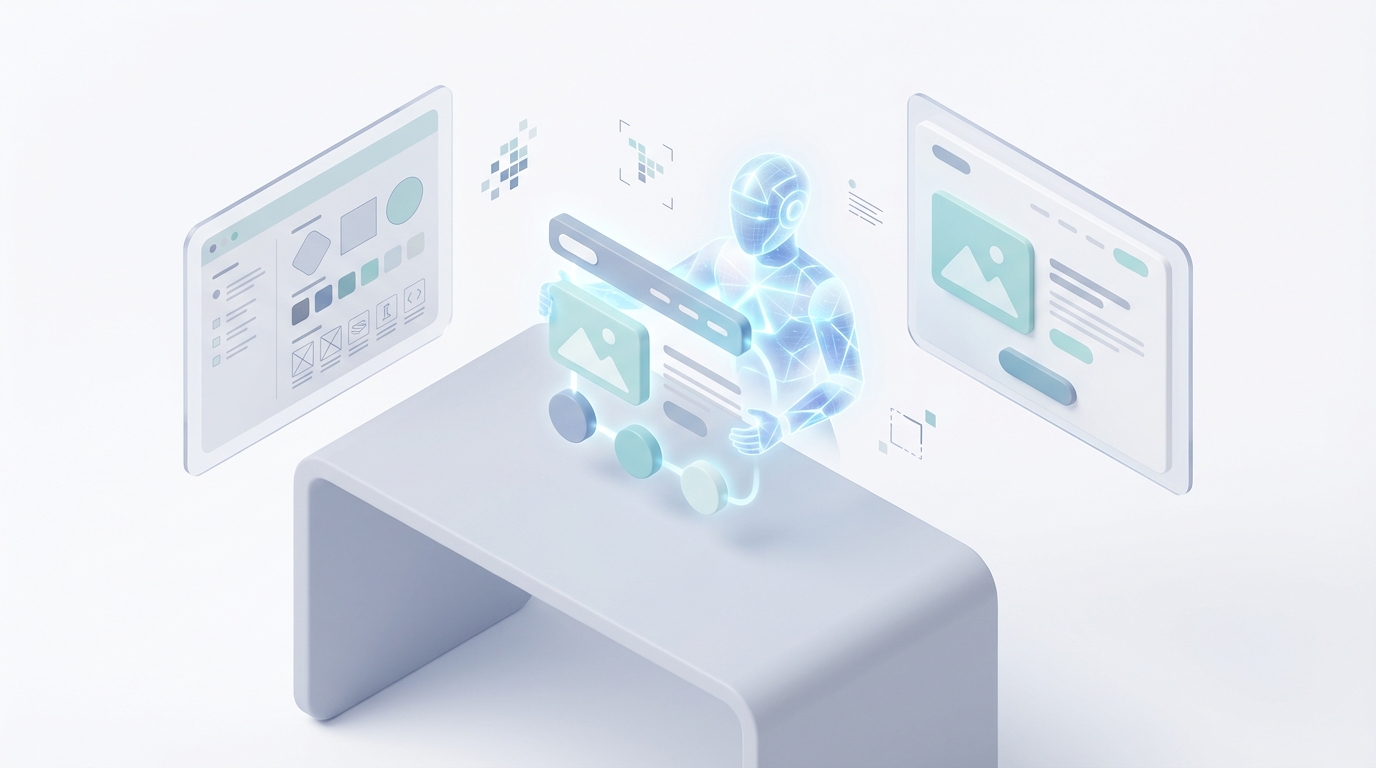
The AI1 platform integrates with Nano Banana — our AI image generation tool built on Google Gemini — to generate segment-specific images as part of the page-building workflow. For each audience segment, the agent generates images that reflect that segment's visual world.
How visual style guides work for image generation
The same style guide principle applies to images. We build a visual style guide that defines the image aesthetic — color palette, composition style, level of abstraction, mood — and the AI generates images that match that aesthetic every time.
For MyZone's own site, we use a minimalist isometric illustration style: muted cool tones, soft 3D geometry, enterprise-friendly. Every image on this blog, every page image, follows that aesthetic. That's AI-enforced brand consistency working in real time.
For a client in B2B manufacturing? We build a style guide that reflects precision, clean machinery, industrial context. For a financial services client? Calm, professional, data-forward. The images feel intentional because they are — just not manually created.
Salespeople now have a superpower they've never had before
This is the part that genuinely excites me about where sales is going.
In the past, a salesperson who identified a high-value prospect segment had one option: request a custom landing page from marketing, wait weeks for it to be built, watch the campaign timing slip. By the time the page launched, the window had often closed.
Now? A salesperson can brief an AI agent on a new segment — "Healthcare CFOs in the Pacific Northwest dealing with EHR compliance costs" — and have a fully built, brand-compliant, conversion-optimized landing page ready to pair with a Google Ads campaign in the same afternoon.
That's a fundamental shift in who can move quickly in a sales organization. It's no longer "how fast can marketing build it." It's "how fast can the salesperson articulate the segment."
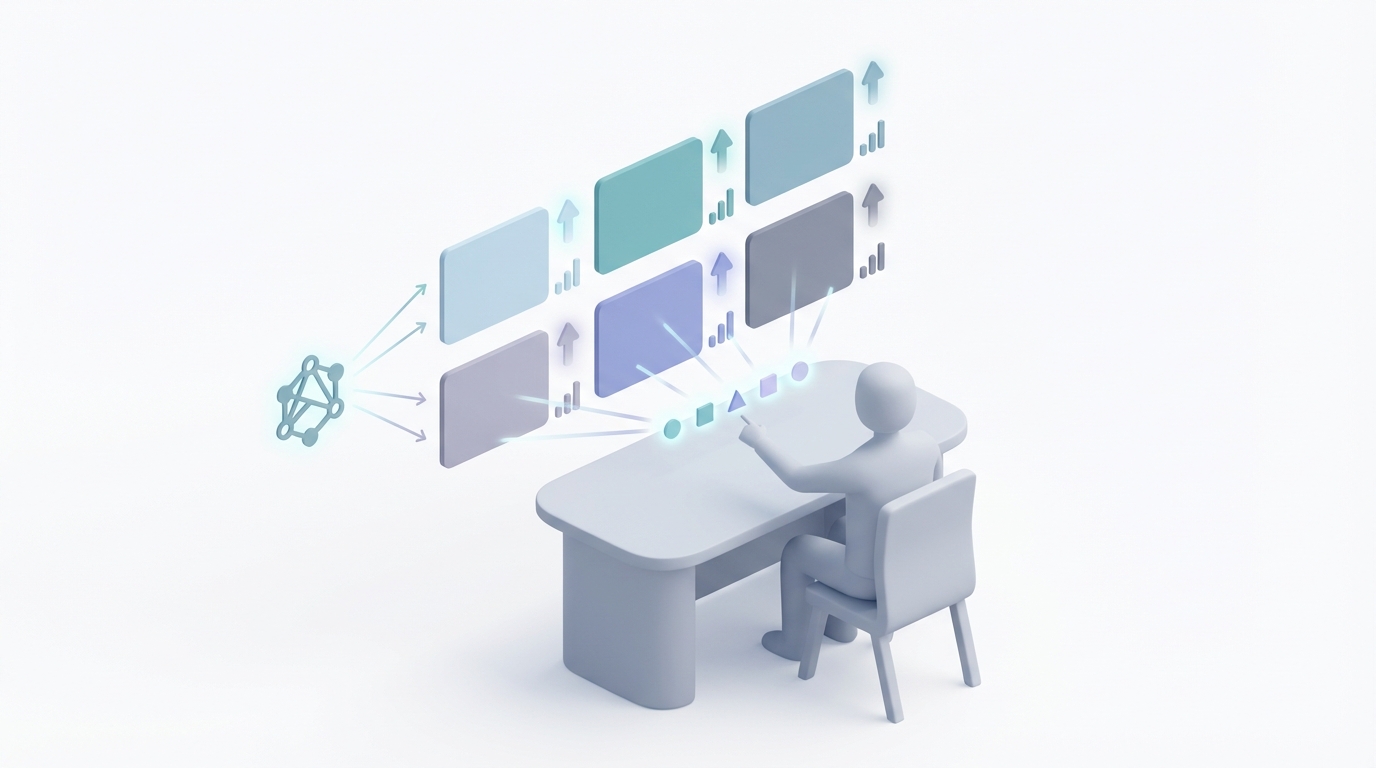
The paid traffic math: why personalization pays for itself immediately
Let's run the numbers. Say you're spending $15,000 per month on Google Ads with a 2% conversion rate. That's 150 leads per month.
You segment your campaigns into three audience groups and build AI-powered landing pages for each. For this worked example, assume conversion rates move to 5%; that is an illustration, not a benchmark or guaranteed result. Same $15,000 spend. Same traffic. Now you're getting 375 leads.
225 additional leads per month. Under those assumptions, a 20% close rate and $5,000 average deal value imply $225,000 in additional closed-deal value per month — not annual pipeline — from the same ad budget. This is a worked example, not a forecast. The pages cost you a few hours of AI agent time to build.
In our own work at MyZone, I have seen conversion rate lifts of 2x to 4x when businesses move from generic landing pages to segment-specific pages. These are our observations, not an industry benchmark or a guaranteed result. The variance depends on how generic the original page was and how well-defined the new segments are.
Why Google Ads specifically rewards personalization
There's a bonus layer here that's worth understanding. Google Ads documentation (checked in 2026) explains that Quality Score is a diagnostic, not an input in the ad auction. Landing-page relevance matters to the visitor experience, but does not guarantee a particular cost per click or ad position. Google's documentation lists landing-page experience among Quality Score's three components.
Personalization doesn't just increase conversion rates. It also reduces your cost per click. It compounds both ends of the ROI calculation simultaneously.
Meta Ads work the same way. Facebook and Instagram reward creative relevance with lower CPMs. Ads that lead to highly relevant pages see better campaign-level ROAS because the platform learns that users from those campaigns take meaningful actions.
The flywheel effect
Better landing page relevance → higher Quality Score → lower CPCs → more traffic for same budget → more conversions → better campaign performance signals → better ad placements. Personalization doesn't just help once. It improves the entire paid traffic flywheel over time.
What this actually looks like in the AI1 platform
When a client comes to us wanting to improve their paid traffic conversion, here's how the workflow actually runs using AI1.
First, we do a segment audit. The AI agent analyzes their existing traffic — by industry, company size, job function, geography — and identifies the 3-5 segments that represent the most volume and highest intent. This takes 30 minutes using Google Analytics and CRM data.
Second, we build the brand style guide. If they have an existing one, the agent reads it. If they don't, we run a 20-minute discovery session and the agent codifies it. This becomes the design DNA for every page we build.
Third, the agent builds the pages. For each segment: copy brief → headline variants → body copy → image generation → HTML build → QA. Every page follows the style guide. Every image matches the visual standard. Every CTA is calibrated to the segment's buying stage.
Fourth, we deploy and track. Pages go live on staging for client approval, then push to production. The AI1 platform monitors conversion rates per segment and flags underperformers for optimization.
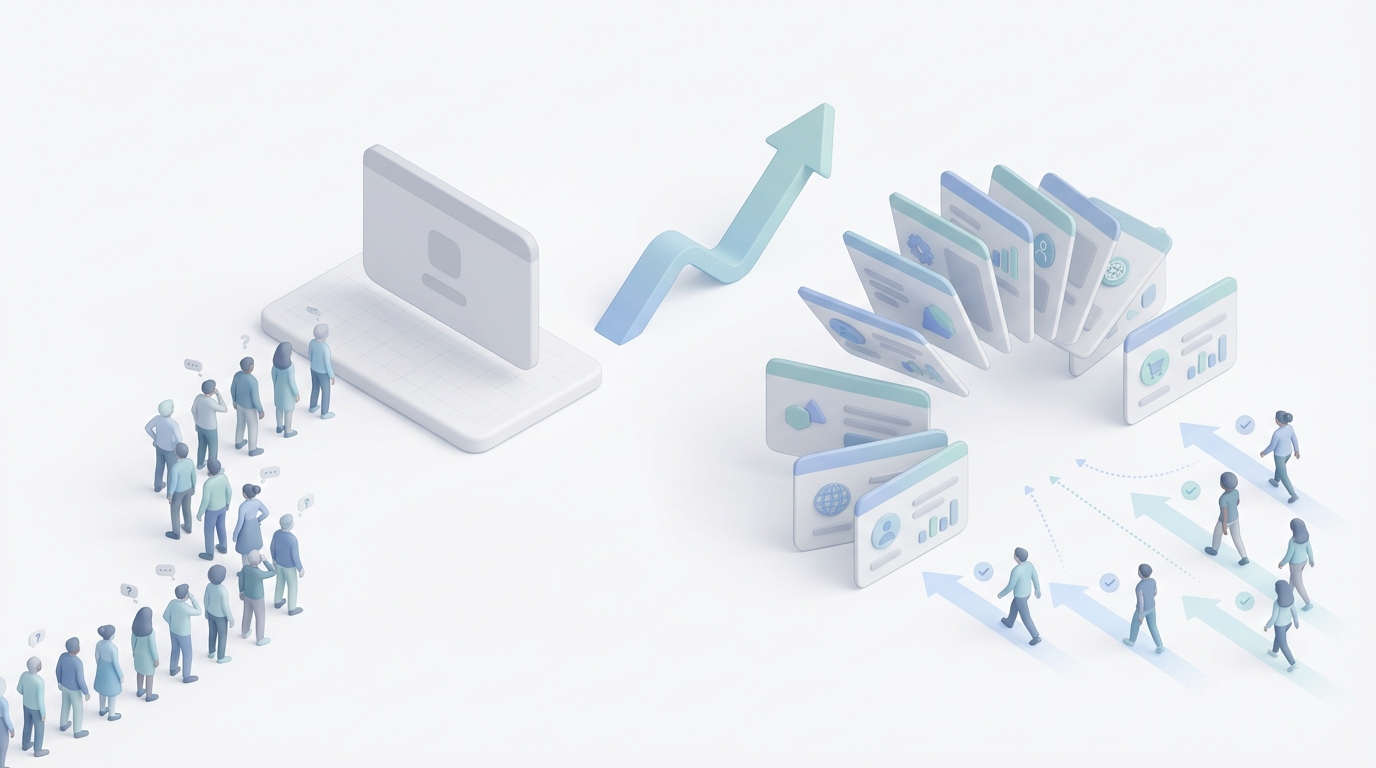
How to get started: a practical framework
You don't need to start with a dozen segments. Start with three. Here's the approach I recommend:
- Identify your highest-volume traffic segments. Pull your last 90 days of CRM and analytics data. Find your top 3-5 segments by inbound volume — industries, job titles, or use cases that come up repeatedly.
- Map the primary concern for each segment. What keeps a CFO up at night is different from what keeps an IT director up at night. One sentence per segment. That becomes your headline direction.
- Codify your brand style guide. Colors, fonts, spacing, tone, visual aesthetic. If it doesn't exist yet, build it. This is the foundation that makes everything consistent.
- Brief the AI agent per segment. Segment name, primary concern, proof points that resonate, desired CTA. The agent handles everything else.
- A/B test against your current generic page. Run 50/50 traffic for two weeks. The data will tell you whether the lift justifies expanding to more segments — and in my experience, it always does.
The time from segment audit to live pages depends on scope, integrations and review; it is not a fixed under-a-day delivery promise.
The broader shift: AI is giving salespeople creative leverage
I want to step back for a moment, because landing pages are just one example of a much larger shift happening in sales.
For decades, salespeople with great insights about their customers were bottlenecked by their inability to act on those insights. They knew which segments were underserved. They knew what messages would resonate. They had the relationships and the market understanding. What they lacked was the ability to execute creative and technical work at the speed their insights demanded.
AI agents close that gap. A salesperson who once had great ideas and slow execution now has great ideas and immediate execution. The insight-to-action cycle that used to take months now takes hours.
That's not a small thing. It's a capability change that puts a team of ten in the hands of one motivated person.
"The salespeople winning in 2026 aren't the ones with the biggest teams. They're the ones who figured out how to put an AI agent team behind every conversation."
The bottom line
Hyper-personalization isn't the future of paid traffic. It's the present — for the companies that figured out how to do it at scale.
AI agents have made that scale accessible to everyone. You no longer need a design team, a developer, or a six-figure agency retainer to build personalized landing pages for every segment you serve. You need a style guide, a clear understanding of your audience, and an AI agent that can do the rest.
The companies who deploy this first don't just get better conversion rates — they establish a structural advantage that compounds. Every new segment they identify, they can address immediately. Every gap they see in the market, they can fill within hours.
The question isn't whether AI-built landing pages work. The data is clear. The question is: how many more leads could you be getting from the traffic budget you're already spending?
Want AI-powered landing pages for your sales team?
See how the AI1 platform can build segment-specific landing pages that convert — guided by your brand standards and reviewed before publication.