
I’m going to tell you something that will probably annoy you. The Google Ads you spent four hours writing last week? They don’t say what your website says. They don’t match your strategy document. And they probably don’t reflect what your business actually does right now.
I know because I’ve seen it hundreds of times. A business owner or marketing manager sits down, opens Google Ads, and starts writing headlines from memory. They type what they think the business does. What they remember from the last meeting. What sounds good in their head.
They never open their own website. They never re-read the strategy doc. They just write.
The disconnect nobody talks about
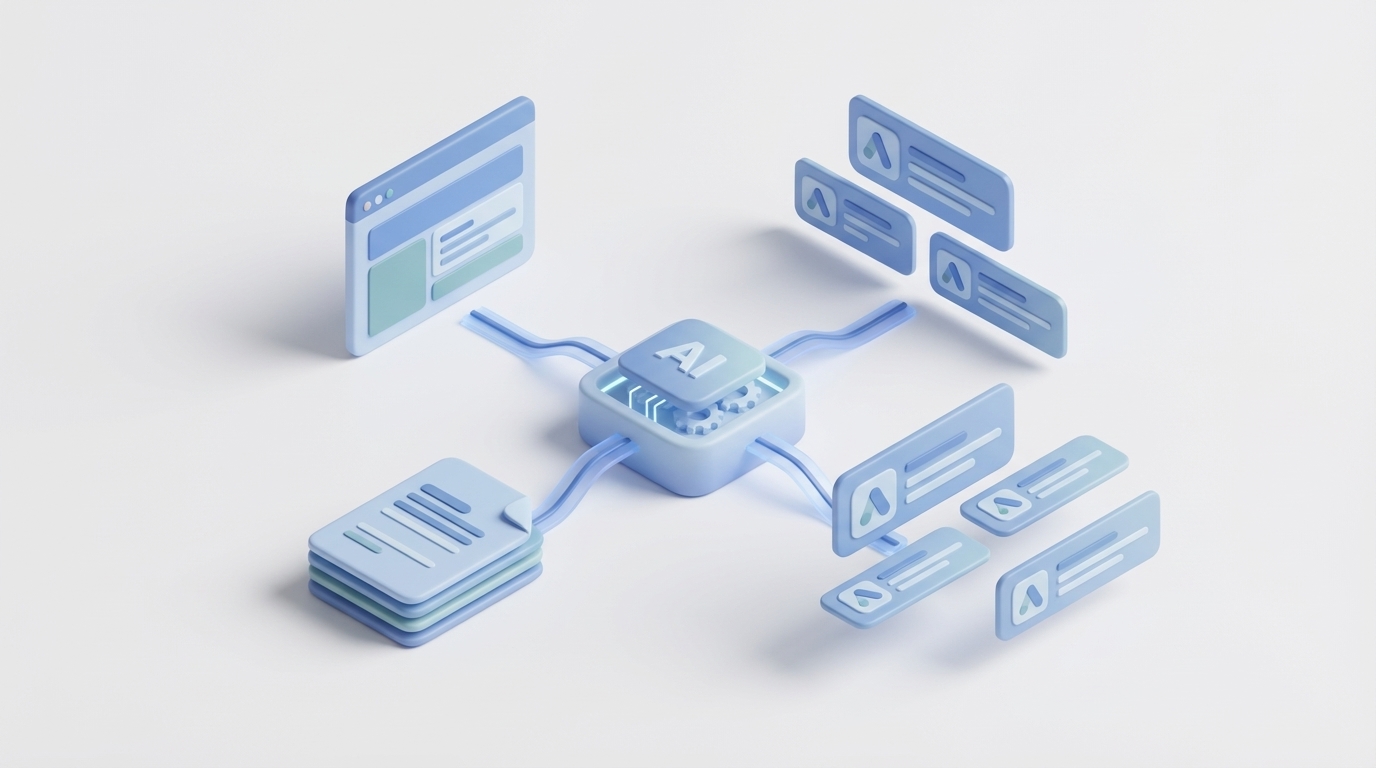
Here’s the problem with writing Google Ads by hand. You’re not writing from source material. You’re writing from memory. And memory is a terrible copywriter.
Your website says “AI-powered operations platform for mid-market companies.” Your ad says “Smart business solutions for growing teams.” Those aren’t the same message. One is specific and differentiated. The other could be any company on earth.
This happens because humans are lazy readers of their own content. You wrote the website six months ago. You’ve updated it three times since. The value propositions evolved. The language shifted. But your mental model of what the business does is still stuck on the version from two years ago.
The result? Your ads promise one thing. Your landing page delivers another. That mismatch can weaken the experience for people who click. And you blame the platform instead of the process.
In Ai1, the Copywriter does this work for your team.
Google Ads RSAs are a volume game
Let’s talk about Responsive Search Ads for a second. Google Ads documentation (checked in 2026) allows up to 15 headlines and 4 descriptions per responsive search ad. The algorithm then tests combinations to find what works best for each search query.
Most advertisers give Google 5 or 6 headlines and 2 descriptions. They run out of ideas. They run out of patience. They figure “good enough” and move on.
But “good enough” is costing you money. More headline variations give Google more combinations to test; they do not guarantee more clicks. When you give the algorithm more material to work with, it finds better combinations for specific search intents. Google's January 2024 announcement also reported 12% more conversions on average when RSA Ad Strength improved from Poor to Excellent. Fewer distinct headlines give the system fewer combinations to test.
The math is simple. If you’re running one fully populated responsive search ad in each of 10 ad groups, that gives you 150 headlines and 40 descriptions. That’s 190 pieces of copy. Try writing 190 unique, on-brand, strategically aligned pieces of ad copy by hand. It takes a full day. Minimum.
Most businesses give Google's ad algorithm a knife when it needs a toolbox. Five headlines isn't testing. It's guessing.
Why your ads don’t match your business
I ran an experiment last year. I took 30 Google Ads accounts from businesses we work with and compared their ad copy to their website copy. The results were painful.
In 23 out of 30 accounts, the ads used different language than the website for the same services. Different value propositions. Different terminology. Sometimes completely different positioning.
One company’s website emphasized “compliance-first data management.” Their ads talked about “easy-to-use data tools.” Those attract completely different buyers. The website was talking to enterprise risk managers. The ads were talking to small business owners who hate spreadsheets.
Another company had updated their website to focus on three new service lines. Their ads were still promoting two services they’d sunset six months earlier. Nobody updated the ads because nobody re-read the website.
This is the norm, not the exception. And it’s not because these businesses are sloppy. It’s because the process is broken. Writing ads in isolation from your actual business content guarantees messaging drift.
What if the ad writer read your website first?
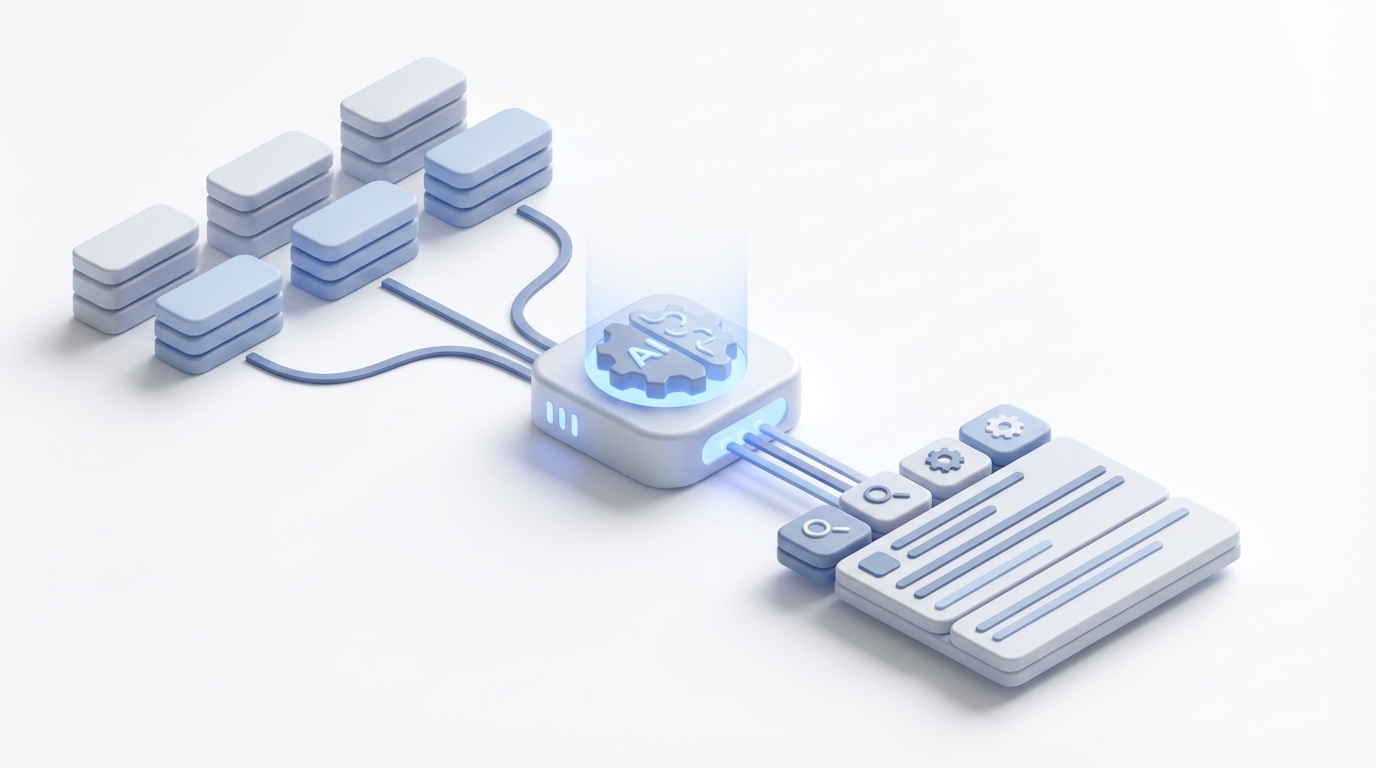
That’s the question we asked ourselves. What if, before writing a single headline, the system actually read your entire website? Scraped every page. Understood your services, your differentiators, your proof points, your language.
And what if it also read your strategy document? The one that explains who you serve, why you’re different, what problems you solve, and how you want to be positioned in the market.
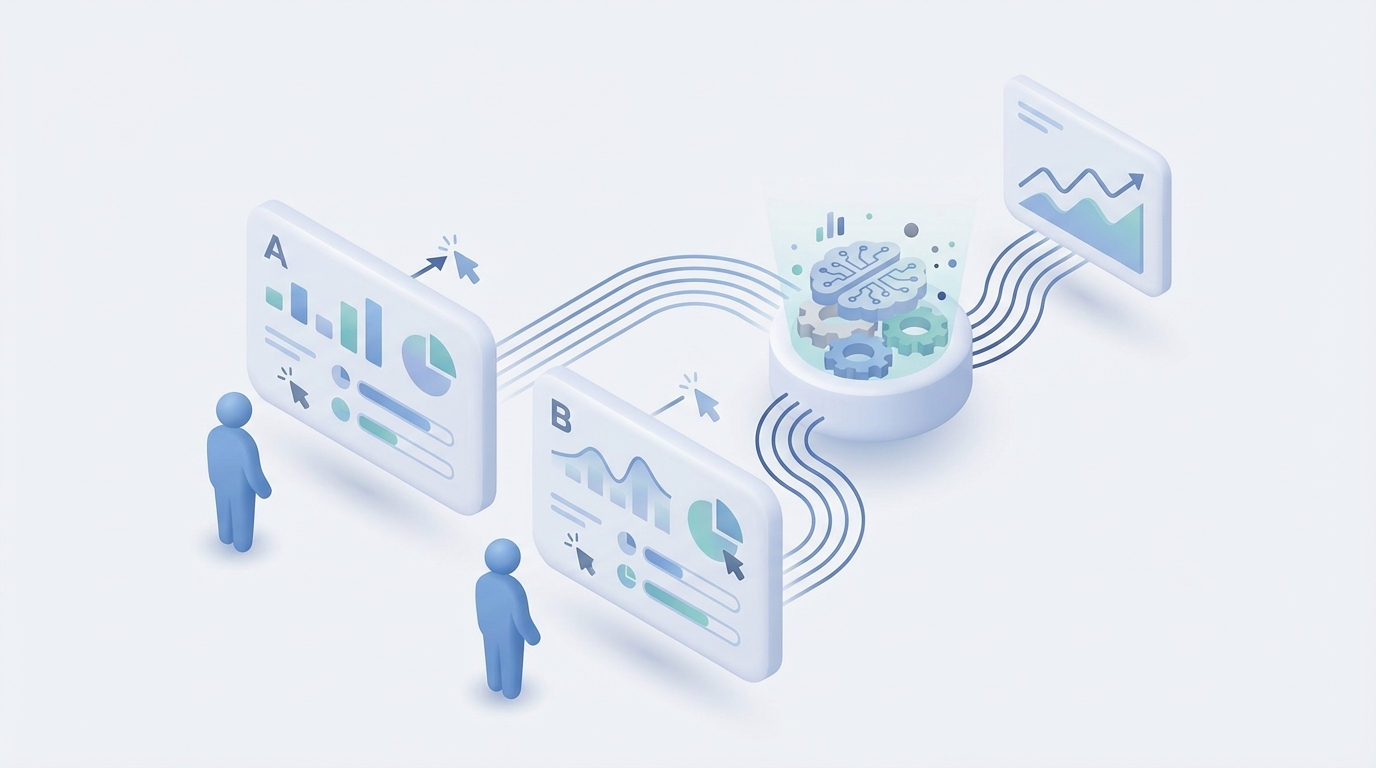
That’s what we built. The Google Ads Generator takes two inputs: your strategy doc and your website URL. It reads both. Then it writes.
The output is 15 headlines and 4 descriptions per ad group, formatted in a Google Sheet that’s ready for direct import into Google Ads. No reformatting. No copy-pasting. The sheet matches Google’s import template exactly.
How it actually works
The process is straightforward. You provide your strategy document and your website URL. The system does four things.
- It scrapes your website.
- It reads your strategy document.
- It generates the ads.
- It outputs to Google Sheets.
First, it scrapes your website. Not just the homepage. It reads your services pages, about page, case studies, and any other content that describes what you do. It extracts the actual language you use to describe your business.
Second, it reads your strategy document. This is the context layer. Your strategy doc tells the AI who your ideal customers are, what problems you solve, how you’re positioned against competitors, and what your key differentiators are. Without this, the AI would just rewrite your website. With it, the AI writes ads that are strategically targeted. In Google's January 2024 data, small businesses using its conversational ad builder were 42% more likely to publish Search campaigns with Good or Excellent Ad Strength.
Third, it generates the ads. 15 headlines at 30 characters each. 4 descriptions at 90 characters each. Per ad group. Every headline and description is grounded in real content from your website and aligned with your strategic positioning. No hallucinated features. No generic platitudes.
Fourth, it outputs to Google Sheets. Formatted, organized by ad group, ready to import. You review, make any tweaks you want, and upload directly to Google Ads.
The whole thing takes about 3 to 5 minutes. Not 4 to 6 hours. Minutes.
The best ad copy doesn't come from creativity. It comes from reading what the business actually says about itself and then saying it in 30 characters.
The strategy doc is the secret weapon
Most AI ad generators just ask you for keywords and a landing page URL. That’s not enough. Keywords tell you what people search for. The landing page tells you what one page says. Neither tells the AI what your business actually is.
The strategy document changes everything. It’s the difference between an AI that writes generic ads and an AI that writes your ads.
Your strategy doc contains:
- Your ideal customer profiles.
- Your competitive positioning.
- Your unique value propositions.
- Your brand voice guidelines.
- The specific outcomes you deliver.
- The objections you overcome.
When the AI has all of that context plus your full website content, it doesn’t just write ads. It writes ads that sell the way you sell. It emphasizes what you emphasize. It targets who you target. It differentiates the way you differentiate.
No human copywriter, no matter how talented, is going to re-read a 15-page strategy document and scrape an entire website before writing each batch of ads. But the AI does it every single time. That’s not a small advantage. That’s a structural one.
The consistency problem nobody measures
Here’s something Google won’t tell you directly, but every experienced advertiser knows. Message consistency between your ad and your landing page helps visitors understand whether they are in the right place.
When your ad says “AI-powered operations platform” and your landing page says “AI-powered operations platform,” Google sees alignment. Google Ads documentation (checked in 2026) describes Quality Score as a diagnostic, not an input in the ad auction. Matching wording does not guarantee lower costs or better positions.
When your ad says “smart business tools” and your landing page says “AI-powered operations platform,” Google sees a disconnect. That mismatch can confuse visitors; its effect on campaign results needs testing.
Because our system reads the actual website before writing the ads, the language naturally matches. The headlines use the same terms, the same positioning, the same value propositions that appear on your landing pages. Consistency isn’t something you have to check for. It’s built into the process.
What this saves you
Consider an account with 8 to 12 ad groups as a worked example, not an industry benchmark. For one fully populated responsive search ad per group, that means 15 headlines and 4 descriptions per ad.
Manual writing time depends on the number of ads, the source material and the review process. Then add review time, revision cycles, and the inevitable back-and-forth with stakeholders who want different messaging.
Producing and reviewing a full set of RSA copy can take substantial time, which can make frequent refreshes difficult.
The AI does it in under 5 minutes. Not 5 minutes of mediocre output that needs heavy editing. Five minutes of strategically-aligned, website-consistent copy that’s ready for review. In our own deployments at MyZone, most clients change fewer than 10% of the generated headlines.
That’s not a productivity improvement. That’s a category change. You go from “we update our ads quarterly because it’s a pain” to “we refresh our ads monthly because it takes five minutes.”
The bigger picture: ads as part of the system
The Google Ads Generator isn’t a standalone tool. It’s part of the Ai1 marketing automation stack. And that matters because ads don’t exist in isolation.
Your strategy document feeds the ad generator. The same strategy document feeds your content calendar. Your website content informs both. When you update your strategy, every downstream asset can be regenerated in minutes.
That means when your positioning evolves, your ads evolve with it. When you launch a new service, your ads include it immediately. When you sunset a product, your ads stop promoting it the same day.
Ads can lag behind a strategic change. Regenerating drafts from updated source material can shorten that lag, with review still needed before publication.
Who this is for
This isn’t for everyone. If you’re spending $500 a month on Google Ads and running two ad groups, you can probably write the ads yourself in an hour. The ROI isn’t there.
But if you’re running a serious paid search program with 8 or more ad groups, spending $5,000 or more per month, and struggling to keep your ad copy fresh, consistent, and aligned with your actual business messaging, this changes everything.
It’s also built for agencies managing multiple client accounts. When you’re writing ads for 15 different clients, each with different positioning and different websites, the volume becomes unmanageable. The AI handles each client independently, reading each client’s strategy doc and website to produce tailored ads. No cross-contamination. No recycled headlines.
The bottom line
You’re spending too much time writing ads that don’t match your website. You’re giving Google’s algorithm too few headlines to test. And you’re updating your ads too infrequently because the process is too painful.
All three problems have the same root cause: you’re writing ads from memory instead of from source material. Fix the process and the ads fix themselves.
The AI reads what you actually say. Then it says it in 30 characters. That’s the whole trick. And it works better than anything you’ll write by hand.
See the Google Ads Generator Automation in Action
Watch how Ai1 generates high-converting ad copy from your strategy docs with our Google Ads generator automation workflow.
Meet the Google Ads Manager →